How-To Guides

How to Cook Whole Pork Cheeks

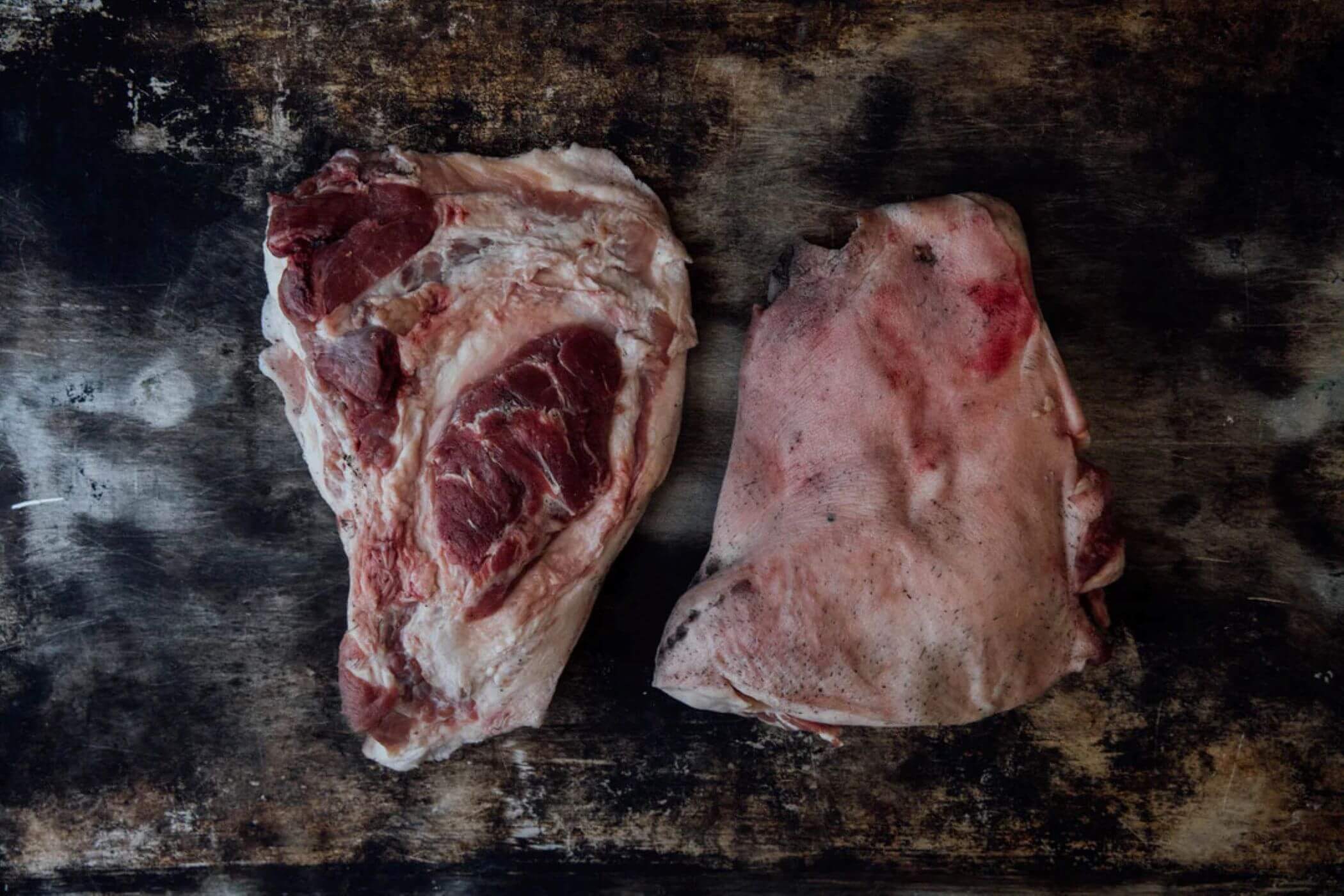
Full, rind-on pork cheek, uncooked.

What Are Whole Pork Cheeks?

How to Cook Whole Pork Cheeks: Pork cheeks are exactly what they sound like – the cheek muscle of a pig. This hardworking cut benefits from long, slow cooking to achieve meltingly tender results while delivering exceptional depth of flavour. Like many hardworking cuts, pork cheeks reward patience with rich, unctuous meat that’s perfect for slow-cooked dishes.

Our whole pork cheeks, sourced from free-range, native-breed pigs, are a celebration of flavour and traditional butchery. Slowly reared and naturally exercised, these pigs develop muscle full of character that reflects Swaledale Butchers’ nose-to-tail philosophy.

Sold whole, with the rind on, our pork cheeks allow you to explore a variety of cooking options, from slow braises to home curing. Unlike some butchers, we don’t separate the oyster muscle, as the demand would compromise our ethos. To meet this, others may source cheeks from non-free-range pigs, but at Swaledale, we remain committed to quality, sustainability, and the highest standards of butchery.

Please note: One whole rind-on pork cheek weighs approximately 850g and serves 3–4 people, making it an ideal centrepiece for a comforting meal shared with family or friends.

What Do Whole Pork Cheeks Taste Like?

Whole pork cheeks offer an incredible depth of flavour, making them a favourite among chefs and home cooks alike. This cut has a natural richness and tenderness when cooked slowly, delivering a melt-in-the-mouth texture.

One of the remarkable qualities of pork cheeks is their ability to take on the characteristics of the cooking liquor, allowing you to infuse them with layers of flavour. Whether you’re braising them in wine, beer, or a robust stock, always choose something you would enjoy drinking – now is not the time for that old, opened bottle of wine that’s edging closer to vinegar.

For a truly exceptional dish, pair pork cheeks with ingredients like Oloroso sherry, aromatic herbs, and hearty pulses. The result is a deeply satisfying and flavour-packed meal that highlights the quality and versatility of this under-appreciated cut.

How Long Does It Take to Cook Whole Pork Cheeks?

Removing the oyster muscle from the cheek allows for a shorter braising time, typically around 3–4 hours. However, when cooking whole pork cheeks with the rind and fat intact, you’ll need an additional 1–2 hours for slow cooking to achieve that tender, melt-in-the-mouth result.

Whole pork cheeks benefit from low, slow cooking methods, such as braising or slow-roasting, which break down the connective tissues and render the fat, resulting in beautifully succulent meat.

Alternatively, Chef Valentine Warner takes a unique approach by roasting the pork cheeks quickly. Once cooked, he thinly slices them, showcasing a different texture and flavour profile that highlights the versatility of this cut.

Whether braised or roasted, pork cheeks reward patience with a dish packed full of rich, deep flavour and unbeatable tenderness.

How to Cook Whole Pork Cheeks

Whole pork cheeks are a wonderfully indulgent cut, offering incredible depth of flavour and a melt-in-the-mouth texture when cooked correctly. This method focuses on slow-cooking to ensure the cheeks become perfectly tender, while the cooking liquor and soffritto create a rich, hearty dish that’s full of character.

Please note: One whole pork cheek weighs approximately 850g and serves 3–4 people, making it an ideal centrepiece for a comforting meal shared with family or friends.

  1. Prepare the Cheeks: Bring the whole pork cheeks to room temperature before cooking. This ensures even cooking throughout.
  2. Preheat the Oven: Set your oven to 135ºC (275ºF).
  3. Trim the Fat: Using a sharp knife or kitchen scissors, carefully trim away any excess fat from the cheeks, leaving enough to keep the meat moist and enhance flavour during cooking.
  4. Season the Cheeks: Generously season the pork cheeks with sea salt and freshly cracked black pepper, ensuring an even coating all over.
  5. Brown the Cheeks: Heat a few tablespoons of olive oil in an oven-proof casserole dish over medium-high heat. Add the pork cheeks and sear them on all sides until they develop a deep, golden-brown crust. Once browned, remove the cheeks and set them aside.
  6. Cook Down the Soffritto: In the same casserole dish, reduce the heat to medium and add a soffritto base – finely diced onions, carrots, and celery. Stir frequently, cooking until soft and lightly caramelised. A pinch of salt will help draw out moisture and enhance flavour.
  7. Deglaze the Pan: Pour in your chosen cooking liquor – such as red wine, Oloroso sherry, or dark beer – and scrape up the browned bits from the bottom of the dish. Allow the liquid to reduce slightly to intensify the flavour, then add enough chicken stock to create a rich braising liquid.
  8. Braise the Cheeks: Return the browned pork cheeks to the casserole dish, nestling them into the liquid. The cheeks should be partially submerged in the braising liquor. Cover the dish with a tight-fitting lid.
  9. Slow-Cook: Place the casserole dish in the centre of the preheated oven and cook for approximately 3 hours. Check occasionally to ensure the liquid hasn’t reduced too much, topping up with more stock if needed.
  10. Test for Doneness: The pork cheeks are ready when they can be easily pierced with a fork, and the meat is tender enough to fall apart.
  11. Rest and Serve: Remove the casserole dish from the oven and let the cheeks rest for 10–15 minutes. Serve the pork cheeks with the rich braising liquid and a side of crusty bread, creamy mashed potatoes, or lentils to soak up the incredible flavours.

Top Tips for Cooking Whole Pork Cheeks

Choosing the Right Cooking Liquor: Pork cheeks are incredibly versatile and will take on the flavours of the cooking liquor beautifully. Options like cider, beer, stout, red wine, or Oloroso sherry work wonderfully, each imparting its unique depth of flavour to the dish.

  • Cider brings a sweet, tangy note that pairs beautifully with pork’s richness.
  • Beer or Stout adds a malty, slightly bitter depth, perfect for a hearty, rustic dish.
  • Red Wine delivers bold, robust flavours, especially when paired with aromatic herbs like thyme or rosemary.
  • Sherry, particularly Oloroso, adds a nutty, slightly sweet complexity that elevates the dish to something truly special.

Whichever you choose, always opt for something you’d happily drink yourself – this isn’t the time to pour in that bottle gathering dust at the back of the cupboard. And don’t forget to set aside another bottle to enjoy alongside the meal – after all, a great dish deserves a great pairing!

Whole Pork Cheek Recipe

George Ryle’s Whole Pork Cheek Recipe with Chickpeas, Oloroso & Sweet Onions is a rustic, Andalusian-inspired dish showcasing a single, slow-cooked pork cheek. Braised low and slow with hearty chickpeas, sweet onions, and Oloroso sherry, the result is tender, flavourful meat and a rich, savoury broth. Finished with a splash of sherry vinegar for balance, this dish is perfect served with crusty bread and a chilled glass of Fino sherry.

Classic Pork Cheek Cooking Methods

Slow-Braised Pork Cheeks in Red Wine
A timeless, French-inspired pork cheek recipe where the cheeks are seared until golden and then slow-braised with red wine, shallots, carrots, garlic, and fresh thyme. The result is tender, melt-in-the-mouth pork cheeks in a rich, velvety sauce. Serve this with creamy mashed potatoes or polenta for an indulgent, comforting dish.

Pork Cheeks with Cider and Apples
A classic British pork cheek recipe that celebrates the balance of savoury and sweet. Braise the cheeks in dry cider with onions, sage, and whole apples until perfectly tender. The apples’ natural sweetness complements the savoury pork and cider, creating a warming autumnal dish. Pair this with buttered greens and plenty of crusty bread to soak up the delicious juices.

Spanish Braised Pork Cheeks with Chorizo and Paprika
For a taste of Spain, this recipe features slow-cooked pork cheeks braised with spicy chorizo, smoked paprika, tomatoes, and white wine. The chorizo’s rich oil infuses the dish with smoky, bold flavours, making it a standout meal. Serve alongside patatas bravas or saffron rice to complete this Spanish-inspired feast.

Italian Pork Cheeks with White Wine and Polenta
An Italian pork cheek recipe perfect for a refined yet hearty meal. The cheeks are braised in white wine with garlic, rosemary, and a splash of lemon for a bright, aromatic flavour. Serve this tender dish over creamy polenta, finishing with a sprinkle of Parmigiano Reggiano for added richness.

Crispy Roasted Pork Cheeks
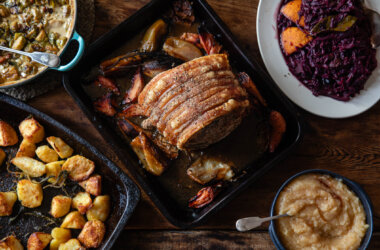
For an alternative texture, try crispy roasted pork cheeks. Cooked skin-on, the cheeks achieve a beautifully golden crackling while the meat beneath remains tender and succulent. Start by scoring the skin, rubbing with salt and herbs, and roasting low and slow before finishing with a high-heat blast for that irresistible crunch. Perfect served with roasted root vegetables or braised greens.

Order meat online

Instagram

  • Do you love bacon?

Here’s our in house science and history teacher, @grylos, talking osmosis, salt, and the slow work of dry curing bacon.
  • Burns Night, 25 January.

Two pastry wrapped tributes to Robert Burns.
Made with chef Josh Whitehead of @finer_pleasures.

A haggis sausage roll with coarse cut native breed pork.
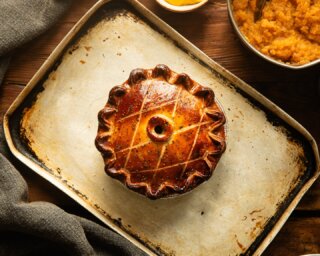
A hot water crust pie of mutton and lamb haggis, oats, onions and spice.

Food for a cold night.
  • On many a recipe, the instruction ‘brown your mince’ is set out plainly enough. And yet, deep into January, when slow cooking is very much back on the table and recipes keep asking for the same thing, it feels worth saying that this is meant quite literally. Brown your mince. It does not say grey it.

Browning is a process, not a gesture. It takes time, heat, and a little patience, and what you are doing is building flavour, not simply warming meat through. When mince is rushed, crowded into the pan, stirred too soon, it stews. It turns grey. The moisture stays put and the flavour never quite arrives.

So here is @grylos , taking a moment to explain the difference, and to remind you that if you want the most from good produce, you have to let it work. Give it space. Leave it alone long enough to colour properly. Let it smell right before you move on.

Because this is slow food month, after all. There is no need to hurry. Take your time, do it properly, and you will taste the difference in the finished dish.
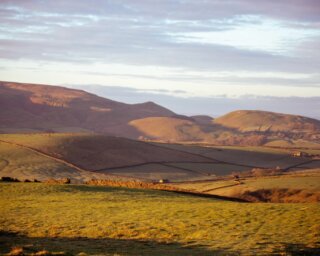
  • Winter. It felt strange being in Yorkshire, watching the news from the south where snow lay thick and sudden, while here January had arrived quietly, cold and wet, but not yet truly winter as we know it. Up here the season has always moved at a slower pace, and there is something steadying in remembering that. The idea that we should charge straight on after Christmas is a modern one, and it sits awkwardly with bodies and minds that are still tuned to pause, to take stock, to look back at the year just gone. 

Out on the farms, there is no rush but plenty to do. Some are already lambing, others preparing for it, working with the land rather than against it as the days begin, almost imperceptibly, to lengthen. The fields are still subdued, but there are signs, if you look closely, that life is beginning to stir again.

And so, it feels right, now and then, to slow everything down and simply notice Yorkshire in January, not as something to be endured, but as a quiet and beautiful part of the year in its own right.
  • Now the depths of winter descend. The excitement of Christmas has passed, but do not let that fool you. These months are still some of the best for eating roasted meats and leaning into deeper, newer flavour profiles.

Here is a traditional, and not so traditional, approach to our pork middle. We send a lot of our pork middles out to chefs, ready for them to stuff and roast in their own way, using both the loin and the belly. You will see plenty of porchetta on the market that uses just the belly. This is different. Using both cuts gives balance, structure, and allows the flavour of the pork itself to shine.

For our website, we also offer a less traditional version, stuffed simply with our fennel sausage meat. That brings seasoning right through the joint, and a little extra fat to help keep everything moist during a long, slow roast.

It is a brilliant cut to have, either as a roast or the following day, sliced cold for sandwiches.
  • Chef George Ryle @grylos, signing off the year with us.

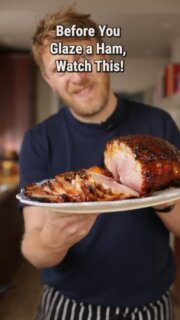
A delicious Christmas ham glaze.
Nothing clever. Nothing rushed, but some useful tips. 

Thank you for watching, cooking along, and sticking with us this year.

Merry Christmas.
  • We like doing things properly. Smoking is one of them.
It is not sterile or shiny. But have you ever been to a smokehouse in Arbroath? If you have, you will know what this looks like. That black tar on the walls comes from years of smoke and years of meat. That is the point.

We still smoke food properly. Many do not. Much of what you see labelled as smoked has barely seen smoke at all. For us, that matters. Food done properly matters. It will matter even more in the years ahead.

So when you buy something from us and it says smoked, you know exactly what that means.
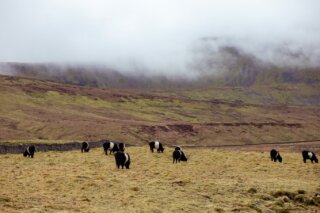
  • Much of the beef on tables and in kitchens at this time of year comes from Bill Whittaker’s herd of Belted Galloway cattle.

They graze land in the shadow of Ingleborough, feeding on diverse forage shaped by limestone ground. It is land that suits the cattle, and cattle that suit the land.

We usually receive Bill’s beef once a year, when it is ready. It is always a good moment when it arrives. Beef like this cannot be rushed. It follows the season.

This is the way we like to work. Smaller farms, running the right cattle on the right ground, producing beef that fits the rhythm of the year.

As we head into the new year, we are always keen to hear from other farmers working with native breeds, regenerative systems, and properly pasture-fed livestock. If that sounds like you, and you have something coming through, do get in touch.
Do you love bacon? Here’s our in house science and history teacher, @grylos, talking osmosis, salt, and the slow work of dry curing bacon.
6 days ago
3408
View on Instagram |
1/8
Burns Night, 25 January.

Two pastry wrapped tributes to Robert Burns.
Made with chef Josh Whitehead of @finer_pleasures.

A haggis sausage roll with coarse cut native breed pork.
A hot water crust pie of mutton and lamb haggis, oats, onions and spice.

Food for a cold night.
Burns Night, 25 January.

Two pastry wrapped tributes to Robert Burns.
Made with chef Josh Whitehead of @finer_pleasures.

A haggis sausage roll with coarse cut native breed pork.
A hot water crust pie of mutton and lamb haggis, oats, onions and spice.

Food for a cold night.
Burns Night, 25 January.

Two pastry wrapped tributes to Robert Burns.
Made with chef Josh Whitehead of @finer_pleasures.

A haggis sausage roll with coarse cut native breed pork.
A hot water crust pie of mutton and lamb haggis, oats, onions and spice.

Food for a cold night.
Burns Night, 25 January.

Two pastry wrapped tributes to Robert Burns.
Made with chef Josh Whitehead of @finer_pleasures.

A haggis sausage roll with coarse cut native breed pork.
A hot water crust pie of mutton and lamb haggis, oats, onions and spice.

Food for a cold night.
Burns Night, 25 January.

Two pastry wrapped tributes to Robert Burns.
Made with chef Josh Whitehead of @finer_pleasures.

A haggis sausage roll with coarse cut native breed pork.
A hot water crust pie of mutton and lamb haggis, oats, onions and spice.

Food for a cold night.
Burns Night, 25 January.

Two pastry wrapped tributes to Robert Burns.
Made with chef Josh Whitehead of @finer_pleasures.

A haggis sausage roll with coarse cut native breed pork.
A hot water crust pie of mutton and lamb haggis, oats, onions and spice.

Food for a cold night.
Burns Night, 25 January. Two pastry wrapped tributes to Robert Burns. Made with chef Josh Whitehead of @finer_pleasures. A haggis sausage roll with coarse cut native breed pork. A hot water crust pie of mutton and lamb haggis, oats, onions and spice. Food for a cold night.
7 days ago
1056
View on Instagram |
2/8
On many a recipe, the instruction ‘brown your mince’ is set out plainly enough. And yet, deep into January, when slow cooking is very much back on the table and recipes keep asking for the same thing, it feels worth saying that this is meant quite literally. Brown your mince. It does not say grey it. Browning is a process, not a gesture. It takes time, heat, and a little patience, and what you are doing is building flavour, not simply warming meat through. When mince is rushed, crowded into the pan, stirred too soon, it stews. It turns grey. The moisture stays put and the flavour never quite arrives. So here is @grylos , taking a moment to explain the difference, and to remind you that if you want the most from good produce, you have to let it work. Give it space. Leave it alone long enough to colour properly. Let it smell right before you move on. Because this is slow food month, after all. There is no need to hurry. Take your time, do it properly, and you will taste the difference in the finished dish.
2 weeks ago
2727
View on Instagram |
3/8
Winter. It felt strange being in Yorkshire, watching the news from the south where snow lay thick and sudden, while here January had arrived quietly, cold and wet, but not yet truly winter as we know it. Up here the season has always moved at a slower pace, and there is something steadying in remembering that. The idea that we should charge straight on after Christmas is a modern one, and it sits awkwardly with bodies and minds that are still tuned to pause, to take stock, to look back at the year just gone. 

Out on the farms, there is no rush but plenty to do. Some are already lambing, others preparing for it, working with the land rather than against it as the days begin, almost imperceptibly, to lengthen. The fields are still subdued, but there are signs, if you look closely, that life is beginning to stir again.

And so, it feels right, now and then, to slow everything down and simply notice Yorkshire in January, not as something to be endured, but as a quiet and beautiful part of the year in its own right.
Winter. It felt strange being in Yorkshire, watching the news from the south where snow lay thick and sudden, while here January had arrived quietly, cold and wet, but not yet truly winter as we know it. Up here the season has always moved at a slower pace, and there is something steadying in remembering that. The idea that we should charge straight on after Christmas is a modern one, and it sits awkwardly with bodies and minds that are still tuned to pause, to take stock, to look back at the year just gone. 

Out on the farms, there is no rush but plenty to do. Some are already lambing, others preparing for it, working with the land rather than against it as the days begin, almost imperceptibly, to lengthen. The fields are still subdued, but there are signs, if you look closely, that life is beginning to stir again.

And so, it feels right, now and then, to slow everything down and simply notice Yorkshire in January, not as something to be endured, but as a quiet and beautiful part of the year in its own right.
Winter. It felt strange being in Yorkshire, watching the news from the south where snow lay thick and sudden, while here January had arrived quietly, cold and wet, but not yet truly winter as we know it. Up here the season has always moved at a slower pace, and there is something steadying in remembering that. The idea that we should charge straight on after Christmas is a modern one, and it sits awkwardly with bodies and minds that are still tuned to pause, to take stock, to look back at the year just gone. 

Out on the farms, there is no rush but plenty to do. Some are already lambing, others preparing for it, working with the land rather than against it as the days begin, almost imperceptibly, to lengthen. The fields are still subdued, but there are signs, if you look closely, that life is beginning to stir again.

And so, it feels right, now and then, to slow everything down and simply notice Yorkshire in January, not as something to be endured, but as a quiet and beautiful part of the year in its own right.
Winter. It felt strange being in Yorkshire, watching the news from the south where snow lay thick and sudden, while here January had arrived quietly, cold and wet, but not yet truly winter as we know it. Up here the season has always moved at a slower pace, and there is something steadying in remembering that. The idea that we should charge straight on after Christmas is a modern one, and it sits awkwardly with bodies and minds that are still tuned to pause, to take stock, to look back at the year just gone. Out on the farms, there is no rush but plenty to do. Some are already lambing, others preparing for it, working with the land rather than against it as the days begin, almost imperceptibly, to lengthen. The fields are still subdued, but there are signs, if you look closely, that life is beginning to stir again. And so, it feels right, now and then, to slow everything down and simply notice Yorkshire in January, not as something to be endured, but as a quiet and beautiful part of the year in its own right.
3 weeks ago
672
View on Instagram |
4/8
Now the depths of winter descend. The excitement of Christmas has passed, but do not let that fool you. These months are still some of the best for eating roasted meats and leaning into deeper, newer flavour profiles. Here is a traditional, and not so traditional, approach to our pork middle. We send a lot of our pork middles out to chefs, ready for them to stuff and roast in their own way, using both the loin and the belly. You will see plenty of porchetta on the market that uses just the belly. This is different. Using both cuts gives balance, structure, and allows the flavour of the pork itself to shine. For our website, we also offer a less traditional version, stuffed simply with our fennel sausage meat. That brings seasoning right through the joint, and a little extra fat to help keep everything moist during a long, slow roast. It is a brilliant cut to have, either as a roast or the following day, sliced cold for sandwiches.
3 weeks ago
1401
View on Instagram |
5/8
Chef George Ryle @grylos, signing off the year with us. A delicious Christmas ham glaze. Nothing clever. Nothing rushed, but some useful tips. Thank you for watching, cooking along, and sticking with us this year. Merry Christmas.
1 month ago
1,30830
View on Instagram |
6/8
We like doing things properly. Smoking is one of them. It is not sterile or shiny. But have you ever been to a smokehouse in Arbroath? If you have, you will know what this looks like. That black tar on the walls comes from years of smoke and years of meat. That is the point. We still smoke food properly. Many do not. Much of what you see labelled as smoked has barely seen smoke at all. For us, that matters. Food done properly matters. It will matter even more in the years ahead. So when you buy something from us and it says smoked, you know exactly what that means.
1 month ago
36917
View on Instagram |
7/8
Much of the beef on tables and in kitchens at this time of year comes from Bill Whittaker’s herd of Belted Galloway cattle.

They graze land in the shadow of Ingleborough, feeding on diverse forage shaped by limestone ground. It is land that suits the cattle, and cattle that suit the land.

We usually receive Bill’s beef once a year, when it is ready. It is always a good moment when it arrives. Beef like this cannot be rushed. It follows the season.

This is the way we like to work. Smaller farms, running the right cattle on the right ground, producing beef that fits the rhythm of the year.

As we head into the new year, we are always keen to hear from other farmers working with native breeds, regenerative systems, and properly pasture-fed livestock. If that sounds like you, and you have something coming through, do get in touch.
Much of the beef on tables and in kitchens at this time of year comes from Bill Whittaker’s herd of Belted Galloway cattle.

They graze land in the shadow of Ingleborough, feeding on diverse forage shaped by limestone ground. It is land that suits the cattle, and cattle that suit the land.

We usually receive Bill’s beef once a year, when it is ready. It is always a good moment when it arrives. Beef like this cannot be rushed. It follows the season.

This is the way we like to work. Smaller farms, running the right cattle on the right ground, producing beef that fits the rhythm of the year.

As we head into the new year, we are always keen to hear from other farmers working with native breeds, regenerative systems, and properly pasture-fed livestock. If that sounds like you, and you have something coming through, do get in touch.
Much of the beef on tables and in kitchens at this time of year comes from Bill Whittaker’s herd of Belted Galloway cattle.

They graze land in the shadow of Ingleborough, feeding on diverse forage shaped by limestone ground. It is land that suits the cattle, and cattle that suit the land.

We usually receive Bill’s beef once a year, when it is ready. It is always a good moment when it arrives. Beef like this cannot be rushed. It follows the season.

This is the way we like to work. Smaller farms, running the right cattle on the right ground, producing beef that fits the rhythm of the year.

As we head into the new year, we are always keen to hear from other farmers working with native breeds, regenerative systems, and properly pasture-fed livestock. If that sounds like you, and you have something coming through, do get in touch.
Much of the beef on tables and in kitchens at this time of year comes from Bill Whittaker’s herd of Belted Galloway cattle.

They graze land in the shadow of Ingleborough, feeding on diverse forage shaped by limestone ground. It is land that suits the cattle, and cattle that suit the land.

We usually receive Bill’s beef once a year, when it is ready. It is always a good moment when it arrives. Beef like this cannot be rushed. It follows the season.

This is the way we like to work. Smaller farms, running the right cattle on the right ground, producing beef that fits the rhythm of the year.

As we head into the new year, we are always keen to hear from other farmers working with native breeds, regenerative systems, and properly pasture-fed livestock. If that sounds like you, and you have something coming through, do get in touch.
Much of the beef on tables and in kitchens at this time of year comes from Bill Whittaker’s herd of Belted Galloway cattle.

They graze land in the shadow of Ingleborough, feeding on diverse forage shaped by limestone ground. It is land that suits the cattle, and cattle that suit the land.

We usually receive Bill’s beef once a year, when it is ready. It is always a good moment when it arrives. Beef like this cannot be rushed. It follows the season.

This is the way we like to work. Smaller farms, running the right cattle on the right ground, producing beef that fits the rhythm of the year.

As we head into the new year, we are always keen to hear from other farmers working with native breeds, regenerative systems, and properly pasture-fed livestock. If that sounds like you, and you have something coming through, do get in touch.
Much of the beef on tables and in kitchens at this time of year comes from Bill Whittaker’s herd of Belted Galloway cattle.

They graze land in the shadow of Ingleborough, feeding on diverse forage shaped by limestone ground. It is land that suits the cattle, and cattle that suit the land.

We usually receive Bill’s beef once a year, when it is ready. It is always a good moment when it arrives. Beef like this cannot be rushed. It follows the season.

This is the way we like to work. Smaller farms, running the right cattle on the right ground, producing beef that fits the rhythm of the year.

As we head into the new year, we are always keen to hear from other farmers working with native breeds, regenerative systems, and properly pasture-fed livestock. If that sounds like you, and you have something coming through, do get in touch.
Much of the beef on tables and in kitchens at this time of year comes from Bill Whittaker’s herd of Belted Galloway cattle. They graze land in the shadow of Ingleborough, feeding on diverse forage shaped by limestone ground. It is land that suits the cattle, and cattle that suit the land. We usually receive Bill’s beef once a year, when it is ready. It is always a good moment when it arrives. Beef like this cannot be rushed. It follows the season. This is the way we like to work. Smaller farms, running the right cattle on the right ground, producing beef that fits the rhythm of the year. As we head into the new year, we are always keen to hear from other farmers working with native breeds, regenerative systems, and properly pasture-fed livestock. If that sounds like you, and you have something coming through, do get in touch.
1 month ago
1081
View on Instagram |
8/8