How-To Guides

How to Cook Denver Steak

What Is Denver Steak?

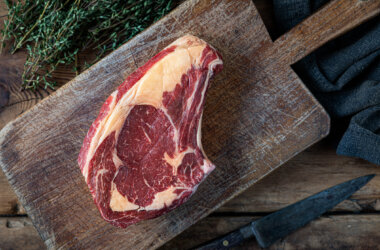
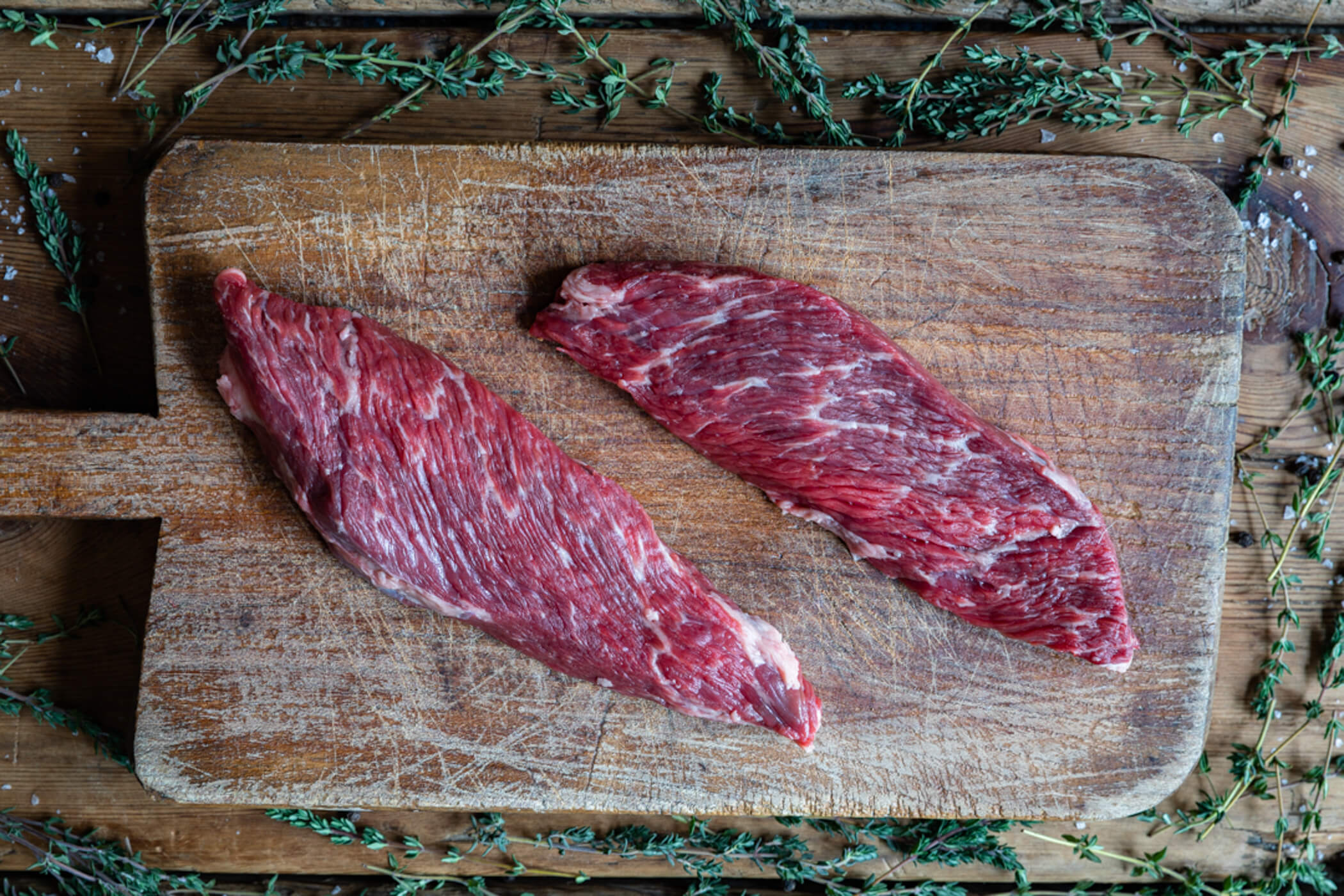
How to Cook Denver Steak: Denver steak is cut from the cow’s front shoulder (the chuck), specifically from beneath the shoulder blade where the serratus ventralis muscle lies.

While the chuck typically sees a lot of movement, this particular muscle remains relatively tender. It takes a skilled butcher to separate it cleanly from the surrounding connective tissue, and slicing across the grain is key to maximising flavour and tenderness.

The result is one of the most tender cuts from the chuck – rich in deep beefy flavour and ideal for high-heat cooking. Equally impressive is its generous intramuscular marbling, which keeps the steak juicy as it cooks.

For more exceptional cuts like this, shop our whole carcass artisan steak collection.

Denver Steak Cooking Time

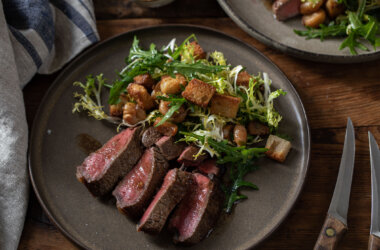
Thanks to its generous intramuscular marbling, Denver steak can be cooked to medium and still deliver great flavour. That said, we think medium-rare is the sweet spot – tender, juicy, and full of character. Aim for a total cooking time of around 6–8 minutes, depending on thickness.

How to Cook a Denver Steak to Perfection

  1. Take your Denver steaks out of the refrigerator, remove from the vacuum packaging, and pat dry with kitchen paper. Allow them to come up to room temperature.
  2. Heat a griddle or heavy-based frying pan until smoking hot.
  3. Just before cooking, rub olive oil over both sides of the steaks and season generously with salt and pepper.
  4. Place the steaks in the pan and brown on both sides—about 90 seconds per side. The steaks will naturally release from the pan once a crust has formed, so if they stick, wait a few moments and try again. You’re looking for a rich, golden crust.
  5. Reduce the heat and continue cooking for a total of 6–8 minutes, turning the steaks roughly every 90 seconds until they reach medium-rare (see top tips below).
  6. Remove from the pan and rest in a warm place for at least 5 minutes before serving.

Top Tips for Cooking Denver Steak

  • To check the doneness of your Denver steak while cooking, the finger test is a quick and reliable guide – especially if you’re aiming for that ideal medium-rare finish.
  • Lightly press the tip of your middle finger to the tip of your thumb, then feel the base of your thumb. That soft but slightly springy texture? That’s what a medium-rare steak should feel like. It should resemble the feel of your cheek – tender, yielding, but still with structure.
  • Use this as a touch test during cooking to avoid overcooking and to help you consistently achieve perfectly cooked Denver steak every time.

Denver steak recipe

For a generous, full-flavoured take, try George Ryle’s Denver Steak with Braised Spinach and Bone Marrow Butter. The preparation takes time, but the result is well worth it – tender, richly marbled steak paired with slow-cooked greens and an indulgent butter that melts beautifully into the meat. A standout dish built on simplicity and depth.

Order meat online

Instagram

  • Do you love bacon?

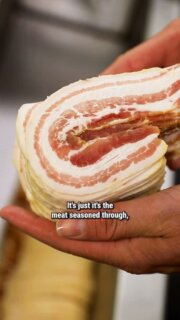
Here’s our in house science and history teacher, @grylos, talking osmosis, salt, and the slow work of dry curing bacon.
  • Burns Night, 25 January.

Two pastry wrapped tributes to Robert Burns.
Made with chef Josh Whitehead of @finer_pleasures.

A haggis sausage roll with coarse cut native breed pork.
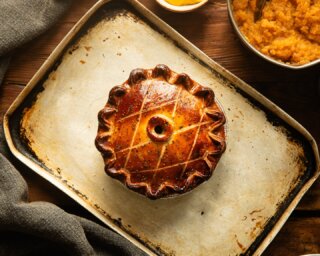
A hot water crust pie of mutton and lamb haggis, oats, onions and spice.

Food for a cold night.
  • On many a recipe, the instruction ‘brown your mince’ is set out plainly enough. And yet, deep into January, when slow cooking is very much back on the table and recipes keep asking for the same thing, it feels worth saying that this is meant quite literally. Brown your mince. It does not say grey it.

Browning is a process, not a gesture. It takes time, heat, and a little patience, and what you are doing is building flavour, not simply warming meat through. When mince is rushed, crowded into the pan, stirred too soon, it stews. It turns grey. The moisture stays put and the flavour never quite arrives.

So here is @grylos , taking a moment to explain the difference, and to remind you that if you want the most from good produce, you have to let it work. Give it space. Leave it alone long enough to colour properly. Let it smell right before you move on.

Because this is slow food month, after all. There is no need to hurry. Take your time, do it properly, and you will taste the difference in the finished dish.
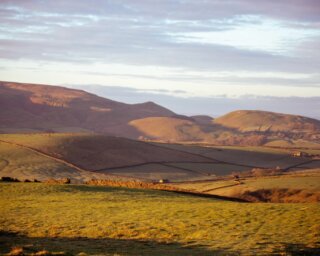
  • Winter. It felt strange being in Yorkshire, watching the news from the south where snow lay thick and sudden, while here January had arrived quietly, cold and wet, but not yet truly winter as we know it. Up here the season has always moved at a slower pace, and there is something steadying in remembering that. The idea that we should charge straight on after Christmas is a modern one, and it sits awkwardly with bodies and minds that are still tuned to pause, to take stock, to look back at the year just gone. 

Out on the farms, there is no rush but plenty to do. Some are already lambing, others preparing for it, working with the land rather than against it as the days begin, almost imperceptibly, to lengthen. The fields are still subdued, but there are signs, if you look closely, that life is beginning to stir again.

And so, it feels right, now and then, to slow everything down and simply notice Yorkshire in January, not as something to be endured, but as a quiet and beautiful part of the year in its own right.
  • Now the depths of winter descend. The excitement of Christmas has passed, but do not let that fool you. These months are still some of the best for eating roasted meats and leaning into deeper, newer flavour profiles.

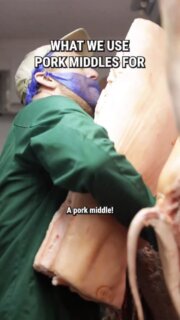
Here is a traditional, and not so traditional, approach to our pork middle. We send a lot of our pork middles out to chefs, ready for them to stuff and roast in their own way, using both the loin and the belly. You will see plenty of porchetta on the market that uses just the belly. This is different. Using both cuts gives balance, structure, and allows the flavour of the pork itself to shine.

For our website, we also offer a less traditional version, stuffed simply with our fennel sausage meat. That brings seasoning right through the joint, and a little extra fat to help keep everything moist during a long, slow roast.

It is a brilliant cut to have, either as a roast or the following day, sliced cold for sandwiches.
  • Chef George Ryle @grylos, signing off the year with us.

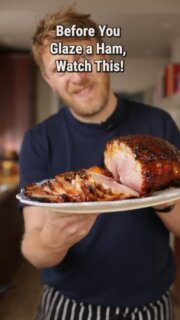
A delicious Christmas ham glaze.
Nothing clever. Nothing rushed, but some useful tips. 

Thank you for watching, cooking along, and sticking with us this year.

Merry Christmas.
  • We like doing things properly. Smoking is one of them.
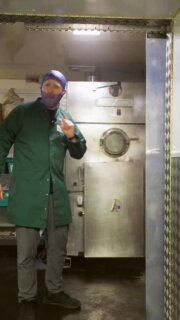
It is not sterile or shiny. But have you ever been to a smokehouse in Arbroath? If you have, you will know what this looks like. That black tar on the walls comes from years of smoke and years of meat. That is the point.

We still smoke food properly. Many do not. Much of what you see labelled as smoked has barely seen smoke at all. For us, that matters. Food done properly matters. It will matter even more in the years ahead.

So when you buy something from us and it says smoked, you know exactly what that means.
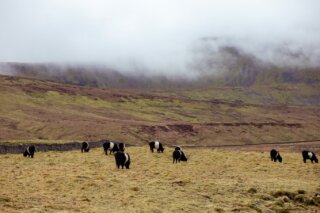
  • Much of the beef on tables and in kitchens at this time of year comes from Bill Whittaker’s herd of Belted Galloway cattle.

They graze land in the shadow of Ingleborough, feeding on diverse forage shaped by limestone ground. It is land that suits the cattle, and cattle that suit the land.

We usually receive Bill’s beef once a year, when it is ready. It is always a good moment when it arrives. Beef like this cannot be rushed. It follows the season.

This is the way we like to work. Smaller farms, running the right cattle on the right ground, producing beef that fits the rhythm of the year.

As we head into the new year, we are always keen to hear from other farmers working with native breeds, regenerative systems, and properly pasture-fed livestock. If that sounds like you, and you have something coming through, do get in touch.
Do you love bacon? Here’s our in house science and history teacher, @grylos, talking osmosis, salt, and the slow work of dry curing bacon.
6 days ago
3408
View on Instagram |
1/8
Burns Night, 25 January.

Two pastry wrapped tributes to Robert Burns.
Made with chef Josh Whitehead of @finer_pleasures.

A haggis sausage roll with coarse cut native breed pork.
A hot water crust pie of mutton and lamb haggis, oats, onions and spice.

Food for a cold night.
Burns Night, 25 January.

Two pastry wrapped tributes to Robert Burns.
Made with chef Josh Whitehead of @finer_pleasures.

A haggis sausage roll with coarse cut native breed pork.
A hot water crust pie of mutton and lamb haggis, oats, onions and spice.

Food for a cold night.
Burns Night, 25 January.

Two pastry wrapped tributes to Robert Burns.
Made with chef Josh Whitehead of @finer_pleasures.

A haggis sausage roll with coarse cut native breed pork.
A hot water crust pie of mutton and lamb haggis, oats, onions and spice.

Food for a cold night.
Burns Night, 25 January.

Two pastry wrapped tributes to Robert Burns.
Made with chef Josh Whitehead of @finer_pleasures.

A haggis sausage roll with coarse cut native breed pork.
A hot water crust pie of mutton and lamb haggis, oats, onions and spice.

Food for a cold night.
Burns Night, 25 January.

Two pastry wrapped tributes to Robert Burns.
Made with chef Josh Whitehead of @finer_pleasures.

A haggis sausage roll with coarse cut native breed pork.
A hot water crust pie of mutton and lamb haggis, oats, onions and spice.

Food for a cold night.
Burns Night, 25 January.

Two pastry wrapped tributes to Robert Burns.
Made with chef Josh Whitehead of @finer_pleasures.

A haggis sausage roll with coarse cut native breed pork.
A hot water crust pie of mutton and lamb haggis, oats, onions and spice.

Food for a cold night.
Burns Night, 25 January. Two pastry wrapped tributes to Robert Burns. Made with chef Josh Whitehead of @finer_pleasures. A haggis sausage roll with coarse cut native breed pork. A hot water crust pie of mutton and lamb haggis, oats, onions and spice. Food for a cold night.
7 days ago
1056
View on Instagram |
2/8
On many a recipe, the instruction ‘brown your mince’ is set out plainly enough. And yet, deep into January, when slow cooking is very much back on the table and recipes keep asking for the same thing, it feels worth saying that this is meant quite literally. Brown your mince. It does not say grey it. Browning is a process, not a gesture. It takes time, heat, and a little patience, and what you are doing is building flavour, not simply warming meat through. When mince is rushed, crowded into the pan, stirred too soon, it stews. It turns grey. The moisture stays put and the flavour never quite arrives. So here is @grylos , taking a moment to explain the difference, and to remind you that if you want the most from good produce, you have to let it work. Give it space. Leave it alone long enough to colour properly. Let it smell right before you move on. Because this is slow food month, after all. There is no need to hurry. Take your time, do it properly, and you will taste the difference in the finished dish.
2 weeks ago
2727
View on Instagram |
3/8
Winter. It felt strange being in Yorkshire, watching the news from the south where snow lay thick and sudden, while here January had arrived quietly, cold and wet, but not yet truly winter as we know it. Up here the season has always moved at a slower pace, and there is something steadying in remembering that. The idea that we should charge straight on after Christmas is a modern one, and it sits awkwardly with bodies and minds that are still tuned to pause, to take stock, to look back at the year just gone. 

Out on the farms, there is no rush but plenty to do. Some are already lambing, others preparing for it, working with the land rather than against it as the days begin, almost imperceptibly, to lengthen. The fields are still subdued, but there are signs, if you look closely, that life is beginning to stir again.

And so, it feels right, now and then, to slow everything down and simply notice Yorkshire in January, not as something to be endured, but as a quiet and beautiful part of the year in its own right.
Winter. It felt strange being in Yorkshire, watching the news from the south where snow lay thick and sudden, while here January had arrived quietly, cold and wet, but not yet truly winter as we know it. Up here the season has always moved at a slower pace, and there is something steadying in remembering that. The idea that we should charge straight on after Christmas is a modern one, and it sits awkwardly with bodies and minds that are still tuned to pause, to take stock, to look back at the year just gone. 

Out on the farms, there is no rush but plenty to do. Some are already lambing, others preparing for it, working with the land rather than against it as the days begin, almost imperceptibly, to lengthen. The fields are still subdued, but there are signs, if you look closely, that life is beginning to stir again.

And so, it feels right, now and then, to slow everything down and simply notice Yorkshire in January, not as something to be endured, but as a quiet and beautiful part of the year in its own right.
Winter. It felt strange being in Yorkshire, watching the news from the south where snow lay thick and sudden, while here January had arrived quietly, cold and wet, but not yet truly winter as we know it. Up here the season has always moved at a slower pace, and there is something steadying in remembering that. The idea that we should charge straight on after Christmas is a modern one, and it sits awkwardly with bodies and minds that are still tuned to pause, to take stock, to look back at the year just gone. 

Out on the farms, there is no rush but plenty to do. Some are already lambing, others preparing for it, working with the land rather than against it as the days begin, almost imperceptibly, to lengthen. The fields are still subdued, but there are signs, if you look closely, that life is beginning to stir again.

And so, it feels right, now and then, to slow everything down and simply notice Yorkshire in January, not as something to be endured, but as a quiet and beautiful part of the year in its own right.
Winter. It felt strange being in Yorkshire, watching the news from the south where snow lay thick and sudden, while here January had arrived quietly, cold and wet, but not yet truly winter as we know it. Up here the season has always moved at a slower pace, and there is something steadying in remembering that. The idea that we should charge straight on after Christmas is a modern one, and it sits awkwardly with bodies and minds that are still tuned to pause, to take stock, to look back at the year just gone. Out on the farms, there is no rush but plenty to do. Some are already lambing, others preparing for it, working with the land rather than against it as the days begin, almost imperceptibly, to lengthen. The fields are still subdued, but there are signs, if you look closely, that life is beginning to stir again. And so, it feels right, now and then, to slow everything down and simply notice Yorkshire in January, not as something to be endured, but as a quiet and beautiful part of the year in its own right.
3 weeks ago
672
View on Instagram |
4/8
Now the depths of winter descend. The excitement of Christmas has passed, but do not let that fool you. These months are still some of the best for eating roasted meats and leaning into deeper, newer flavour profiles. Here is a traditional, and not so traditional, approach to our pork middle. We send a lot of our pork middles out to chefs, ready for them to stuff and roast in their own way, using both the loin and the belly. You will see plenty of porchetta on the market that uses just the belly. This is different. Using both cuts gives balance, structure, and allows the flavour of the pork itself to shine. For our website, we also offer a less traditional version, stuffed simply with our fennel sausage meat. That brings seasoning right through the joint, and a little extra fat to help keep everything moist during a long, slow roast. It is a brilliant cut to have, either as a roast or the following day, sliced cold for sandwiches.
3 weeks ago
1401
View on Instagram |
5/8
Chef George Ryle @grylos, signing off the year with us. A delicious Christmas ham glaze. Nothing clever. Nothing rushed, but some useful tips. Thank you for watching, cooking along, and sticking with us this year. Merry Christmas.
1 month ago
1,30830
View on Instagram |
6/8
We like doing things properly. Smoking is one of them. It is not sterile or shiny. But have you ever been to a smokehouse in Arbroath? If you have, you will know what this looks like. That black tar on the walls comes from years of smoke and years of meat. That is the point. We still smoke food properly. Many do not. Much of what you see labelled as smoked has barely seen smoke at all. For us, that matters. Food done properly matters. It will matter even more in the years ahead. So when you buy something from us and it says smoked, you know exactly what that means.
1 month ago
36917
View on Instagram |
7/8
Much of the beef on tables and in kitchens at this time of year comes from Bill Whittaker’s herd of Belted Galloway cattle.

They graze land in the shadow of Ingleborough, feeding on diverse forage shaped by limestone ground. It is land that suits the cattle, and cattle that suit the land.

We usually receive Bill’s beef once a year, when it is ready. It is always a good moment when it arrives. Beef like this cannot be rushed. It follows the season.

This is the way we like to work. Smaller farms, running the right cattle on the right ground, producing beef that fits the rhythm of the year.

As we head into the new year, we are always keen to hear from other farmers working with native breeds, regenerative systems, and properly pasture-fed livestock. If that sounds like you, and you have something coming through, do get in touch.
Much of the beef on tables and in kitchens at this time of year comes from Bill Whittaker’s herd of Belted Galloway cattle.

They graze land in the shadow of Ingleborough, feeding on diverse forage shaped by limestone ground. It is land that suits the cattle, and cattle that suit the land.

We usually receive Bill’s beef once a year, when it is ready. It is always a good moment when it arrives. Beef like this cannot be rushed. It follows the season.

This is the way we like to work. Smaller farms, running the right cattle on the right ground, producing beef that fits the rhythm of the year.

As we head into the new year, we are always keen to hear from other farmers working with native breeds, regenerative systems, and properly pasture-fed livestock. If that sounds like you, and you have something coming through, do get in touch.
Much of the beef on tables and in kitchens at this time of year comes from Bill Whittaker’s herd of Belted Galloway cattle.

They graze land in the shadow of Ingleborough, feeding on diverse forage shaped by limestone ground. It is land that suits the cattle, and cattle that suit the land.

We usually receive Bill’s beef once a year, when it is ready. It is always a good moment when it arrives. Beef like this cannot be rushed. It follows the season.

This is the way we like to work. Smaller farms, running the right cattle on the right ground, producing beef that fits the rhythm of the year.

As we head into the new year, we are always keen to hear from other farmers working with native breeds, regenerative systems, and properly pasture-fed livestock. If that sounds like you, and you have something coming through, do get in touch.
Much of the beef on tables and in kitchens at this time of year comes from Bill Whittaker’s herd of Belted Galloway cattle.

They graze land in the shadow of Ingleborough, feeding on diverse forage shaped by limestone ground. It is land that suits the cattle, and cattle that suit the land.

We usually receive Bill’s beef once a year, when it is ready. It is always a good moment when it arrives. Beef like this cannot be rushed. It follows the season.

This is the way we like to work. Smaller farms, running the right cattle on the right ground, producing beef that fits the rhythm of the year.

As we head into the new year, we are always keen to hear from other farmers working with native breeds, regenerative systems, and properly pasture-fed livestock. If that sounds like you, and you have something coming through, do get in touch.
Much of the beef on tables and in kitchens at this time of year comes from Bill Whittaker’s herd of Belted Galloway cattle.

They graze land in the shadow of Ingleborough, feeding on diverse forage shaped by limestone ground. It is land that suits the cattle, and cattle that suit the land.

We usually receive Bill’s beef once a year, when it is ready. It is always a good moment when it arrives. Beef like this cannot be rushed. It follows the season.

This is the way we like to work. Smaller farms, running the right cattle on the right ground, producing beef that fits the rhythm of the year.

As we head into the new year, we are always keen to hear from other farmers working with native breeds, regenerative systems, and properly pasture-fed livestock. If that sounds like you, and you have something coming through, do get in touch.
Much of the beef on tables and in kitchens at this time of year comes from Bill Whittaker’s herd of Belted Galloway cattle.

They graze land in the shadow of Ingleborough, feeding on diverse forage shaped by limestone ground. It is land that suits the cattle, and cattle that suit the land.

We usually receive Bill’s beef once a year, when it is ready. It is always a good moment when it arrives. Beef like this cannot be rushed. It follows the season.

This is the way we like to work. Smaller farms, running the right cattle on the right ground, producing beef that fits the rhythm of the year.

As we head into the new year, we are always keen to hear from other farmers working with native breeds, regenerative systems, and properly pasture-fed livestock. If that sounds like you, and you have something coming through, do get in touch.
Much of the beef on tables and in kitchens at this time of year comes from Bill Whittaker’s herd of Belted Galloway cattle. They graze land in the shadow of Ingleborough, feeding on diverse forage shaped by limestone ground. It is land that suits the cattle, and cattle that suit the land. We usually receive Bill’s beef once a year, when it is ready. It is always a good moment when it arrives. Beef like this cannot be rushed. It follows the season. This is the way we like to work. Smaller farms, running the right cattle on the right ground, producing beef that fits the rhythm of the year. As we head into the new year, we are always keen to hear from other farmers working with native breeds, regenerative systems, and properly pasture-fed livestock. If that sounds like you, and you have something coming through, do get in touch.
1 month ago
1081
View on Instagram |
8/8