Sausage Recipes

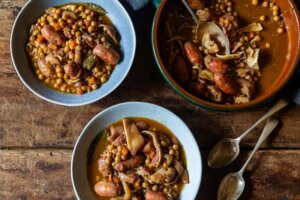
Cassoulet with Toulouse Sausage, Beans & Bacon

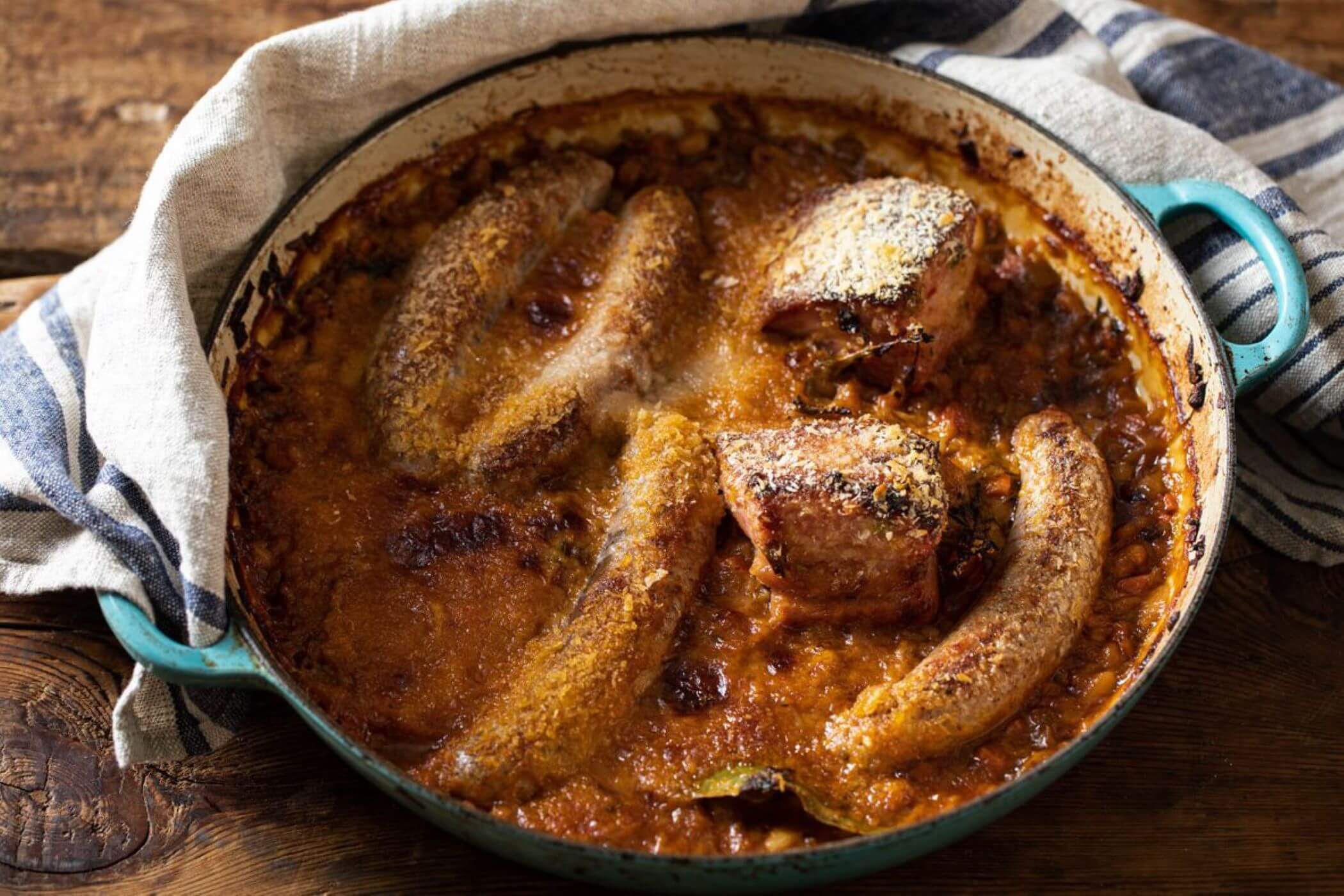
On offer here is a cassoulet recipe, a dish of porky delight where the beans act as a sponge for those flavours and pork fat – the smoke of the bacon and the garlic of the Toulouse sausage shining through. A dish that delivers both flavour and comfort in one.

Cassoulet is a dish of rare significance, known throughout the world and synonymous with one of the most famous and revered cuisines. French provincial cooking has long been held up as a beacon for all that is great about food. The essence of convivial dining – generous feasts of simple rustic fare, cooked with perfectly ripe, locally grown and reared ingredients.

It is the scene that both restaurants and households in this country have been trying to replicate for decades. While this recipe has veered off course from the classic cassoulet (due to a lack of confit goose or duck leg), it takes its inspiration from the original.

Serves: 3-4

Cook time: 1 hour 45 minutes

Ingredients

Method

  1. Drain the beans and tip into a pan. Add 600ml of the stock, 5 cloves of garlic, 2 bay leaves, and the green tops of the leeks. Bring the pan up to the boil, reduce the heat and simmer gently for 35-45 minutes. Place a cartouche over the beans to prevent too much liquid evaporating.
  2. Preheat your oven to 180°C.
  3. Separately, add a tablespoon of duck fat to a shallow, heavy-bottomed casserole dish. Once the fat is hot, place the sausages in the pan and brown them off. Then remove from the pan and set aside.
  4. To the pan, add the carrot, onion, and leeks. Season with sea salt and black pepper and cook on a gentle heat, stirring regularly for 10-minutes.
  5. Slice the remaining garlic cloves and then add them to the pan. Cook for 5-minutes.
  6. Tie the thyme and bay leaves with a piece of string. Add this to the pan, along with the tomato purée. Cook for 5-minutes, remembering to keep stirring.
  7. The beans should be fairly tender by now and only in a little stock. Pick out the leek tops and then tip the beans and their liquid into the pan with the vegetables, followed by the white wine and bring up to the boil. Stir well to make sure everything is well incorporated.
  8. Check for seasoning and adjust as necessary. A warning here, the smoked belly has a natural saltiness, so err on the side of caution with the salt.
  9. Also, at this stage, you need to check the liquid levels and add a little more stock if needed. The final dish doesn’t want to be at all ‘soupy’, but neither completely dry.
  10. Nestle the bacon pieces and the sausages into the beans and then sprinkle over the breadcrumbs. Drizzle a little olive oil over the whole thing and place in the oven for 25-30 minutes.

Order meat online

Instagram

  • We are firmly of the belief that our pork is as good as it has ever been, the breeding, the rearing, the dry ageing and of course the butchery. All of it functioning in harmony to provide us with some high-grade pork. 

Loin chops seem to be having their moment in the sun, currently a firm favourite amongst our restaurant community, and rightly so. A classic; the leaner eye meat enveloped by a lovely cover of fat, cut thick and cooked well, they are so, so good. 

A little less well known, but no less delicious, and a cracking option for sharing, our shoulder chops are a slightly different beast. We split our shoulders in half and age the so-called Boston butt, when ready, the shoulder chops are cut from this section. The eye meat is made up of the collar or neck fillet and has excellent natural marbling. You then get a little of the blade and the muscles that surround it, this is darker, more richly flavoured meat. You still get the cover of fat, which, once rendered, tastes incredible. All in all, a fantastic sharing chop and a slight point of difference from the loin chops.

Both supremely delicious!
  • The process of developing a dish with chefs is a rewarding one, made all the more so when we have the chance to eat the end product. As was the case here upon a recent (ish) visit to @rambutan_ldn 

Conversations around the best steak to use for this dish began months ago and we were able to offer our expert advice as Sofia and her team fine-tuned the balance of flavours, spices and textures. A few different cuts were trialled, and, in the end, it was our rump steaks which triumphed! Their flavour and fat able to be carried by that rich and deep curry sauce, with brighter notes and acidity being offered up by the parsley temper and little pearls of onion. It is truly a triumph. A marriage of Yorkshire beef and traditional Sri Lankan flavours and we couldn’t be prouder to see it on the menu and being enjoyed by their lucky guests!
  • What salt should you use when cooking steaks and chops? Does it matter?

Well, we have, in the past, taken some heat in the comments from people saying that we are using the wrong salt on our steaks. “You should be using fine salt!”, “flaky salt on steaks!! NO WAY!”, “It just falls off!”, to give you a few examples. 

So, to put the debate to bed we undertook an extremely controlled, scientific experiment to determine which salt is the best salt to use on your steaks. In a field, with a piece of goose skirt, a barbecue and two varieties of sea salt (that’s one important detail, to use sea salt, not table salt) and a desire to eat well seasoned steak. Poor us!

Watch the video to find our conclusions, which will also feature in an academic journal soon – a seminal piece of scientific research. 

#sodiyum #flakysalt4life
  • A recent visit to see Ed Stavely’s pigs on the Swinton Estate, where a landscape not traditionally associated with pig keeping is slowly being reshaped through careful management and a willingness to do things a little differently.

The pigs are largely native breeds, often crossed with Duroc to help them fare better through the long Yorkshire winters and the exposed conditions up on the estate. Hardy, slow-growing animals that seem to suit both the land and the philosophy behind the system.

They are part of a wider effort to restore ground that had, in places, drifted too far from balance. Their rooting clears rougher areas, disturbs the soil naturally and creates opportunities for new herbal lays, healthier pasture and eventually species-rich hay meadows to return.

There are certainly easier places to rear pigs, but it is difficult not to admire the determination to make this sort of farming work in a landscape like this, where the focus stretches beyond production alone and towards the long-term health of the land itself.
  • Take a little inspiration from our very own grill master @grylos when it comes to cooking your big, bone in steaks. This method takes time, skill and plenty of patience but the result is a deep, dark char, beautiful blushing pink flesh and melting buttery fat. We can safely say, after this day we spent in the field, that it is well worth the effort. Close to steak perfection. 

Plus, he knocked up a charred spring vegetable green sauce, which was an ideal foil for that most delicious of steaks – clever boy. 

The idea is to spend time building a char and crust with many short visits to the hottest part of the grill, interspersed with time away from the grill, somewhere warm, slowly coming up to temperature. Placing it directly on the coals at the end is a bit of a gimmick, however, it did yield excellent results, so maybe give it a go (only if you have good quality charcoal though!)!

Steak perfection!!
  • To our friends down south, you might have noticed Yorkshire is still a good few weeks behind the march towards summer. The trees are only just coming into leaf in the Dales, especially up in Upper Wharfedale, and that gives us a little more time with the wild garlic.

Here is @grylos with what feels like one of his best ideas to date.

A proper use of those essential carcass balance cuts. Lamb hearts, though this would work just as well with tongues, sweetbreads or liver. Cooked simply, well seasoned, finished with a little lemon.

Alongside it, wild garlic taken from the darker, shaded parts of the woodland where it is still fresh. Even if it has started to turn, it holds up. Treated like spinach, wilted down, then cooked with oil, salt and cream, left to reduce until it becomes rich and full of flavour.

A brilliant little starter for our chefs blackboards, and something that will more than hold its own at home.

A dish for the season, if ever there was one.
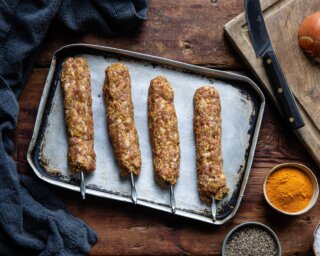
  • We are reaching the end of our wild garlic sausages, as the season begins to slip away and only the deeper, shaded pockets of woodland still offer the tender leaves we rely on.

It is from these cooler, quieter areas that we are still able to gather what we need, though even here the plants are beginning to turn, and once the flowers arrive, the flavour shifts and our time with wild garlic comes to a close for another year.

As ever, we follow the season rather than stretch it, working with what is left while it is still at its best, which means if you have been enjoying them, or have been meaning to try them, now is the time to cook them or put a few aside for later.

Before long, they will be gone, and we will wait for spring to bring them back again.
  • A while back we had the pleasure of visiting @petea25 at the @cantonarms Arms, where we spoke about their ever evolving menu, a place that is not afraid to cook things until they are gone and then move on to something new.

We saw how they treated the Swaledale pork chop, and it told you everything you needed to know. Cooked with care, handled properly, and full of flavour.

It was, simply, delicious.
We are firmly of the belief that our pork is as good as it has ever been, the breeding, the rearing, the dry ageing and of course the butchery. All of it functioning in harmony to provide us with some high-grade pork. Loin chops seem to be having their moment in the sun, currently a firm favourite amongst our restaurant community, and rightly so. A classic; the leaner eye meat enveloped by a lovely cover of fat, cut thick and cooked well, they are so, so good. A little less well known, but no less delicious, and a cracking option for sharing, our shoulder chops are a slightly different beast. We split our shoulders in half and age the so-called Boston butt, when ready, the shoulder chops are cut from this section. The eye meat is made up of the collar or neck fillet and has excellent natural marbling. You then get a little of the blade and the muscles that surround it, this is darker, more richly flavoured meat. You still get the cover of fat, which, once rendered, tastes incredible. All in all, a fantastic sharing chop and a slight point of difference from the loin chops. Both supremely delicious!
4 days ago
847
View on Instagram |
1/8
The process of developing a dish with chefs is a rewarding one, made all the more so when we have the chance to eat the end product. As was the case here upon a recent (ish) visit to @rambutan_ldn Conversations around the best steak to use for this dish began months ago and we were able to offer our expert advice as Sofia and her team fine-tuned the balance of flavours, spices and textures. A few different cuts were trialled, and, in the end, it was our rump steaks which triumphed! Their flavour and fat able to be carried by that rich and deep curry sauce, with brighter notes and acidity being offered up by the parsley temper and little pearls of onion. It is truly a triumph. A marriage of Yorkshire beef and traditional Sri Lankan flavours and we couldn’t be prouder to see it on the menu and being enjoyed by their lucky guests!
1 week ago
735
View on Instagram |
2/8
What salt should you use when cooking steaks and chops? Does it matter? Well, we have, in the past, taken some heat in the comments from people saying that we are using the wrong salt on our steaks. “You should be using fine salt!”, “flaky salt on steaks!! NO WAY!”, “It just falls off!”, to give you a few examples. So, to put the debate to bed we undertook an extremely controlled, scientific experiment to determine which salt is the best salt to use on your steaks. In a field, with a piece of goose skirt, a barbecue and two varieties of sea salt (that’s one important detail, to use sea salt, not table salt) and a desire to eat well seasoned steak. Poor us! Watch the video to find our conclusions, which will also feature in an academic journal soon – a seminal piece of scientific research. #sodiyum #flakysalt4life
2 weeks ago
13215
View on Instagram |
3/8
A recent visit to see Ed Stavely’s pigs on the Swinton Estate, where a landscape not traditionally associated with pig keeping is slowly being reshaped through careful management and a willingness to do things a little differently.

The pigs are largely native breeds, often crossed with Duroc to help them fare better through the long Yorkshire winters and the exposed conditions up on the estate. Hardy, slow-growing animals that seem to suit both the land and the philosophy behind the system.

They are part of a wider effort to restore ground that had, in places, drifted too far from balance. Their rooting clears rougher areas, disturbs the soil naturally and creates opportunities for new herbal lays, healthier pasture and eventually species-rich hay meadows to return.

There are certainly easier places to rear pigs, but it is difficult not to admire the determination to make this sort of farming work in a landscape like this, where the focus stretches beyond production alone and towards the long-term health of the land itself.
A recent visit to see Ed Stavely’s pigs on the Swinton Estate, where a landscape not traditionally associated with pig keeping is slowly being reshaped through careful management and a willingness to do things a little differently.

The pigs are largely native breeds, often crossed with Duroc to help them fare better through the long Yorkshire winters and the exposed conditions up on the estate. Hardy, slow-growing animals that seem to suit both the land and the philosophy behind the system.

They are part of a wider effort to restore ground that had, in places, drifted too far from balance. Their rooting clears rougher areas, disturbs the soil naturally and creates opportunities for new herbal lays, healthier pasture and eventually species-rich hay meadows to return.

There are certainly easier places to rear pigs, but it is difficult not to admire the determination to make this sort of farming work in a landscape like this, where the focus stretches beyond production alone and towards the long-term health of the land itself.
A recent visit to see Ed Stavely’s pigs on the Swinton Estate, where a landscape not traditionally associated with pig keeping is slowly being reshaped through careful management and a willingness to do things a little differently.

The pigs are largely native breeds, often crossed with Duroc to help them fare better through the long Yorkshire winters and the exposed conditions up on the estate. Hardy, slow-growing animals that seem to suit both the land and the philosophy behind the system.

They are part of a wider effort to restore ground that had, in places, drifted too far from balance. Their rooting clears rougher areas, disturbs the soil naturally and creates opportunities for new herbal lays, healthier pasture and eventually species-rich hay meadows to return.

There are certainly easier places to rear pigs, but it is difficult not to admire the determination to make this sort of farming work in a landscape like this, where the focus stretches beyond production alone and towards the long-term health of the land itself.
A recent visit to see Ed Stavely’s pigs on the Swinton Estate, where a landscape not traditionally associated with pig keeping is slowly being reshaped through careful management and a willingness to do things a little differently.

The pigs are largely native breeds, often crossed with Duroc to help them fare better through the long Yorkshire winters and the exposed conditions up on the estate. Hardy, slow-growing animals that seem to suit both the land and the philosophy behind the system.

They are part of a wider effort to restore ground that had, in places, drifted too far from balance. Their rooting clears rougher areas, disturbs the soil naturally and creates opportunities for new herbal lays, healthier pasture and eventually species-rich hay meadows to return.

There are certainly easier places to rear pigs, but it is difficult not to admire the determination to make this sort of farming work in a landscape like this, where the focus stretches beyond production alone and towards the long-term health of the land itself.
A recent visit to see Ed Stavely’s pigs on the Swinton Estate, where a landscape not traditionally associated with pig keeping is slowly being reshaped through careful management and a willingness to do things a little differently. The pigs are largely native breeds, often crossed with Duroc to help them fare better through the long Yorkshire winters and the exposed conditions up on the estate. Hardy, slow-growing animals that seem to suit both the land and the philosophy behind the system. They are part of a wider effort to restore ground that had, in places, drifted too far from balance. Their rooting clears rougher areas, disturbs the soil naturally and creates opportunities for new herbal lays, healthier pasture and eventually species-rich hay meadows to return. There are certainly easier places to rear pigs, but it is difficult not to admire the determination to make this sort of farming work in a landscape like this, where the focus stretches beyond production alone and towards the long-term health of the land itself.
3 weeks ago
462
View on Instagram |
4/8
Take a little inspiration from our very own grill master @grylos when it comes to cooking your big, bone in steaks. This method takes time, skill and plenty of patience but the result is a deep, dark char, beautiful blushing pink flesh and melting buttery fat. We can safely say, after this day we spent in the field, that it is well worth the effort. Close to steak perfection. Plus, he knocked up a charred spring vegetable green sauce, which was an ideal foil for that most delicious of steaks – clever boy. The idea is to spend time building a char and crust with many short visits to the hottest part of the grill, interspersed with time away from the grill, somewhere warm, slowly coming up to temperature. Placing it directly on the coals at the end is a bit of a gimmick, however, it did yield excellent results, so maybe give it a go (only if you have good quality charcoal though!)! Steak perfection!!
1 month ago
1,28832
View on Instagram |
5/8
To our friends down south, you might have noticed Yorkshire is still a good few weeks behind the march towards summer. The trees are only just coming into leaf in the Dales, especially up in Upper Wharfedale, and that gives us a little more time with the wild garlic. Here is @grylos with what feels like one of his best ideas to date. A proper use of those essential carcass balance cuts. Lamb hearts, though this would work just as well with tongues, sweetbreads or liver. Cooked simply, well seasoned, finished with a little lemon. Alongside it, wild garlic taken from the darker, shaded parts of the woodland where it is still fresh. Even if it has started to turn, it holds up. Treated like spinach, wilted down, then cooked with oil, salt and cream, left to reduce until it becomes rich and full of flavour. A brilliant little starter for our chefs blackboards, and something that will more than hold its own at home. A dish for the season, if ever there was one.
1 month ago
1839
View on Instagram |
6/8
We are reaching the end of our wild garlic sausages, as the season begins to slip away and only the deeper, shaded pockets of woodland still offer the tender leaves we rely on.

It is from these cooler, quieter areas that we are still able to gather what we need, though even here the plants are beginning to turn, and once the flowers arrive, the flavour shifts and our time with wild garlic comes to a close for another year.

As ever, we follow the season rather than stretch it, working with what is left while it is still at its best, which means if you have been enjoying them, or have been meaning to try them, now is the time to cook them or put a few aside for later.

Before long, they will be gone, and we will wait for spring to bring them back again.
We are reaching the end of our wild garlic sausages, as the season begins to slip away and only the deeper, shaded pockets of woodland still offer the tender leaves we rely on.

It is from these cooler, quieter areas that we are still able to gather what we need, though even here the plants are beginning to turn, and once the flowers arrive, the flavour shifts and our time with wild garlic comes to a close for another year.

As ever, we follow the season rather than stretch it, working with what is left while it is still at its best, which means if you have been enjoying them, or have been meaning to try them, now is the time to cook them or put a few aside for later.

Before long, they will be gone, and we will wait for spring to bring them back again.
We are reaching the end of our wild garlic sausages, as the season begins to slip away and only the deeper, shaded pockets of woodland still offer the tender leaves we rely on.

It is from these cooler, quieter areas that we are still able to gather what we need, though even here the plants are beginning to turn, and once the flowers arrive, the flavour shifts and our time with wild garlic comes to a close for another year.

As ever, we follow the season rather than stretch it, working with what is left while it is still at its best, which means if you have been enjoying them, or have been meaning to try them, now is the time to cook them or put a few aside for later.

Before long, they will be gone, and we will wait for spring to bring them back again.
We are reaching the end of our wild garlic sausages, as the season begins to slip away and only the deeper, shaded pockets of woodland still offer the tender leaves we rely on. It is from these cooler, quieter areas that we are still able to gather what we need, though even here the plants are beginning to turn, and once the flowers arrive, the flavour shifts and our time with wild garlic comes to a close for another year. As ever, we follow the season rather than stretch it, working with what is left while it is still at its best, which means if you have been enjoying them, or have been meaning to try them, now is the time to cook them or put a few aside for later. Before long, they will be gone, and we will wait for spring to bring them back again.
1 month ago
761
View on Instagram |
7/8
A while back we had the pleasure of visiting @petea25 at the @cantonarms Arms, where we spoke about their ever evolving menu, a place that is not afraid to cook things until they are gone and then move on to something new. We saw how they treated the Swaledale pork chop, and it told you everything you needed to know. Cooked with care, handled properly, and full of flavour. It was, simply, delicious.
1 month ago
38110
View on Instagram |
8/8