How-To Guides

How to Cook a Cumberland Sausage

What Makes a Cumberland Sausage Ring Unique?

How to Cook a Cumberland Sausage: A Traditional British Favourite
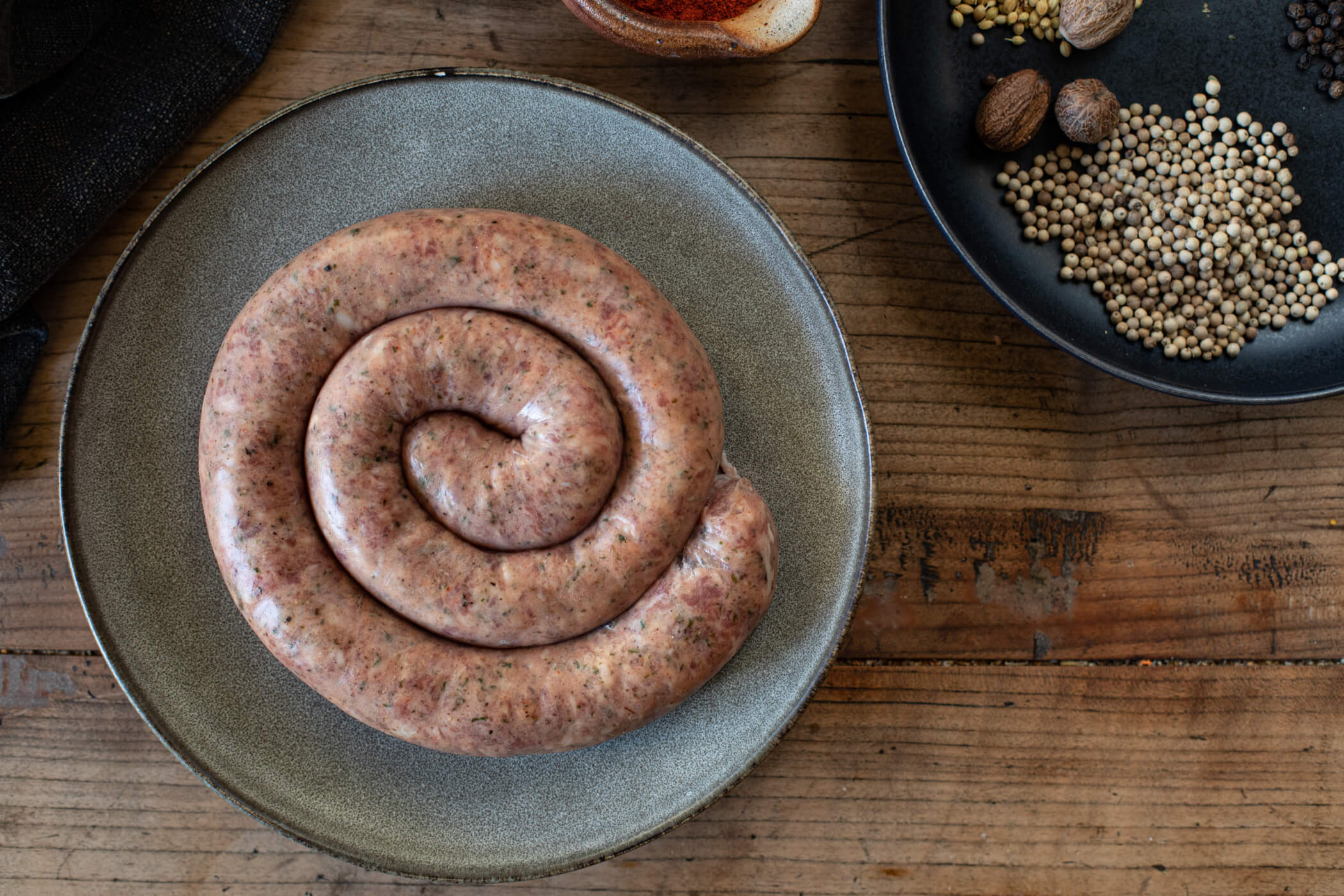
A famous name among sausage enthusiasts and meat lovers across the UK, the Cumberland sausage is a classic coiled (unlinked) sausage, traditionally made in a ring rather than as individual links. This iconic sausage must contain a minimum of 80% pork, known for its bold, peppery seasoning and hearty texture.

While modern versions have toned down the spice to suit changing palates, Swaledale Butchers stays true to the original recipe, delivering a potent pepper hit, balanced with cayenne, nutmeg, ginger, and mace. Another key feature of Cumberland sausage is its chunky texture, as the meat is chopped rather than finely minced, ensuring a satisfyingly robust bite.

Using our preferred shoulder and belly cuts, these succulent sausages have just the right amount of fat content for a juicy, meaty, and flavoursome experience – perfect for traditional British breakfasts, sausage casseroles, or a classic sausage and creamy mashed potato.

Cumberland Sausage Ring: Cooking Time & Best Methods

Best Way to Cook a Cumberland Sausage
The traditional Cumberland sausage is known for its signature coiled shape and bold seasoning. Cooking it properly ensures a juicy, flavourful bite with a perfect balance of caramelisation and tenderness.

Traditional Cumberland Sausage Cooking Method
The most traditional way to cook a Cumberland sausage is to slow-bake it in the oven at a medium heat. This allows the seasoning to fully develop and ensures the sausage cooks evenly without bursting.

How Long to Cook a Cumberland Sausage

  • Oven-Baked: Place the Cumberland sausage ring on a lined baking tray and bake at 180°C (fan) / 200°C for 15-20 minutes, turning halfway through for an even cook.
  • Pan-Fried: Heat a non-stick frying pan over medium-low heat, add a splash of oil, and fry the sausage for 12-15 minutes, turning frequently to develop a rich, golden crust.
  • Barbecued: Cook over medium-hot coals, turning occasionally, for 10-12 minutes, ensuring it is cooked through without drying out.

Pan-Fry vs Oven-Bake: Cumberland Sausage

  • Oven-baking is the best option for a slow, even cook with minimal effort, keeping the sausage juicy inside while crisping up the casing.
  • Pan-frying delivers a beautifully caramelised exterior but requires careful attention to prevent burning.
  • Barbecuing adds a delicious smoky depth, making it perfect for outdoor cooking.

For best results, allow the sausage to come to room temperature for 30 minutes before cooking and let it rest for a few minutes after cooking to lock in the juices.

How to Cook a Cumberland Sausage Ring in the Oven

  1. Remove your Cumberland sausage ring from the packaging and pat it dry with kitchen paper to remove excess moisture.
  2. Preheat your oven to 200ºC (fan 180ºC).
  3. Lightly rub a little olive oil over the sausage ring to enhance browning.
  4. Place the sausage in a non-stick or lined baking tray, ensuring the coil stays intact.
  5. Bake for 15-20 minutes, turning occasionally, until the top is golden brown and crisp.
  6. Check that the sausage is cooked through, with no pinkness in the centre.
  7. Rest for a few minutes before serving to allow the juices to settle.
  8. Tuck in and enjoy!

How to Cook a Cumberland Sausage Ring in a Frying Pan

  1. Remove your Cumberland sausage ring from the packaging and pat it dry with kitchen paper.
  2. Place a non-stick frying pan over medium-low heat and add a small drizzle of olive oil.
  3. Carefully place the sausage ring in the pan, keeping the coil intact.
  4. Turn the sausage approximately every 4 minutes to ensure even cooking and browning on all sides.
  5. Cook for around 15-20 minutes – resist the temptation to turn the heat up too high. The key is to cook it low and slow, allowing the sausage to heat evenly while developing a beautiful golden-brown crust.
  6. Check the sausage is cooked through, with no pinkness in the centre.
  7. Rest for a few minutes before serving.
  8. Tuck in and enjoy!

Top Tips for Cooking a Cumberland Sausage Ring

Bring to Room Temperature – Take your Cumberland sausage ring out of the fridge 30 minutes before cooking to ensure even cooking.

🔥 Low & Slow is Best – Avoid high heat, as it can dry out the sausage and cause the casing to split. A medium-low heat allows the fat to render properly, keeping the sausage juicy and full of flavour.

🥄 Turn Regularly – Whether you’re pan-frying or oven-baking, turn your sausage ring every few minutes to achieve an even golden-brown crust without burning.

🧈 Use the Right Fat – A small drizzle of olive oil helps prevent sticking, but don’t overdo it – Cumberland sausages have plenty of natural fat that will render out during cooking.

🌡️ Check for Doneness – The best way to check if your Cumberland sausage ring is fully cooked is by using a meat thermometer. The internal temperature should reach 75°C for safe consumption. If you don’t have a thermometer, cut into the thickest part of the sausage – there should be no pinkness and the juices should run clear.

🍽️ Rest Before Serving – Once cooked, allow the sausage ring to rest for a few minutes before slicing. This helps the juices redistribute, keeping it moist and tender.

💡 Experiment with Cooking Methods – While oven-baking and pan-frying are the most common methods, try grilling your Cumberland sausage ring over indirect heat for a delicious, smoky finish.

Cumberland Sausage Ring Recipe Ideas

The Cumberland sausage ring is as versatile as it is delicious, making it a staple for a variety of comforting dishes. Whether you’re serving it as a showstopping centrepiece or incorporating it into a hearty meal, this coiled sausage offers bold, peppery flavour and a satisfying meaty bite.

Classic Comfort: Cumberland Sausage with Creamy Mash & Onion Gravy
A traditional pairing that never fails – serve your Cumberland sausage ring with buttery mashed potatoes and rich caramelised onion gravy for the ultimate British comfort food.

A Hearty Breakfast Addition
For those who love a full English breakfast, the Cumberland sausage ring is a perfect centrepiece, bringing depth of flavour to eggs, bacon, tomatoes, and black pudding. Simply slice it into thick rounds or serve whole for a rustic touch.

One-Pot Wonder
Sam Nixon’s Cumberland Sausage Cassoulet is the answer to low-effort, high-reward cooking. Slow-cooked in a rich, herby tomato sauce with butter beans and smoked bacon, it delivers all the warmth and comfort of a classic French cassoulet in just one pot – perfect for an easy midweek meal. See the full recipe on our journal – a dish packed with bold, comforting flavours and minimal washing up.

Whichever way you choose to enjoy it, the Cumberland sausage ring guarantees hearty, satisfying flavour in every bite.


Order meat online

Instagram

  • Highland cattle get photographed a lot. They are turned into cuddly toys. But beneath the coat is a hardy animal that can stand the worst of a Yorkshire winter. That is why Andy Lambert grazes them high on the Dales, on rough ground where few other breeds would thrive. They are the one of the few cattle that can turn this hard landscape into rich, delicious beef. It feeds our chefs and home cooks across the country. We are grateful for them, and it is always a pleasure to see them on the tops.
  • A ragù alla bolognese with a few top tips from chef @grylos.

Beef, pork, and a little surprise at the end for real depth. Slow cooked until rich, deep, and properly delicious.

Find the full recipe on our journal and cook it slow this weekend. What’s your secret to a good bolognese?

@grylos 
@tom_saunderson
  • We love yellow fat. Do you?

This is an old Dexter. You do not see beef like this every day. When one comes in, we get a little excited.
  • One of the motivations for operating a whole carcass butchery model is access to the other bits – offal and ‘butchers cuts’. For us, they are just as important a part of the picture as the more famous, prime cuts. 
So, it gives us immense satisfaction that we now sell more of these delights then we ever have. For chefs understand that these cuts and organs offer something a little different. Yes, in terms of flavour and value but also, we think, in terms of creativity. A ribeye or a rack of lamb might inspire more classic garnishes, whereas an ox heart or a pig’s tongue allow the imaginations run a little freer. It takes skill and touch to cook these cuts well and the results can be extraordinary.
We’ll keep buying the whole carcasses, you guys keep cooking the offal and butcher’s cuts!
  • Small herds, native breeds, and wild game, all farmed and sourced with care, are what we’re about and what we care deeply for.

The partridge, often called the hedge chicken, is one of the best introductions to game. Mild, tender, full of flavour, and truly sustainable. In fact, we should be eating more of it to help prevent wastage from wild-shot game.

Here’s @grylos with an autumnal take on a classic: a partridge Caesar salad. It might just inspire you to give this delicious wild game a go.
  • Ceps, butter, onglet. A proper celebration of the season.

Available via our website…

Thanks @grylos
  • Anyone can age beef. Doesn’t make it good beef.

Great beef starts at its source. Well bred, right breed for the terrain, working with nature, not against it. Low stress, low stock density, fed on diverse pasture that isn’t overly rich or monocultured.

From there it’s about time. Then more time. And patience. And, to be honest, the right kit.

As ageing beef has become more popular, you see it in supermarkets and on high streets. But the reality is a lot of the kit used doesn’t stack up. It looks wow but creates mould. People push bad beef too far and try to make it sound interesting.

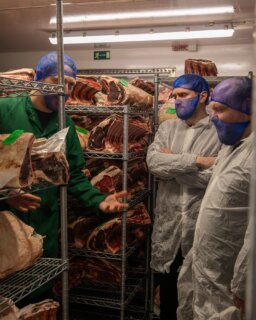
We’ve done our tests. We’ve listened to our chefs. We’ve custom-built our dry ager. And we know that when you start with quality, proper controlled ageing just enhances the flavour.
  • We’ve been gently reminded that, as butchers, we should probably say something about National Sausage Week.

Truth is, every week’s sausage week here. We love them. We make a lot of them. And, if we’re honest, we think they’re some of the best you’ll find anywhere.

Sausages sit right at the heart of proper whole-carcass butchery. They let us use everything — nose to tail — with care and craft. Made fresh, checked constantly, and built on great ingredients.

So yes, we’re partaking. Here’s 7 sausage recipes that you can find on our journal, with contributions from Jorge the Butcher, @grylos, @samnixon18, and @jacobkenedy
Highland cattle get photographed a lot. They are turned into cuddly toys. But beneath the coat is a hardy animal that can stand the worst of a Yorkshire winter. That is why Andy Lambert grazes them high on the Dales, on rough ground where few other breeds would thrive. They are the one of the few cattle that can turn this hard landscape into rich, delicious beef. It feeds our chefs and home cooks across the country. We are grateful for them, and it is always a pleasure to see them on the tops.
5 days ago
View on Instagram |
1/8
A ragù alla bolognese with a few top tips from chef @grylos. Beef, pork, and a little surprise at the end for real depth. Slow cooked until rich, deep, and properly delicious. Find the full recipe on our journal and cook it slow this weekend. What’s your secret to a good bolognese? @grylos @tom_saunderson
5 days ago
View on Instagram |
2/8
We love yellow fat. Do you? This is an old Dexter. You do not see beef like this every day. When one comes in, we get a little excited.
2 weeks ago
View on Instagram |
3/8
One of the motivations for operating a whole carcass butchery model is access to the other bits – offal and ‘butchers cuts’. For us, they are just as important a part of the picture as the more famous, prime cuts. 
So, it gives us immense satisfaction that we now sell more of these delights then we ever have. For chefs understand that these cuts and organs offer something a little different. Yes, in terms of flavour and value but also, we think, in terms of creativity. A ribeye or a rack of lamb might inspire more classic garnishes, whereas an ox heart or a pig’s tongue allow the imaginations run a little freer. It takes skill and touch to cook these cuts well and the results can be extraordinary.
We’ll keep buying the whole carcasses, you guys keep cooking the offal and butcher’s cuts!
One of the motivations for operating a whole carcass butchery model is access to the other bits – offal and ‘butchers cuts’. For us, they are just as important a part of the picture as the more famous, prime cuts. 
So, it gives us immense satisfaction that we now sell more of these delights then we ever have. For chefs understand that these cuts and organs offer something a little different. Yes, in terms of flavour and value but also, we think, in terms of creativity. A ribeye or a rack of lamb might inspire more classic garnishes, whereas an ox heart or a pig’s tongue allow the imaginations run a little freer. It takes skill and touch to cook these cuts well and the results can be extraordinary.
We’ll keep buying the whole carcasses, you guys keep cooking the offal and butcher’s cuts!
One of the motivations for operating a whole carcass butchery model is access to the other bits – offal and ‘butchers cuts’. For us, they are just as important a part of the picture as the more famous, prime cuts. 
So, it gives us immense satisfaction that we now sell more of these delights then we ever have. For chefs understand that these cuts and organs offer something a little different. Yes, in terms of flavour and value but also, we think, in terms of creativity. A ribeye or a rack of lamb might inspire more classic garnishes, whereas an ox heart or a pig’s tongue allow the imaginations run a little freer. It takes skill and touch to cook these cuts well and the results can be extraordinary.
We’ll keep buying the whole carcasses, you guys keep cooking the offal and butcher’s cuts!
One of the motivations for operating a whole carcass butchery model is access to the other bits – offal and ‘butchers cuts’. For us, they are just as important a part of the picture as the more famous, prime cuts. So, it gives us immense satisfaction that we now sell more of these delights then we ever have. For chefs understand that these cuts and organs offer something a little different. Yes, in terms of flavour and value but also, we think, in terms of creativity. A ribeye or a rack of lamb might inspire more classic garnishes, whereas an ox heart or a pig’s tongue allow the imaginations run a little freer. It takes skill and touch to cook these cuts well and the results can be extraordinary. We’ll keep buying the whole carcasses, you guys keep cooking the offal and butcher’s cuts!
3 weeks ago
View on Instagram |
4/8
Small herds, native breeds, and wild game, all farmed and sourced with care, are what we’re about and what we care deeply for. The partridge, often called the hedge chicken, is one of the best introductions to game. Mild, tender, full of flavour, and truly sustainable. In fact, we should be eating more of it to help prevent wastage from wild-shot game. Here’s @grylos with an autumnal take on a classic: a partridge Caesar salad. It might just inspire you to give this delicious wild game a go.
3 weeks ago
View on Instagram |
5/8
Ceps, butter, onglet. A proper celebration of the season. Available via our website… Thanks @grylos
4 weeks ago
View on Instagram |
6/8
Anyone can age beef. Doesn’t make it good beef. Great beef starts at its source. Well bred, right breed for the terrain, working with nature, not against it. Low stress, low stock density, fed on diverse pasture that isn’t overly rich or monocultured. From there it’s about time. Then more time. And patience. And, to be honest, the right kit. As ageing beef has become more popular, you see it in supermarkets and on high streets. But the reality is a lot of the kit used doesn’t stack up. It looks wow but creates mould. People push bad beef too far and try to make it sound interesting. We’ve done our tests. We’ve listened to our chefs. We’ve custom-built our dry ager. And we know that when you start with quality, proper controlled ageing just enhances the flavour.
1 month ago
View on Instagram |
7/8
We’ve been gently reminded that, as butchers, we should probably say something about National Sausage Week.

Truth is, every week’s sausage week here. We love them. We make a lot of them. And, if we’re honest, we think they’re some of the best you’ll find anywhere.

Sausages sit right at the heart of proper whole-carcass butchery. They let us use everything — nose to tail — with care and craft. Made fresh, checked constantly, and built on great ingredients.

So yes, we’re partaking. Here’s 7 sausage recipes that you can find on our journal, with contributions from Jorge the Butcher, @grylos, @samnixon18, and @jacobkenedy
We’ve been gently reminded that, as butchers, we should probably say something about National Sausage Week.

Truth is, every week’s sausage week here. We love them. We make a lot of them. And, if we’re honest, we think they’re some of the best you’ll find anywhere.

Sausages sit right at the heart of proper whole-carcass butchery. They let us use everything — nose to tail — with care and craft. Made fresh, checked constantly, and built on great ingredients.

So yes, we’re partaking. Here’s 7 sausage recipes that you can find on our journal, with contributions from Jorge the Butcher, @grylos, @samnixon18, and @jacobkenedy
We’ve been gently reminded that, as butchers, we should probably say something about National Sausage Week.

Truth is, every week’s sausage week here. We love them. We make a lot of them. And, if we’re honest, we think they’re some of the best you’ll find anywhere.

Sausages sit right at the heart of proper whole-carcass butchery. They let us use everything — nose to tail — with care and craft. Made fresh, checked constantly, and built on great ingredients.

So yes, we’re partaking. Here’s 7 sausage recipes that you can find on our journal, with contributions from Jorge the Butcher, @grylos, @samnixon18, and @jacobkenedy
We’ve been gently reminded that, as butchers, we should probably say something about National Sausage Week.

Truth is, every week’s sausage week here. We love them. We make a lot of them. And, if we’re honest, we think they’re some of the best you’ll find anywhere.

Sausages sit right at the heart of proper whole-carcass butchery. They let us use everything — nose to tail — with care and craft. Made fresh, checked constantly, and built on great ingredients.

So yes, we’re partaking. Here’s 7 sausage recipes that you can find on our journal, with contributions from Jorge the Butcher, @grylos, @samnixon18, and @jacobkenedy
We’ve been gently reminded that, as butchers, we should probably say something about National Sausage Week.

Truth is, every week’s sausage week here. We love them. We make a lot of them. And, if we’re honest, we think they’re some of the best you’ll find anywhere.

Sausages sit right at the heart of proper whole-carcass butchery. They let us use everything — nose to tail — with care and craft. Made fresh, checked constantly, and built on great ingredients.

So yes, we’re partaking. Here’s 7 sausage recipes that you can find on our journal, with contributions from Jorge the Butcher, @grylos, @samnixon18, and @jacobkenedy
We’ve been gently reminded that, as butchers, we should probably say something about National Sausage Week.

Truth is, every week’s sausage week here. We love them. We make a lot of them. And, if we’re honest, we think they’re some of the best you’ll find anywhere.

Sausages sit right at the heart of proper whole-carcass butchery. They let us use everything — nose to tail — with care and craft. Made fresh, checked constantly, and built on great ingredients.

So yes, we’re partaking. Here’s 7 sausage recipes that you can find on our journal, with contributions from Jorge the Butcher, @grylos, @samnixon18, and @jacobkenedy
We’ve been gently reminded that, as butchers, we should probably say something about National Sausage Week.

Truth is, every week’s sausage week here. We love them. We make a lot of them. And, if we’re honest, we think they’re some of the best you’ll find anywhere.

Sausages sit right at the heart of proper whole-carcass butchery. They let us use everything — nose to tail — with care and craft. Made fresh, checked constantly, and built on great ingredients.

So yes, we’re partaking. Here’s 7 sausage recipes that you can find on our journal, with contributions from Jorge the Butcher, @grylos, @samnixon18, and @jacobkenedy
We’ve been gently reminded that, as butchers, we should probably say something about National Sausage Week.

Truth is, every week’s sausage week here. We love them. We make a lot of them. And, if we’re honest, we think they’re some of the best you’ll find anywhere.

Sausages sit right at the heart of proper whole-carcass butchery. They let us use everything — nose to tail — with care and craft. Made fresh, checked constantly, and built on great ingredients.

So yes, we’re partaking. Here’s 7 sausage recipes that you can find on our journal, with contributions from Jorge the Butcher, @grylos, @samnixon18, and @jacobkenedy
We’ve been gently reminded that, as butchers, we should probably say something about National Sausage Week. Truth is, every week’s sausage week here. We love them. We make a lot of them. And, if we’re honest, we think they’re some of the best you’ll find anywhere. Sausages sit right at the heart of proper whole-carcass butchery. They let us use everything — nose to tail — with care and craft. Made fresh, checked constantly, and built on great ingredients. So yes, we’re partaking. Here’s 7 sausage recipes that you can find on our journal, with contributions from Jorge the Butcher, @grylos, @samnixon18, and @jacobkenedy
1 month ago
View on Instagram |
8/8