Recipes, Chicken Recipes

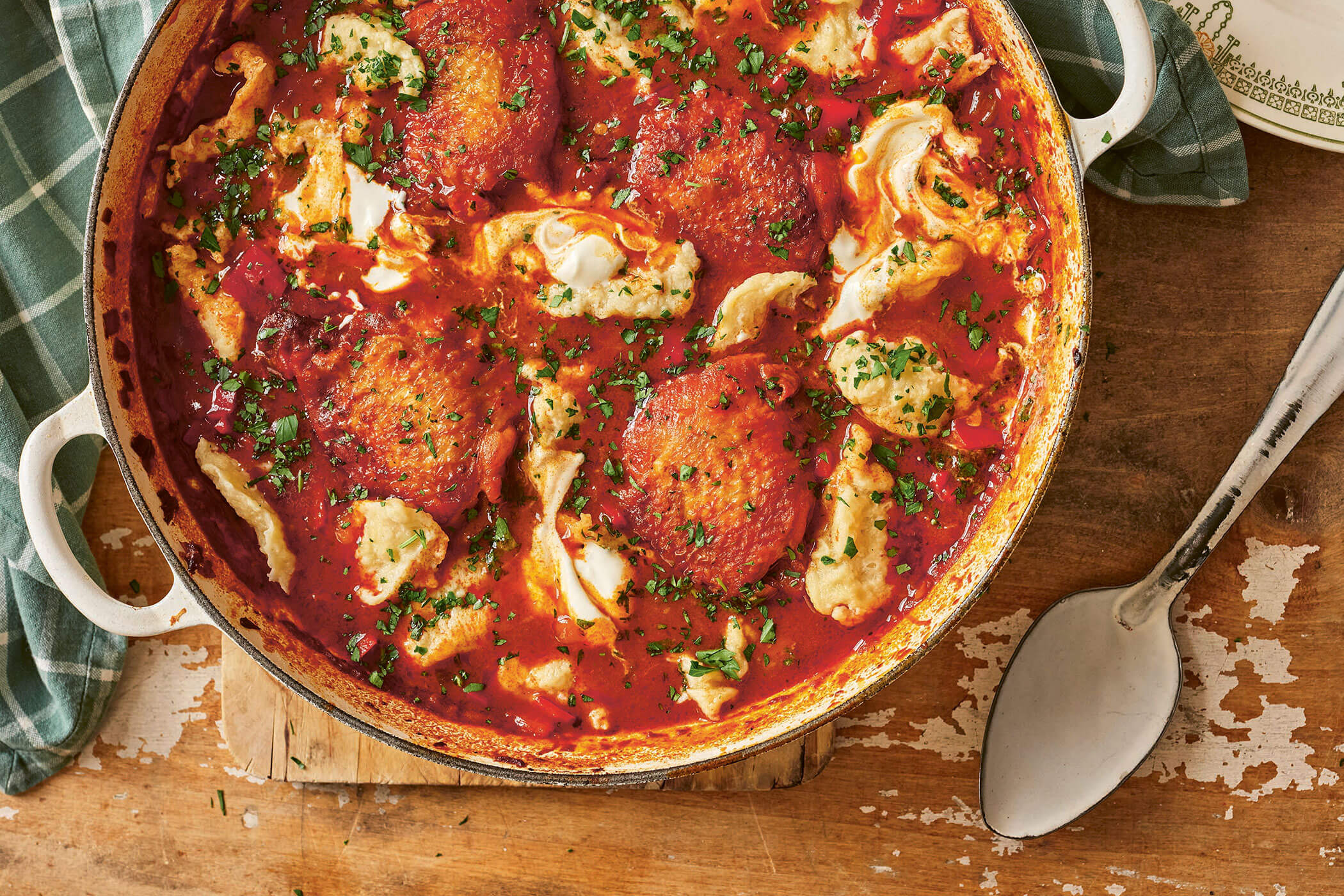
Chicken Paprikaš with Noklice

Chicken paprikaš with noklice dumplings cooked in a casserole dish, topped with fresh parsley and served with sour cream

When it comes to paprikaš, overzealousness with sweet paprika is encouraged. Famously associated with Hungary, paprikaš is incredibly popular across the Balkans, but especially Vojvodina, an autonomous province in northern Serbia (as it was in Yugoslavia also), which has a large ethnic Hungarian population. Famous for its excellent cuisine and cakes, Vojvodina lies on the south-eastern Pannonian Plain and is so incredibly fertile it was known as the breadbasket of Yugoslavia. The prevalent type of paprikaš there is fiš paprikaš, which is prepared with freshwater fish such as pike, catfish and carp, all cooked in a cauldron simmering over an open fire. A similar paprikaš is also made in Slavonia and Baranja in Croatia.

In the rest of the region, paprikaš is an umbrella term for any meat (usually chicken or pork) or vegetable stew with a paprika broth. Other stews with a thicker paprika-based sauce that are heavier on meat (any of beef, veal, pork, lamb or game) and lighter on vegetables, fall under the umbrella of gulaš (particularly in Serbia). As the name suggests, they are similar to Hungarian goulash. Paprikaš is typically served with boiled potatoes or noklice which are little dumplings similar to Hungarian nokedli and German spätzle. Feel free to substitute them with ready-made gnocchi.

This recipe is by Irina Janakievska and is kindly reproduced with her permission from The Balkan Kitchen.

Serves: 4

Prep time: 20 minutes

Cook time: 1 hour 30 minutes

Ingredients

Paprikaš

Noklice

To Serve

Method

  1. Preheat the oven to 180°C fan (400°F). Arrange the onion, pepper, and chicken pieces (skin-side up) in a casserole dish (Dutch oven). Drizzle the oil over the chicken and vegetables and sprinkle everything with the salt and a grind of black pepper. Bake in the oven, uncovered, for 25 to 30 minutes, until the chicken skin has started to crisp and become golden and the vegetables have started to caramelise.
  2. Remove from the oven and transfer the chicken pieces to a plate. Add the garlic, paprika, Bukovo pepper, flour, vegetable bouillon powder, and the salt, and tomato purée to the vegetables and stir well to combine. Gradually pour in the stock, stirring to loosen the vegetables. Return the chicken pieces to the dish, nestling them in the liquid but ensuring the skin is not submerged. Cover, return to the oven, and cook for 45 to 60 minutes.
  3. Meanwhile, prepare the noklice. Crack the eggs into a medium bowl and add the salt. Whisk with an electric whisk on high speed for 2 to 3 minutes, or until frothy. Add the oil and water and whisk for a further minute. Add the flour gradually, whisking to form a thick batter. Bring a large saucepan of salted water to a simmer. Using two teaspoons, form quenelles of batter and drop into the pan. Repeat until you have used up the batter. Cook for 2 to 3 minutes, or until the noklice float to the top. Lift them out with a slotted spoon and place them around the chicken in the casserole. Adjust the seasoning, return the casserole to the oven, and cook uncovered, for 5 to 10 minutes.
  4. Serve with fresh parsley and a dollop of sour cream or crème fraîche.

Order meat online

Instagram

  • Chef George Ryle @grylos, signing off the year with us.

A delicious Christmas ham glaze.
Nothing clever. Nothing rushed, but some useful tips. 

Thank you for watching, cooking along, and sticking with us this year.

Merry Christmas.
  • We like doing things properly. Smoking is one of them.
It is not sterile or shiny. But have you ever been to a smokehouse in Arbroath? If you have, you will know what this looks like. That black tar on the walls comes from years of smoke and years of meat. That is the point.

We still smoke food properly. Many do not. Much of what you see labelled as smoked has barely seen smoke at all. For us, that matters. Food done properly matters. It will matter even more in the years ahead.

So when you buy something from us and it says smoked, you know exactly what that means.
  • Much of the beef on tables and in kitchens at this time of year comes from Bill Whittaker’s herd of Belted Galloway cattle.

They graze land in the shadow of Ingleborough, feeding on diverse forage shaped by limestone ground. It is land that suits the cattle, and cattle that suit the land.

We usually receive Bill’s beef once a year, when it is ready. It is always a good moment when it arrives. Beef like this cannot be rushed. It follows the season.

This is the way we like to work. Smaller farms, running the right cattle on the right ground, producing beef that fits the rhythm of the year.

As we head into the new year, we are always keen to hear from other farmers working with native breeds, regenerative systems, and properly pasture-fed livestock. If that sounds like you, and you have something coming through, do get in touch.
  • Sometimes it takes a new perspective, a fresh angle, to see the value in things. To reverse a perception that might be long held and deeply ingrained. But when we achieve that moment of clarity, the bright light of revelation, the effect can be significant. A door opened and a new future imagined. 

Too much? Well, probably. But maybe, just maybe your eyes really are being opened to a new way. A future of menu writing with the possibility of a new ‘butchers’ steak’; move over bavette, onglet and Denver and step into the spotlight the chuck eye steak. 

Traditionally, a chuck, to butchers and chefs is most likely to conjure images of pies, stews and bourguignons. Your archetypal braising cut, or so it had been assumed. We don’t believe it should be confined by these parameters and are rather taken with the idea of it becoming your new favourite secondary steak. The chuck is the muscle that extends from the ribeye into the neck, like a pork collar, meaning it has good natural marbling and a nice, open texture. Cooked pink, with a great crust and basted in brown butter, it truly is an excellent steak.

For maximum value, snaffle yourself a whole chuck, trim away some of the meat that runs around the eye, reserving for something braised and delicious, then cut yourself some choice steaks. You won’t regret it.
  • A rich, booze-laden beast of a pie. This is no ordinary mince pie. It is deep-filled, indulgent and made with real craft by @joshwhiteheadchef of @finer_pleasures.

We are down to the last few. Our mailing list heard about them yesterday, which is why they are moving quickly. If you want first sight of future specials, sign up.

Josh has been working on this recipe for three years. It is rooted in Hannah Glasse’s 1747 mince pie, where meat was once part of the mix. He has taken that idea and turned it on its head, using the clean, buttery fat from our native-breed cattle in place of suet.

The filling is dried fruit soaked since July in Armagnac, aged port, Madeira and homemade ginger wine. There are ceps cooked slowly in brown sugar syrup until they turn to toffee. And yes, a little Bovril. Trust Josh, it works.

Bake at 185°C until golden, let it sit for two minutes, then eat warm. A dusting of icing sugar finishes it well. Serve with cream, custard or brandy butter.

A very special mince pie, and nearly gone.
  • Highland cattle get photographed a lot. They are turned into cuddly toys. But beneath the coat is a hardy animal that can stand the worst of a Yorkshire winter. That is why Andy Lambert grazes them high on the Dales, on rough ground where few other breeds would thrive. They are the one of the few cattle that can turn this hard landscape into rich, delicious beef. It feeds our chefs and home cooks across the country. We are grateful for them, and it is always a pleasure to see them on the tops.
  • A ragù alla bolognese with a few top tips from chef @grylos.

Beef, pork, and a little surprise at the end for real depth. Slow cooked until rich, deep, and properly delicious.

Find the full recipe on our journal and cook it slow this weekend. What’s your secret to a good bolognese?

@grylos 
@tom_saunderson
  • We love yellow fat. Do you?

This is an old Dexter. You do not see beef like this every day. When one comes in, we get a little excited.
Chef George Ryle @grylos, signing off the year with us. A delicious Christmas ham glaze. Nothing clever. Nothing rushed, but some useful tips. Thank you for watching, cooking along, and sticking with us this year. Merry Christmas.
4 days ago
View on Instagram |
1/8
We like doing things properly. Smoking is one of them. It is not sterile or shiny. But have you ever been to a smokehouse in Arbroath? If you have, you will know what this looks like. That black tar on the walls comes from years of smoke and years of meat. That is the point. We still smoke food properly. Many do not. Much of what you see labelled as smoked has barely seen smoke at all. For us, that matters. Food done properly matters. It will matter even more in the years ahead. So when you buy something from us and it says smoked, you know exactly what that means.
6 days ago
View on Instagram |
2/8
Much of the beef on tables and in kitchens at this time of year comes from Bill Whittaker’s herd of Belted Galloway cattle.

They graze land in the shadow of Ingleborough, feeding on diverse forage shaped by limestone ground. It is land that suits the cattle, and cattle that suit the land.

We usually receive Bill’s beef once a year, when it is ready. It is always a good moment when it arrives. Beef like this cannot be rushed. It follows the season.

This is the way we like to work. Smaller farms, running the right cattle on the right ground, producing beef that fits the rhythm of the year.

As we head into the new year, we are always keen to hear from other farmers working with native breeds, regenerative systems, and properly pasture-fed livestock. If that sounds like you, and you have something coming through, do get in touch.
Much of the beef on tables and in kitchens at this time of year comes from Bill Whittaker’s herd of Belted Galloway cattle.

They graze land in the shadow of Ingleborough, feeding on diverse forage shaped by limestone ground. It is land that suits the cattle, and cattle that suit the land.

We usually receive Bill’s beef once a year, when it is ready. It is always a good moment when it arrives. Beef like this cannot be rushed. It follows the season.

This is the way we like to work. Smaller farms, running the right cattle on the right ground, producing beef that fits the rhythm of the year.

As we head into the new year, we are always keen to hear from other farmers working with native breeds, regenerative systems, and properly pasture-fed livestock. If that sounds like you, and you have something coming through, do get in touch.
Much of the beef on tables and in kitchens at this time of year comes from Bill Whittaker’s herd of Belted Galloway cattle.

They graze land in the shadow of Ingleborough, feeding on diverse forage shaped by limestone ground. It is land that suits the cattle, and cattle that suit the land.

We usually receive Bill’s beef once a year, when it is ready. It is always a good moment when it arrives. Beef like this cannot be rushed. It follows the season.

This is the way we like to work. Smaller farms, running the right cattle on the right ground, producing beef that fits the rhythm of the year.

As we head into the new year, we are always keen to hear from other farmers working with native breeds, regenerative systems, and properly pasture-fed livestock. If that sounds like you, and you have something coming through, do get in touch.
Much of the beef on tables and in kitchens at this time of year comes from Bill Whittaker’s herd of Belted Galloway cattle.

They graze land in the shadow of Ingleborough, feeding on diverse forage shaped by limestone ground. It is land that suits the cattle, and cattle that suit the land.

We usually receive Bill’s beef once a year, when it is ready. It is always a good moment when it arrives. Beef like this cannot be rushed. It follows the season.

This is the way we like to work. Smaller farms, running the right cattle on the right ground, producing beef that fits the rhythm of the year.

As we head into the new year, we are always keen to hear from other farmers working with native breeds, regenerative systems, and properly pasture-fed livestock. If that sounds like you, and you have something coming through, do get in touch.
Much of the beef on tables and in kitchens at this time of year comes from Bill Whittaker’s herd of Belted Galloway cattle.

They graze land in the shadow of Ingleborough, feeding on diverse forage shaped by limestone ground. It is land that suits the cattle, and cattle that suit the land.

We usually receive Bill’s beef once a year, when it is ready. It is always a good moment when it arrives. Beef like this cannot be rushed. It follows the season.

This is the way we like to work. Smaller farms, running the right cattle on the right ground, producing beef that fits the rhythm of the year.

As we head into the new year, we are always keen to hear from other farmers working with native breeds, regenerative systems, and properly pasture-fed livestock. If that sounds like you, and you have something coming through, do get in touch.
Much of the beef on tables and in kitchens at this time of year comes from Bill Whittaker’s herd of Belted Galloway cattle.

They graze land in the shadow of Ingleborough, feeding on diverse forage shaped by limestone ground. It is land that suits the cattle, and cattle that suit the land.

We usually receive Bill’s beef once a year, when it is ready. It is always a good moment when it arrives. Beef like this cannot be rushed. It follows the season.

This is the way we like to work. Smaller farms, running the right cattle on the right ground, producing beef that fits the rhythm of the year.

As we head into the new year, we are always keen to hear from other farmers working with native breeds, regenerative systems, and properly pasture-fed livestock. If that sounds like you, and you have something coming through, do get in touch.
Much of the beef on tables and in kitchens at this time of year comes from Bill Whittaker’s herd of Belted Galloway cattle. They graze land in the shadow of Ingleborough, feeding on diverse forage shaped by limestone ground. It is land that suits the cattle, and cattle that suit the land. We usually receive Bill’s beef once a year, when it is ready. It is always a good moment when it arrives. Beef like this cannot be rushed. It follows the season. This is the way we like to work. Smaller farms, running the right cattle on the right ground, producing beef that fits the rhythm of the year. As we head into the new year, we are always keen to hear from other farmers working with native breeds, regenerative systems, and properly pasture-fed livestock. If that sounds like you, and you have something coming through, do get in touch.
2 weeks ago
View on Instagram |
3/8
Sometimes it takes a new perspective, a fresh angle, to see the value in things. To reverse a perception that might be long held and deeply ingrained. But when we achieve that moment of clarity, the bright light of revelation, the effect can be significant. A door opened and a new future imagined. Too much? Well, probably. But maybe, just maybe your eyes really are being opened to a new way. A future of menu writing with the possibility of a new ‘butchers’ steak’; move over bavette, onglet and Denver and step into the spotlight the chuck eye steak. Traditionally, a chuck, to butchers and chefs is most likely to conjure images of pies, stews and bourguignons. Your archetypal braising cut, or so it had been assumed. We don’t believe it should be confined by these parameters and are rather taken with the idea of it becoming your new favourite secondary steak. The chuck is the muscle that extends from the ribeye into the neck, like a pork collar, meaning it has good natural marbling and a nice, open texture. Cooked pink, with a great crust and basted in brown butter, it truly is an excellent steak. For maximum value, snaffle yourself a whole chuck, trim away some of the meat that runs around the eye, reserving for something braised and delicious, then cut yourself some choice steaks. You won’t regret it.
2 weeks ago
View on Instagram |
4/8
A rich, booze-laden beast of a pie. This is no ordinary mince pie. It is deep-filled, indulgent and made with real craft by @joshwhiteheadchef of @finer_pleasures.

We are down to the last few. Our mailing list heard about them yesterday, which is why they are moving quickly. If you want first sight of future specials, sign up.

Josh has been working on this recipe for three years. It is rooted in Hannah Glasse’s 1747 mince pie, where meat was once part of the mix. He has taken that idea and turned it on its head, using the clean, buttery fat from our native-breed cattle in place of suet.

The filling is dried fruit soaked since July in Armagnac, aged port, Madeira and homemade ginger wine. There are ceps cooked slowly in brown sugar syrup until they turn to toffee. And yes, a little Bovril. Trust Josh, it works.

Bake at 185°C until golden, let it sit for two minutes, then eat warm. A dusting of icing sugar finishes it well. Serve with cream, custard or brandy butter.

A very special mince pie, and nearly gone.
A rich, booze-laden beast of a pie. This is no ordinary mince pie. It is deep-filled, indulgent and made with real craft by @joshwhiteheadchef of @finer_pleasures.

We are down to the last few. Our mailing list heard about them yesterday, which is why they are moving quickly. If you want first sight of future specials, sign up.

Josh has been working on this recipe for three years. It is rooted in Hannah Glasse’s 1747 mince pie, where meat was once part of the mix. He has taken that idea and turned it on its head, using the clean, buttery fat from our native-breed cattle in place of suet.

The filling is dried fruit soaked since July in Armagnac, aged port, Madeira and homemade ginger wine. There are ceps cooked slowly in brown sugar syrup until they turn to toffee. And yes, a little Bovril. Trust Josh, it works.

Bake at 185°C until golden, let it sit for two minutes, then eat warm. A dusting of icing sugar finishes it well. Serve with cream, custard or brandy butter.

A very special mince pie, and nearly gone.
A rich, booze-laden beast of a pie. This is no ordinary mince pie. It is deep-filled, indulgent and made with real craft by @joshwhiteheadchef of @finer_pleasures.

We are down to the last few. Our mailing list heard about them yesterday, which is why they are moving quickly. If you want first sight of future specials, sign up.

Josh has been working on this recipe for three years. It is rooted in Hannah Glasse’s 1747 mince pie, where meat was once part of the mix. He has taken that idea and turned it on its head, using the clean, buttery fat from our native-breed cattle in place of suet.

The filling is dried fruit soaked since July in Armagnac, aged port, Madeira and homemade ginger wine. There are ceps cooked slowly in brown sugar syrup until they turn to toffee. And yes, a little Bovril. Trust Josh, it works.

Bake at 185°C until golden, let it sit for two minutes, then eat warm. A dusting of icing sugar finishes it well. Serve with cream, custard or brandy butter.

A very special mince pie, and nearly gone.
A rich, booze-laden beast of a pie. This is no ordinary mince pie. It is deep-filled, indulgent and made with real craft by @joshwhiteheadchef of @finer_pleasures.

We are down to the last few. Our mailing list heard about them yesterday, which is why they are moving quickly. If you want first sight of future specials, sign up.

Josh has been working on this recipe for three years. It is rooted in Hannah Glasse’s 1747 mince pie, where meat was once part of the mix. He has taken that idea and turned it on its head, using the clean, buttery fat from our native-breed cattle in place of suet.

The filling is dried fruit soaked since July in Armagnac, aged port, Madeira and homemade ginger wine. There are ceps cooked slowly in brown sugar syrup until they turn to toffee. And yes, a little Bovril. Trust Josh, it works.

Bake at 185°C until golden, let it sit for two minutes, then eat warm. A dusting of icing sugar finishes it well. Serve with cream, custard or brandy butter.

A very special mince pie, and nearly gone.
A rich, booze-laden beast of a pie. This is no ordinary mince pie. It is deep-filled, indulgent and made with real craft by @joshwhiteheadchef of @finer_pleasures.

We are down to the last few. Our mailing list heard about them yesterday, which is why they are moving quickly. If you want first sight of future specials, sign up.

Josh has been working on this recipe for three years. It is rooted in Hannah Glasse’s 1747 mince pie, where meat was once part of the mix. He has taken that idea and turned it on its head, using the clean, buttery fat from our native-breed cattle in place of suet.

The filling is dried fruit soaked since July in Armagnac, aged port, Madeira and homemade ginger wine. There are ceps cooked slowly in brown sugar syrup until they turn to toffee. And yes, a little Bovril. Trust Josh, it works.

Bake at 185°C until golden, let it sit for two minutes, then eat warm. A dusting of icing sugar finishes it well. Serve with cream, custard or brandy butter.

A very special mince pie, and nearly gone.
A rich, booze-laden beast of a pie. This is no ordinary mince pie. It is deep-filled, indulgent and made with real craft by @joshwhiteheadchef of @finer_pleasures. We are down to the last few. Our mailing list heard about them yesterday, which is why they are moving quickly. If you want first sight of future specials, sign up. Josh has been working on this recipe for three years. It is rooted in Hannah Glasse’s 1747 mince pie, where meat was once part of the mix. He has taken that idea and turned it on its head, using the clean, buttery fat from our native-breed cattle in place of suet. The filling is dried fruit soaked since July in Armagnac, aged port, Madeira and homemade ginger wine. There are ceps cooked slowly in brown sugar syrup until they turn to toffee. And yes, a little Bovril. Trust Josh, it works. Bake at 185°C until golden, let it sit for two minutes, then eat warm. A dusting of icing sugar finishes it well. Serve with cream, custard or brandy butter. A very special mince pie, and nearly gone.
2 weeks ago
View on Instagram |
5/8
Highland cattle get photographed a lot. They are turned into cuddly toys. But beneath the coat is a hardy animal that can stand the worst of a Yorkshire winter. That is why Andy Lambert grazes them high on the Dales, on rough ground where few other breeds would thrive. They are the one of the few cattle that can turn this hard landscape into rich, delicious beef. It feeds our chefs and home cooks across the country. We are grateful for them, and it is always a pleasure to see them on the tops.
3 weeks ago
View on Instagram |
6/8
A ragù alla bolognese with a few top tips from chef @grylos. Beef, pork, and a little surprise at the end for real depth. Slow cooked until rich, deep, and properly delicious. Find the full recipe on our journal and cook it slow this weekend. What’s your secret to a good bolognese? @grylos @tom_saunderson
3 weeks ago
View on Instagram |
7/8
We love yellow fat. Do you? This is an old Dexter. You do not see beef like this every day. When one comes in, we get a little excited.
4 weeks ago
View on Instagram |
8/8