How-To Guides

How to Cook Rolled Sirloin of Beef

What is Rolled Sirloin?

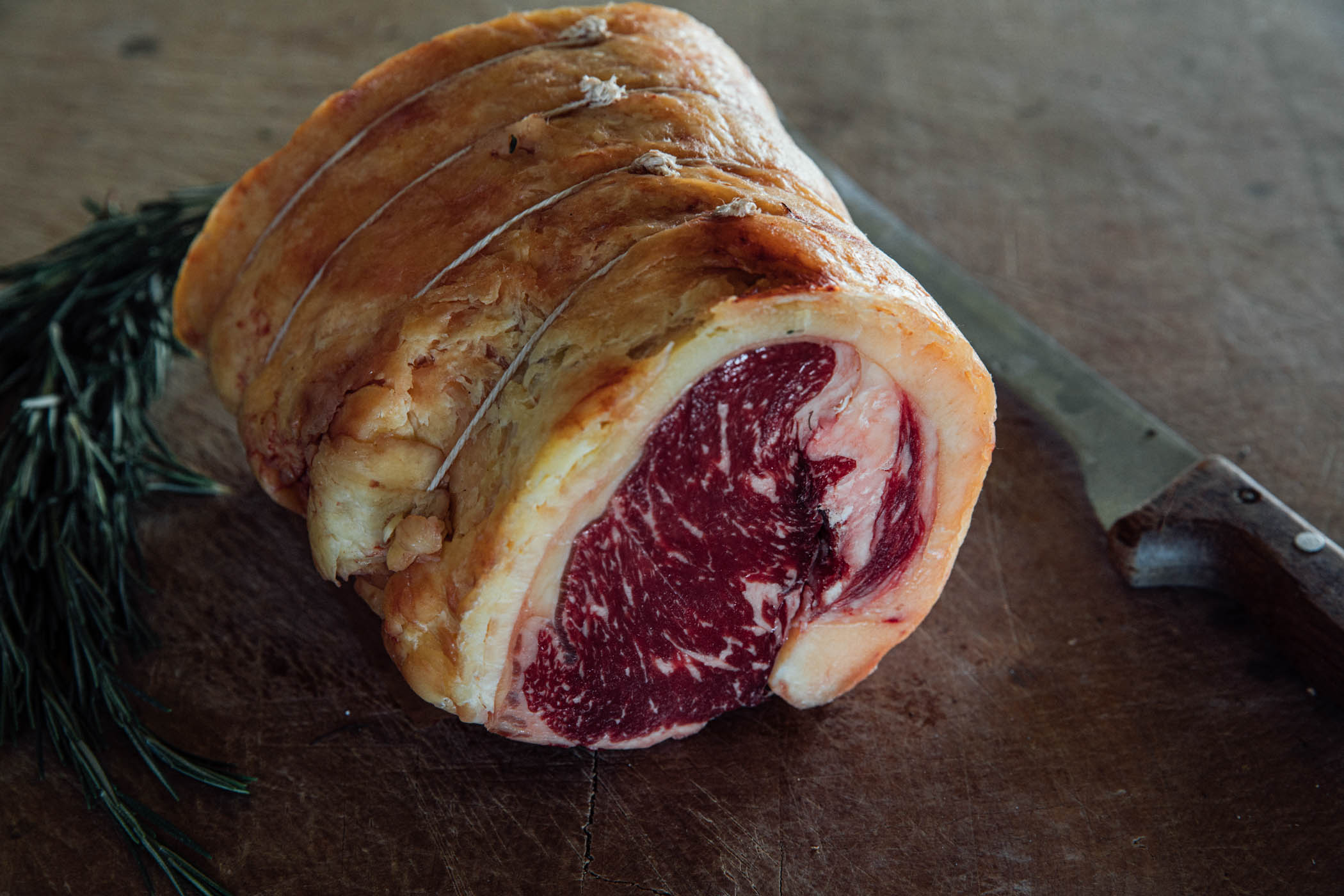
How to Cook Rolled Sirloin of Beef: Rolled sirloin of beef is often hailed as “The King” of roasting joints, and it’s easy to see why. Cut from the saddle of the carcass, situated between the rump and fore-rib, this classic joint is a staple for Sunday roasts and makes a show-stopping centrepiece for any occasion.

At Swaledale, we elevate this already impressive cut with authentic, old-fashioned dry-ageing, enhancing its tenderness and unlocking deep, rich flavours that shine when cooked to perfection. This rolled beef sirloin recipe is ideal for those seeking a premium dry-aged sirloin joint, perfect for creating a standout Sunday roast.

Swaledale takes this delicious, punchy joint to the next level with authentic, old-fashioned dry-ageing that delivers incredible tenderness and flavour when cooked.

Rolled Sirloin Cooking Time

To achieve even cooking, remove the beef from the fridge at least 1–2 hours before cooking to bring it to room temperature. This essential step ensures the meat cooks evenly and retains its juiciness.

For the most succulent and flavourful results, roast your rolled sirloin of beef at 160°C for the following times: 10–12 minutes per 500g for rare, 12–14 minutes per 500g for medium-rare, and 16–18 minutes per 500g for medium. These timings, combined with an initial high-heat sear at 220°C for 10 minutes, will help achieve a beautifully caramelised exterior.

Using a meat thermometer is essential for precision. Aim for an internal temperature of 49–51°C for rare, 53–54°C for medium-rare, and 57–59°C for medium. Allowing the beef to rest after roasting will ensure the meat remains tender and juicy. Keep in mind that the joint will continue to cook as it rests (this residual cooking effect is more significant for larger joints and less for smaller ones), so it’s best to remove the beef from the oven 3–4 degrees below your target temperature.

For those looking to elevate their roast, consider our low-temperature roasting technique, which requires a minimum of 3 hours and delivers unmatched tenderness and uniform cooking. Whether you opt for traditional or low-temperature roasting, rolled sirloin is a true showstopper, perfect for any occasion and guaranteed to impress.

The Best Way to Cook Rolled Sirloin

Traditional Roasting Technique

  1. Prepare the Joint: Remove the beef from its packaging, pat it dry, and allow it to come to room temperature. Preheat your oven to 220°C/Fan 200°C/Gas 7.
  2. Season and Arrange: Rub a little oil over the joint and season generously with high-quality sea salt and freshly cracked black pepper. Place the joint fat-side up in a roasting tray, positioned on a trivet of coarsely chopped carrots, onions, celery, and beef bones.
  3. Initial High Heat: Roast in the centre of the oven for 15 minutes. This step helps to develop a rich crust.
  4. Lower the Temperature: Reduce the oven temperature to 160°C/Fan 140°C/Gas 3. Add a large glass of liquid to the roasting tray – red wine is ideal, but white wine or beef/chicken stock works well too.
  5. Continue Roasting: Roast for 12–14 minutes per 500g, turning the joint halfway through to ensure even cooking.
  6. Check for Doneness: Use a meat thermometer for precision. Aim for 49–51°C for rare, 53–55°C for medium-rare, and 57–59°C for medium, bearing in mind the joint will rise by 3–4 degrees during resting.
  7. Rest the Beef: Once cooked to your desired doneness, remove the joint from the tray and set it aside to rest. After 10 minutes, loosely cover it with foil to retain warmth. Rest for half the roasting time, or a minimum of 15–20 minutes, before carving.
  8. Make the Gravy: Pour 450ml of beef or chicken stock into the roasting tray. Bring to a simmer, reducing the liquid until thickened. Strain through a sieve to remove the bones and vegetables. For an extra-rich finish, stir in a cold knob of butter just before serving.
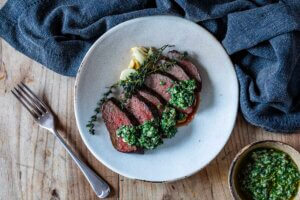
  9. Carve and Serve: Slice the rested beef into thick slices and serve with the warm, rich gravy.

Low-Temperature Roasting Technique

  1. Prepare the Beef: Take your rolled sirloin of beef out of the refrigerator before cooking. Remove it from the vacuum packaging, pat dry any moisture, and allow it to come to room temperature.
  2. Set the Oven: Set your oven to 65°C – this is a very low temperature, and if using a gas cooker, the pilot light may suffice. While this technique works best at 65°C, slightly higher temperatures can be used, though they may alter the timings. Using a meat thermometer is essential to ensure precision.
  3. Season and Roast: Rub the beef with a little oil and season generously with sea salt and freshly cracked black pepper. Depending on the size of the joint, roasting will take a minimum of 3 hours. Aim for an internal temperature of 49–51°C for rare, 53–55°C for medium-rare, or 57–59°C for medium. As you are roasting at a low temperature, the joint won’t continue to cook once removed from the oven, so there’s no need to account for residual cooking during resting.
  4. Rest the Beef: Once the beef has reached the desired internal temperature, rest it for at least 10–15 minutes, or up to one hour, loosely covered in foil. A shorter resting period isn’t an issue, as the meat hasn’t contracted in the same way it would during traditional high-temperature roasting.
  5. Caramelise the Crust: For the final stage, place the beef in an oven set to full blast until an even, caramelised colour is achieved – this will take 6–10 minutes. Due to the low-temperature roasting technique, further resting is unnecessary.
  6. Carve and Serve: Carve into slices approximately 1cm thick and serve immediately.

This method ensures perfectly cooked, tender beef with a beautifully caramelised crust, making it the perfect centrepiece for any special occasion.

Top Tips for Low-Temperature Roasting

  • Invest in a Meat Thermometer: Precision is key for this method. A meat thermometer ensures your joint reaches the perfect temperature for your desired doneness.
  • Allow the Beef to Warm Up: Bringing the beef to room temperature before cooking helps it roast evenly.
  • Boost Flavour with a Trivet: For even more flavour, place the joint on a trivet of chopped vegetables and beef bones. The resulting pan juices will elevate your gravy.
  • Final Blast for a Perfect Crust: Don’t rush the final caramelisation stage. Use a high oven temperature to achieve a beautiful golden-brown crust without overcooking the beef.
  • Keep the Sauce Simple: A rich beef stock or simple red wine reduction pairs beautifully with this tender cut, letting the meat’s natural flavour shine.

Rolled Sirloin Recipe

Val Warner’s Rolled Beef Sirloin Recipe with Porcini Sauce is the perfect marriage of traditional roasting and indulgent, earthy flavours. This dish transforms a beautifully dry-aged, grass-fed sirloin joint into a centrepiece worthy of any special occasion.

The velvety porcini sauce, infused with wild mushrooms, vermouth, and cream, is the ultimate accompaniment to the tender, caramelised beef. Val’s expert touch brings out the best in the sirloin, blending rustic charm with a touch of sophistication. Whether you’re hosting a Sunday roast or a celebratory dinner, this recipe guarantees a show-stopping meal that combines depth, flavour, and elegance.

Order meat online

Instagram

  • A rich, booze-laden beast of a pie. This is no ordinary mince pie. It is deep-filled, indulgent and made with real craft by @joshwhiteheadchef of @finer_pleasures.

We are down to the last few. Our mailing list heard about them yesterday, which is why they are moving quickly. If you want first sight of future specials, sign up.

Josh has been working on this recipe for three years. It is rooted in Hannah Glasse’s 1747 mince pie, where meat was once part of the mix. He has taken that idea and turned it on its head, using the clean, buttery fat from our native-breed cattle in place of suet.

The filling is dried fruit soaked since July in Armagnac, aged port, Madeira and homemade ginger wine. There are ceps cooked slowly in brown sugar syrup until they turn to toffee. And yes, a little Bovril. Trust Josh, it works.

Bake at 185°C until golden, let it sit for two minutes, then eat warm. A dusting of icing sugar finishes it well. Serve with cream, custard or brandy butter.

A very special mince pie, and nearly gone.
  • Highland cattle get photographed a lot. They are turned into cuddly toys. But beneath the coat is a hardy animal that can stand the worst of a Yorkshire winter. That is why Andy Lambert grazes them high on the Dales, on rough ground where few other breeds would thrive. They are the one of the few cattle that can turn this hard landscape into rich, delicious beef. It feeds our chefs and home cooks across the country. We are grateful for them, and it is always a pleasure to see them on the tops.
  • A ragù alla bolognese with a few top tips from chef @grylos.

Beef, pork, and a little surprise at the end for real depth. Slow cooked until rich, deep, and properly delicious.

Find the full recipe on our journal and cook it slow this weekend. What’s your secret to a good bolognese?

@grylos 
@tom_saunderson
  • We love yellow fat. Do you?

This is an old Dexter. You do not see beef like this every day. When one comes in, we get a little excited.
  • One of the motivations for operating a whole carcass butchery model is access to the other bits – offal and ‘butchers cuts’. For us, they are just as important a part of the picture as the more famous, prime cuts. 
So, it gives us immense satisfaction that we now sell more of these delights then we ever have. For chefs understand that these cuts and organs offer something a little different. Yes, in terms of flavour and value but also, we think, in terms of creativity. A ribeye or a rack of lamb might inspire more classic garnishes, whereas an ox heart or a pig’s tongue allow the imaginations run a little freer. It takes skill and touch to cook these cuts well and the results can be extraordinary.
We’ll keep buying the whole carcasses, you guys keep cooking the offal and butcher’s cuts!
  • Small herds, native breeds, and wild game, all farmed and sourced with care, are what we’re about and what we care deeply for.

The partridge, often called the hedge chicken, is one of the best introductions to game. Mild, tender, full of flavour, and truly sustainable. In fact, we should be eating more of it to help prevent wastage from wild-shot game.

Here’s @grylos with an autumnal take on a classic: a partridge Caesar salad. It might just inspire you to give this delicious wild game a go.
  • Ceps, butter, onglet. A proper celebration of the season.

Available via our website…

Thanks @grylos
  • Anyone can age beef. Doesn’t make it good beef.

Great beef starts at its source. Well bred, right breed for the terrain, working with nature, not against it. Low stress, low stock density, fed on diverse pasture that isn’t overly rich or monocultured.

From there it’s about time. Then more time. And patience. And, to be honest, the right kit.

As ageing beef has become more popular, you see it in supermarkets and on high streets. But the reality is a lot of the kit used doesn’t stack up. It looks wow but creates mould. People push bad beef too far and try to make it sound interesting.

We’ve done our tests. We’ve listened to our chefs. We’ve custom-built our dry ager. And we know that when you start with quality, proper controlled ageing just enhances the flavour.
A rich, booze-laden beast of a pie. This is no ordinary mince pie. It is deep-filled, indulgent and made with real craft by @joshwhiteheadchef of @finer_pleasures.

We are down to the last few. Our mailing list heard about them yesterday, which is why they are moving quickly. If you want first sight of future specials, sign up.

Josh has been working on this recipe for three years. It is rooted in Hannah Glasse’s 1747 mince pie, where meat was once part of the mix. He has taken that idea and turned it on its head, using the clean, buttery fat from our native-breed cattle in place of suet.

The filling is dried fruit soaked since July in Armagnac, aged port, Madeira and homemade ginger wine. There are ceps cooked slowly in brown sugar syrup until they turn to toffee. And yes, a little Bovril. Trust Josh, it works.

Bake at 185°C until golden, let it sit for two minutes, then eat warm. A dusting of icing sugar finishes it well. Serve with cream, custard or brandy butter.

A very special mince pie, and nearly gone.
A rich, booze-laden beast of a pie. This is no ordinary mince pie. It is deep-filled, indulgent and made with real craft by @joshwhiteheadchef of @finer_pleasures.

We are down to the last few. Our mailing list heard about them yesterday, which is why they are moving quickly. If you want first sight of future specials, sign up.

Josh has been working on this recipe for three years. It is rooted in Hannah Glasse’s 1747 mince pie, where meat was once part of the mix. He has taken that idea and turned it on its head, using the clean, buttery fat from our native-breed cattle in place of suet.

The filling is dried fruit soaked since July in Armagnac, aged port, Madeira and homemade ginger wine. There are ceps cooked slowly in brown sugar syrup until they turn to toffee. And yes, a little Bovril. Trust Josh, it works.

Bake at 185°C until golden, let it sit for two minutes, then eat warm. A dusting of icing sugar finishes it well. Serve with cream, custard or brandy butter.

A very special mince pie, and nearly gone.
A rich, booze-laden beast of a pie. This is no ordinary mince pie. It is deep-filled, indulgent and made with real craft by @joshwhiteheadchef of @finer_pleasures.

We are down to the last few. Our mailing list heard about them yesterday, which is why they are moving quickly. If you want first sight of future specials, sign up.

Josh has been working on this recipe for three years. It is rooted in Hannah Glasse’s 1747 mince pie, where meat was once part of the mix. He has taken that idea and turned it on its head, using the clean, buttery fat from our native-breed cattle in place of suet.

The filling is dried fruit soaked since July in Armagnac, aged port, Madeira and homemade ginger wine. There are ceps cooked slowly in brown sugar syrup until they turn to toffee. And yes, a little Bovril. Trust Josh, it works.

Bake at 185°C until golden, let it sit for two minutes, then eat warm. A dusting of icing sugar finishes it well. Serve with cream, custard or brandy butter.

A very special mince pie, and nearly gone.
A rich, booze-laden beast of a pie. This is no ordinary mince pie. It is deep-filled, indulgent and made with real craft by @joshwhiteheadchef of @finer_pleasures.

We are down to the last few. Our mailing list heard about them yesterday, which is why they are moving quickly. If you want first sight of future specials, sign up.

Josh has been working on this recipe for three years. It is rooted in Hannah Glasse’s 1747 mince pie, where meat was once part of the mix. He has taken that idea and turned it on its head, using the clean, buttery fat from our native-breed cattle in place of suet.

The filling is dried fruit soaked since July in Armagnac, aged port, Madeira and homemade ginger wine. There are ceps cooked slowly in brown sugar syrup until they turn to toffee. And yes, a little Bovril. Trust Josh, it works.

Bake at 185°C until golden, let it sit for two minutes, then eat warm. A dusting of icing sugar finishes it well. Serve with cream, custard or brandy butter.

A very special mince pie, and nearly gone.
A rich, booze-laden beast of a pie. This is no ordinary mince pie. It is deep-filled, indulgent and made with real craft by @joshwhiteheadchef of @finer_pleasures.

We are down to the last few. Our mailing list heard about them yesterday, which is why they are moving quickly. If you want first sight of future specials, sign up.

Josh has been working on this recipe for three years. It is rooted in Hannah Glasse’s 1747 mince pie, where meat was once part of the mix. He has taken that idea and turned it on its head, using the clean, buttery fat from our native-breed cattle in place of suet.

The filling is dried fruit soaked since July in Armagnac, aged port, Madeira and homemade ginger wine. There are ceps cooked slowly in brown sugar syrup until they turn to toffee. And yes, a little Bovril. Trust Josh, it works.

Bake at 185°C until golden, let it sit for two minutes, then eat warm. A dusting of icing sugar finishes it well. Serve with cream, custard or brandy butter.

A very special mince pie, and nearly gone.
A rich, booze-laden beast of a pie. This is no ordinary mince pie. It is deep-filled, indulgent and made with real craft by @joshwhiteheadchef of @finer_pleasures. We are down to the last few. Our mailing list heard about them yesterday, which is why they are moving quickly. If you want first sight of future specials, sign up. Josh has been working on this recipe for three years. It is rooted in Hannah Glasse’s 1747 mince pie, where meat was once part of the mix. He has taken that idea and turned it on its head, using the clean, buttery fat from our native-breed cattle in place of suet. The filling is dried fruit soaked since July in Armagnac, aged port, Madeira and homemade ginger wine. There are ceps cooked slowly in brown sugar syrup until they turn to toffee. And yes, a little Bovril. Trust Josh, it works. Bake at 185°C until golden, let it sit for two minutes, then eat warm. A dusting of icing sugar finishes it well. Serve with cream, custard or brandy butter. A very special mince pie, and nearly gone.
1 day ago
View on Instagram |
1/8
Highland cattle get photographed a lot. They are turned into cuddly toys. But beneath the coat is a hardy animal that can stand the worst of a Yorkshire winter. That is why Andy Lambert grazes them high on the Dales, on rough ground where few other breeds would thrive. They are the one of the few cattle that can turn this hard landscape into rich, delicious beef. It feeds our chefs and home cooks across the country. We are grateful for them, and it is always a pleasure to see them on the tops.
7 days ago
View on Instagram |
2/8
A ragù alla bolognese with a few top tips from chef @grylos. Beef, pork, and a little surprise at the end for real depth. Slow cooked until rich, deep, and properly delicious. Find the full recipe on our journal and cook it slow this weekend. What’s your secret to a good bolognese? @grylos @tom_saunderson
1 week ago
View on Instagram |
3/8
We love yellow fat. Do you? This is an old Dexter. You do not see beef like this every day. When one comes in, we get a little excited.
2 weeks ago
View on Instagram |
4/8
One of the motivations for operating a whole carcass butchery model is access to the other bits – offal and ‘butchers cuts’. For us, they are just as important a part of the picture as the more famous, prime cuts. 
So, it gives us immense satisfaction that we now sell more of these delights then we ever have. For chefs understand that these cuts and organs offer something a little different. Yes, in terms of flavour and value but also, we think, in terms of creativity. A ribeye or a rack of lamb might inspire more classic garnishes, whereas an ox heart or a pig’s tongue allow the imaginations run a little freer. It takes skill and touch to cook these cuts well and the results can be extraordinary.
We’ll keep buying the whole carcasses, you guys keep cooking the offal and butcher’s cuts!
One of the motivations for operating a whole carcass butchery model is access to the other bits – offal and ‘butchers cuts’. For us, they are just as important a part of the picture as the more famous, prime cuts. 
So, it gives us immense satisfaction that we now sell more of these delights then we ever have. For chefs understand that these cuts and organs offer something a little different. Yes, in terms of flavour and value but also, we think, in terms of creativity. A ribeye or a rack of lamb might inspire more classic garnishes, whereas an ox heart or a pig’s tongue allow the imaginations run a little freer. It takes skill and touch to cook these cuts well and the results can be extraordinary.
We’ll keep buying the whole carcasses, you guys keep cooking the offal and butcher’s cuts!
One of the motivations for operating a whole carcass butchery model is access to the other bits – offal and ‘butchers cuts’. For us, they are just as important a part of the picture as the more famous, prime cuts. 
So, it gives us immense satisfaction that we now sell more of these delights then we ever have. For chefs understand that these cuts and organs offer something a little different. Yes, in terms of flavour and value but also, we think, in terms of creativity. A ribeye or a rack of lamb might inspire more classic garnishes, whereas an ox heart or a pig’s tongue allow the imaginations run a little freer. It takes skill and touch to cook these cuts well and the results can be extraordinary.
We’ll keep buying the whole carcasses, you guys keep cooking the offal and butcher’s cuts!
One of the motivations for operating a whole carcass butchery model is access to the other bits – offal and ‘butchers cuts’. For us, they are just as important a part of the picture as the more famous, prime cuts. So, it gives us immense satisfaction that we now sell more of these delights then we ever have. For chefs understand that these cuts and organs offer something a little different. Yes, in terms of flavour and value but also, we think, in terms of creativity. A ribeye or a rack of lamb might inspire more classic garnishes, whereas an ox heart or a pig’s tongue allow the imaginations run a little freer. It takes skill and touch to cook these cuts well and the results can be extraordinary. We’ll keep buying the whole carcasses, you guys keep cooking the offal and butcher’s cuts!
4 weeks ago
View on Instagram |
5/8
Small herds, native breeds, and wild game, all farmed and sourced with care, are what we’re about and what we care deeply for. The partridge, often called the hedge chicken, is one of the best introductions to game. Mild, tender, full of flavour, and truly sustainable. In fact, we should be eating more of it to help prevent wastage from wild-shot game. Here’s @grylos with an autumnal take on a classic: a partridge Caesar salad. It might just inspire you to give this delicious wild game a go.
4 weeks ago
View on Instagram |
6/8
Ceps, butter, onglet. A proper celebration of the season. Available via our website… Thanks @grylos
4 weeks ago
View on Instagram |
7/8
Anyone can age beef. Doesn’t make it good beef. Great beef starts at its source. Well bred, right breed for the terrain, working with nature, not against it. Low stress, low stock density, fed on diverse pasture that isn’t overly rich or monocultured. From there it’s about time. Then more time. And patience. And, to be honest, the right kit. As ageing beef has become more popular, you see it in supermarkets and on high streets. But the reality is a lot of the kit used doesn’t stack up. It looks wow but creates mould. People push bad beef too far and try to make it sound interesting. We’ve done our tests. We’ve listened to our chefs. We’ve custom-built our dry ager. And we know that when you start with quality, proper controlled ageing just enhances the flavour.
1 month ago
View on Instagram |
8/8