How-To Guides

How to Cook Chicken Legs

What Are Chicken Legs?

How to Cook Chicken Legs: Our large, free-range chicken legs are a popular choice for families on a budget or anyone looking for an economical and versatile meal option. They deliver moist, flavourful meat with crisp, moreish skin, and can be prepared in countless ways, from oven roasting and grilling to slow cooking in stews and curries.

A chicken leg is made up of the thigh (the top part of the leg) and the drumstick (the lower section). This dark meat contains more fat than white meat, which helps to keep it juicy and tender, even if slightly overcooked. The higher fat content also means chicken legs are naturally more flavourful and require less precise timing than leaner cuts like chicken breasts, making them a forgiving choice for everyday cooking.

They respond well to marinades and spice rubs, which penetrate the meat and enhance the natural richness. Whether coated in a simple seasoning, glazed with a sticky sauce, or simmered until the meat falls from the bone, chicken legs can be adapted to suit any cuisine or occasion.

Follow our helpful instructions below to achieve perfect results every time.

How Long Does It Take to Cook Chicken Legs?

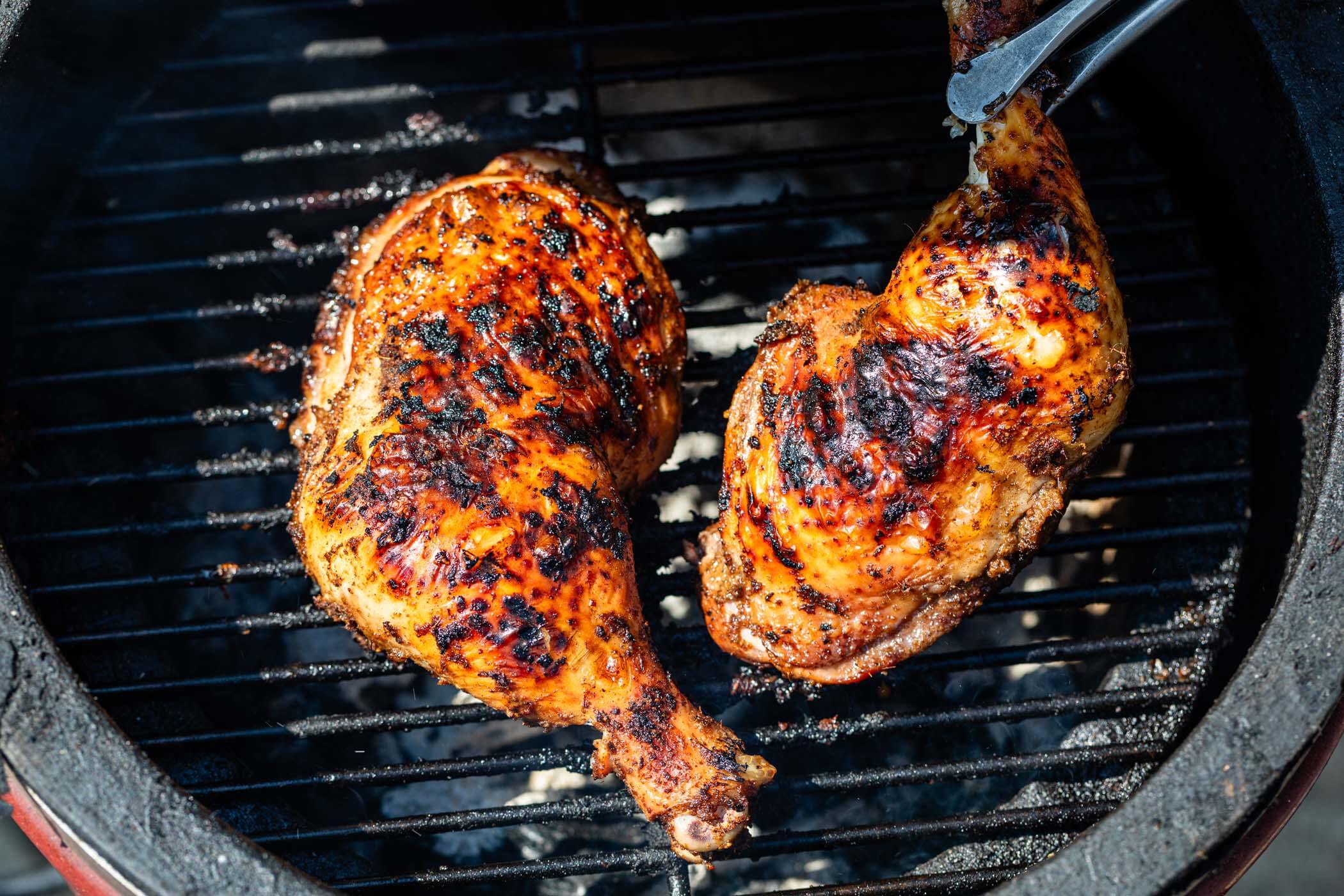
Chicken legs are always a hit on the barbecue, with flame-charred skin, smoky flavour, and tender, juicy meat. For this guide, we are focusing on oven roasting, which will take around 30 to 40 minutes depending on the size of the legs and the efficiency of your oven.

For the most reliable results, use a meat thermometer rather than relying solely on timing. Insert the probe into the thickest part of the thigh, avoiding the bone, and cook until the internal temperature reaches 75°C. This ensures the meat is safely cooked while remaining moist and succulent.

Allow the chicken to rest for a few minutes before serving to let the juices redistribute through the meat. This simple step makes a noticeable difference to flavour and texture.

How to Roast Chicken Legs

  1. Remove your chicken legs from the fridge and pat dry with paper towels to remove any excess moisture on the skin.
    Preheat the oven to 220°C and line a baking tray or shallow baking dish with aluminium foil for easy clean-up.
  2. Coat the chicken in olive oil and season with coarse sea salt and black pepper. Our chicken legs are meaty and full of flavour, but the possibilities for flavouring are endless — bashed thyme or rosemary, garlic, olive oil, and a semi-squeezed halved lemon perhaps, or light soy sauce, honey, chilli, and ginger. Smoked paprika, ground cumin, pureed garlic, and thyme leaves, with a little red wine vinegar and olive oil would also be delicious.
  3. Place your chicken legs on the baking tray uncovered and let them cook on the middle shelf for around 15 minutes, then reduce the temperature to 180°C for the remaining cooking time or until your thermometer registers an internal temperature of 75°C. At the 15-minute mark, baste the chicken with any natural juices. An optional glass of wine or cider could be considered at this stage depending on the recipe — this would help retain moisture, although it should not come far up the side of the chicken legs as this would hinder that all-important crisp skin. The resulting juices could be the base of a quick sauce — think cider bubbled up and reduced briefly before adding crème fraîche and a large teaspoon of Dijon mustard, and returning to the boil for a further few moments.
  4. Check the chicken legs approximately 10 minutes before the cooking time is up. Should the skin require an additional blast of heat to aid crispness, turn the oven back up to 220°C.
  5. Let the chicken rest for at least 10 minutes before serving so the juices redistribute themselves back through the meat.

How to BBQ Chicken Legs

  1. Preheat your barbecue to a medium heat. Place chicken legs over indirect heat, cover, and cook for 25–30 minutes, turning occasionally, until the thickest part of the thigh reaches 75°C. For crisp skin and charred edges, move the legs over direct heat for the final 5 minutes. Rest before serving.

Top Tips for How to Cook Chicken Legs

  • Instead of rubbing the chicken legs in olive oil, try brushing them with melted butter for a richer flavour and a deeper golden colour. The butter helps the skin crisp and adds a subtle richness that complements most seasonings and marinades.
  • For a taste reminiscent of outdoor cooking, brush the chicken with your favourite BBQ sauce during the final 5–8 minutes of baking. The heat will caramelise the sugars in the sauce, creating a glossy finish and a sweet-smoky flavour that works perfectly with juicy dark meat.
  • Marinate the chicken legs for at least a few hours, or ideally overnight, to allow flavours to penetrate deep into the meat. Acidic ingredients like lemon juice, vinegar, or yoghurt help tenderise the meat while herbs and spices boost flavour.
  • Use a spice rub to create a well-seasoned crust. A simple blend of smoked paprika, garlic powder, thyme, and sea salt works beautifully, or try a more complex mix like ras el hanout for a North African twist. Apply liberally to dry skin before cooking for maximum flavour.
  • Allow the chicken legs to rest for at least 10 minutes after cooking. This lets the juices redistribute through the meat, ensuring every bite stays moist and tender.
  • Use a wire rack over your baking tray when roasting. This allows hot air to circulate all around the chicken, helping the skin crisp evenly while any excess fat drips away.

Common Mistakes to Avoid When Cooking Chicken Legs

  • Cooking straight from the fridge – cold meat takes longer to cook and can lead to uneven results. Bring chicken legs to room temperature for 20–30 minutes before cooking.
  • Skipping the pat dry – moisture on the skin prevents proper browning and crispness. Always pat the chicken dry with kitchen paper before seasoning.
  • Overcrowding the tray – placing chicken legs too close together traps steam, leading to pale, soggy skin. Leave space between pieces for even browning.
  • Relying only on cooking time – size and oven variation can throw timings off. Use a meat thermometer and cook until the thickest part of the thigh reaches 75°C.
  • Not resting before serving – cutting in straight away lets juices run out, leaving the meat drier. Rest for at least 10 minutes before eating.

Recipe for Chicken Legs

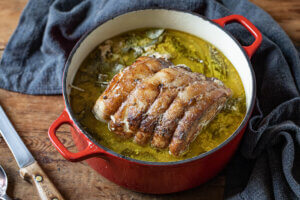
Chicken legs are an excellent choice for quick, satisfying midweek meals. They’re affordable, versatile, and packed with flavour, making them a great base for a wide range of dishes. This coq au vin recipe from chef David Gingell is straightforward to prepare yet delivers deep, rich flavours that fill the kitchen with an irresistible aroma as it cooks.

The chicken is gently simmered with red wine, bacon, mushrooms, and herbs, creating a sauce that’s both hearty and elegant. Serve with buttery mashed potatoes to soak up every drop, and enjoy with a glass of red wine for the perfect comforting supper.

Order meat online

Instagram

  • To our friends down south, you might have noticed Yorkshire is still a good few weeks behind the march towards summer. The trees are only just coming into leaf in the Dales, especially up in Upper Wharfedale, and that gives us a little more time with the wild garlic.

Here is @grylos with what feels like one of his best ideas to date.

A proper use of those essential carcass balance cuts. Lamb hearts, though this would work just as well with tongues, sweetbreads or liver. Cooked simply, well seasoned, finished with a little lemon.

Alongside it, wild garlic taken from the darker, shaded parts of the woodland where it is still fresh. Even if it has started to turn, it holds up. Treated like spinach, wilted down, then cooked with oil, salt and cream, left to reduce until it becomes rich and full of flavour.

A brilliant little starter for our chefs blackboards, and something that will more than hold its own at home.

A dish for the season, if ever there was one.
  • We are reaching the end of our wild garlic sausages, as the season begins to slip away and only the deeper, shaded pockets of woodland still offer the tender leaves we rely on.

It is from these cooler, quieter areas that we are still able to gather what we need, though even here the plants are beginning to turn, and once the flowers arrive, the flavour shifts and our time with wild garlic comes to a close for another year.

As ever, we follow the season rather than stretch it, working with what is left while it is still at its best, which means if you have been enjoying them, or have been meaning to try them, now is the time to cook them or put a few aside for later.

Before long, they will be gone, and we will wait for spring to bring them back again.
  • A while back we had the pleasure of visiting @petea25 at the @cantonarms Arms, where we spoke about their ever evolving menu, a place that is not afraid to cook things until they are gone and then move on to something new.

We saw how they treated the Swaledale pork chop, and it told you everything you needed to know. Cooked with care, handled properly, and full of flavour.

It was, simply, delicious.
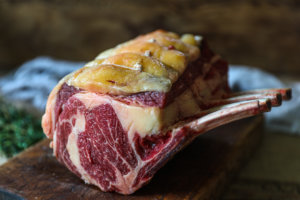
  • Here’s our Trevor, stood in front of an expertly butchered sirloin section.

Porterhouse, T bone, Wing rib, New York strip, fillet, sirloin.

All cut from the same part of the animal, each one offering something slightly different.

Key question is; which one are you taking?
  • The Dales never hurry themselves into spring, and this year is no different. You can drive through them and still feel winter holding on, yet something has shifted all the same.

It begins quietly. Hawthorn shows along the hedgerows, just enough to catch the eye. The grass is lifting, the fields softening, losing that tired, flattened look they carry through the colder months.

Out on the land, the change is clearer. Lambs are scattered across the fields, finding their feet, while cattle have been turned back out and settle easily into the pasture. There is a rhythm to it again, a sense that the farms are beginning to move.

Nothing arrives all at once. It comes on steadily, almost cautiously, as the land turns back to life.
  • The fallacy of Spring lamb!

When we eat lamb in early April, we aren’t eating the lovely little fluffy things people see hopping about in the fields. In fact, you’re actually eating – or at least you are if you are buying from us – old season lamb. The animals that were born the previous springtime. They are age wise, on the verge of morphing into hogget and, in our opinion, it is lamb at its very best. More flavourful as the meat has developed with age, but still with the tenderness one expects with lamb. 
One thing that is not in doubt is that it pairs perfectly with a lot of the seasonal ingredients of this time of year, the peas, broad beans and courgettes from the continent, plus Jersey royals, asparagus and wild garlic from these shores. 
We have plenty of these wonderful carcasses ageing in our fridges, so embrace the idea of eating last years spring lamb!
  • A classic of French cooking, built on combinations that have stood their ground for good reason, and long may they do so.

Chicken breast roasted in brown butter, creamy mash worked with plenty of butter and dairy, and a mustard sauce brought together with cream. It reads rich, but it eats with balance. The Dijon and tarragon cut through, lifting the dish and keeping it in check.
  • A classic of French cooking, built on combinations that have stood their ground for good reason, and long may they do so.

Chicken breast roasted in brown butter, creamy mash worked with plenty of butter and dairy, and a mustard sauce brought together with cream. It reads rich, but it eats with balance. The Dijon and tarragon cut through, lifting the dish and keeping it in check.

This is food that does not chase anything. It knows exactly what it is.
To our friends down south, you might have noticed Yorkshire is still a good few weeks behind the march towards summer. The trees are only just coming into leaf in the Dales, especially up in Upper Wharfedale, and that gives us a little more time with the wild garlic. Here is @grylos with what feels like one of his best ideas to date. A proper use of those essential carcass balance cuts. Lamb hearts, though this would work just as well with tongues, sweetbreads or liver. Cooked simply, well seasoned, finished with a little lemon. Alongside it, wild garlic taken from the darker, shaded parts of the woodland where it is still fresh. Even if it has started to turn, it holds up. Treated like spinach, wilted down, then cooked with oil, salt and cream, left to reduce until it becomes rich and full of flavour. A brilliant little starter for our chefs blackboards, and something that will more than hold its own at home. A dish for the season, if ever there was one.
1 day ago
863
View on Instagram |
1/8
We are reaching the end of our wild garlic sausages, as the season begins to slip away and only the deeper, shaded pockets of woodland still offer the tender leaves we rely on.

It is from these cooler, quieter areas that we are still able to gather what we need, though even here the plants are beginning to turn, and once the flowers arrive, the flavour shifts and our time with wild garlic comes to a close for another year.

As ever, we follow the season rather than stretch it, working with what is left while it is still at its best, which means if you have been enjoying them, or have been meaning to try them, now is the time to cook them or put a few aside for later.

Before long, they will be gone, and we will wait for spring to bring them back again.
We are reaching the end of our wild garlic sausages, as the season begins to slip away and only the deeper, shaded pockets of woodland still offer the tender leaves we rely on.

It is from these cooler, quieter areas that we are still able to gather what we need, though even here the plants are beginning to turn, and once the flowers arrive, the flavour shifts and our time with wild garlic comes to a close for another year.

As ever, we follow the season rather than stretch it, working with what is left while it is still at its best, which means if you have been enjoying them, or have been meaning to try them, now is the time to cook them or put a few aside for later.

Before long, they will be gone, and we will wait for spring to bring them back again.
We are reaching the end of our wild garlic sausages, as the season begins to slip away and only the deeper, shaded pockets of woodland still offer the tender leaves we rely on.

It is from these cooler, quieter areas that we are still able to gather what we need, though even here the plants are beginning to turn, and once the flowers arrive, the flavour shifts and our time with wild garlic comes to a close for another year.

As ever, we follow the season rather than stretch it, working with what is left while it is still at its best, which means if you have been enjoying them, or have been meaning to try them, now is the time to cook them or put a few aside for later.

Before long, they will be gone, and we will wait for spring to bring them back again.
We are reaching the end of our wild garlic sausages, as the season begins to slip away and only the deeper, shaded pockets of woodland still offer the tender leaves we rely on. It is from these cooler, quieter areas that we are still able to gather what we need, though even here the plants are beginning to turn, and once the flowers arrive, the flavour shifts and our time with wild garlic comes to a close for another year. As ever, we follow the season rather than stretch it, working with what is left while it is still at its best, which means if you have been enjoying them, or have been meaning to try them, now is the time to cook them or put a few aside for later. Before long, they will be gone, and we will wait for spring to bring them back again.
6 days ago
651
View on Instagram |
2/8
A while back we had the pleasure of visiting @petea25 at the @cantonarms Arms, where we spoke about their ever evolving menu, a place that is not afraid to cook things until they are gone and then move on to something new. We saw how they treated the Swaledale pork chop, and it told you everything you needed to know. Cooked with care, handled properly, and full of flavour. It was, simply, delicious.
1 week ago
35310
View on Instagram |
3/8
Here’s our Trevor, stood in front of an expertly butchered sirloin section.

Porterhouse, T bone, Wing rib, New York strip, fillet, sirloin.

All cut from the same part of the animal, each one offering something slightly different.

Key question is; which one are you taking?
Here’s our Trevor, stood in front of an expertly butchered sirloin section. Porterhouse, T bone, Wing rib, New York strip, fillet, sirloin. All cut from the same part of the animal, each one offering something slightly different. Key question is; which one are you taking?
1 week ago
571
View on Instagram |
4/8
The Dales never hurry themselves into spring, and this year is no different. You can drive through them and still feel winter holding on, yet something has shifted all the same.

It begins quietly. Hawthorn shows along the hedgerows, just enough to catch the eye. The grass is lifting, the fields softening, losing that tired, flattened look they carry through the colder months.

Out on the land, the change is clearer. Lambs are scattered across the fields, finding their feet, while cattle have been turned back out and settle easily into the pasture. There is a rhythm to it again, a sense that the farms are beginning to move.

Nothing arrives all at once. It comes on steadily, almost cautiously, as the land turns back to life.
The Dales never hurry themselves into spring, and this year is no different. You can drive through them and still feel winter holding on, yet something has shifted all the same.

It begins quietly. Hawthorn shows along the hedgerows, just enough to catch the eye. The grass is lifting, the fields softening, losing that tired, flattened look they carry through the colder months.

Out on the land, the change is clearer. Lambs are scattered across the fields, finding their feet, while cattle have been turned back out and settle easily into the pasture. There is a rhythm to it again, a sense that the farms are beginning to move.

Nothing arrives all at once. It comes on steadily, almost cautiously, as the land turns back to life.
The Dales never hurry themselves into spring, and this year is no different. You can drive through them and still feel winter holding on, yet something has shifted all the same.

It begins quietly. Hawthorn shows along the hedgerows, just enough to catch the eye. The grass is lifting, the fields softening, losing that tired, flattened look they carry through the colder months.

Out on the land, the change is clearer. Lambs are scattered across the fields, finding their feet, while cattle have been turned back out and settle easily into the pasture. There is a rhythm to it again, a sense that the farms are beginning to move.

Nothing arrives all at once. It comes on steadily, almost cautiously, as the land turns back to life.
The Dales never hurry themselves into spring, and this year is no different. You can drive through them and still feel winter holding on, yet something has shifted all the same.

It begins quietly. Hawthorn shows along the hedgerows, just enough to catch the eye. The grass is lifting, the fields softening, losing that tired, flattened look they carry through the colder months.

Out on the land, the change is clearer. Lambs are scattered across the fields, finding their feet, while cattle have been turned back out and settle easily into the pasture. There is a rhythm to it again, a sense that the farms are beginning to move.

Nothing arrives all at once. It comes on steadily, almost cautiously, as the land turns back to life.
The Dales never hurry themselves into spring, and this year is no different. You can drive through them and still feel winter holding on, yet something has shifted all the same.

It begins quietly. Hawthorn shows along the hedgerows, just enough to catch the eye. The grass is lifting, the fields softening, losing that tired, flattened look they carry through the colder months.

Out on the land, the change is clearer. Lambs are scattered across the fields, finding their feet, while cattle have been turned back out and settle easily into the pasture. There is a rhythm to it again, a sense that the farms are beginning to move.

Nothing arrives all at once. It comes on steadily, almost cautiously, as the land turns back to life.
The Dales never hurry themselves into spring, and this year is no different. You can drive through them and still feel winter holding on, yet something has shifted all the same. It begins quietly. Hawthorn shows along the hedgerows, just enough to catch the eye. The grass is lifting, the fields softening, losing that tired, flattened look they carry through the colder months. Out on the land, the change is clearer. Lambs are scattered across the fields, finding their feet, while cattle have been turned back out and settle easily into the pasture. There is a rhythm to it again, a sense that the farms are beginning to move. Nothing arrives all at once. It comes on steadily, almost cautiously, as the land turns back to life.
2 weeks ago
481
View on Instagram |
5/8
The fallacy of Spring lamb! When we eat lamb in early April, we aren’t eating the lovely little fluffy things people see hopping about in the fields. In fact, you’re actually eating – or at least you are if you are buying from us – old season lamb. The animals that were born the previous springtime. They are age wise, on the verge of morphing into hogget and, in our opinion, it is lamb at its very best. More flavourful as the meat has developed with age, but still with the tenderness one expects with lamb. One thing that is not in doubt is that it pairs perfectly with a lot of the seasonal ingredients of this time of year, the peas, broad beans and courgettes from the continent, plus Jersey royals, asparagus and wild garlic from these shores. We have plenty of these wonderful carcasses ageing in our fridges, so embrace the idea of eating last years spring lamb!
3 weeks ago
642
View on Instagram |
6/8
A classic of French cooking, built on combinations that have stood their ground for good reason, and long may they do so. Chicken breast roasted in brown butter, creamy mash worked with plenty of butter and dairy, and a mustard sauce brought together with cream. It reads rich, but it eats with balance. The Dijon and tarragon cut through, lifting the dish and keeping it in check.
1 month ago
7
View on Instagram |
7/8
A classic of French cooking, built on combinations that have stood their ground for good reason, and long may they do so. Chicken breast roasted in brown butter, creamy mash worked with plenty of butter and dairy, and a mustard sauce brought together with cream. It reads rich, but it eats with balance. The Dijon and tarragon cut through, lifting the dish and keeping it in check. This is food that does not chase anything. It knows exactly what it is.
1 month ago
535
View on Instagram |
8/8