How-To Guides

How to Cook Pork Belly

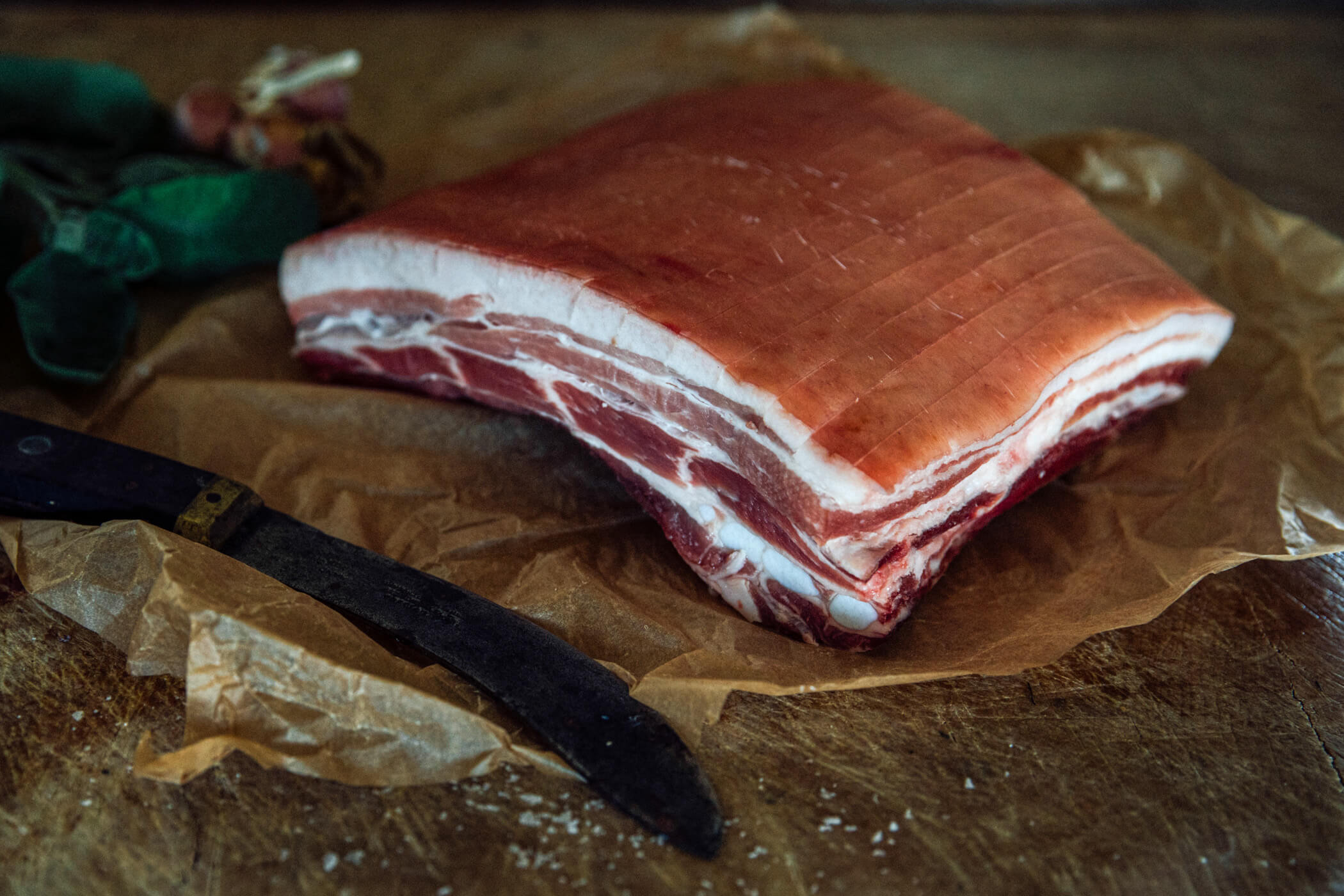
An aged pork belly on some butchers paper, on a wooden block, with a knife laid next to it.

What Is Pork Belly?

How to Cook Pork Belly: Pork belly is a richly marbled cut taken from the middle section of the pig, following on from the loin. It includes the flesh from the underside of the animal along with a large portion of the rib cage. This cut is made up of alternating layers of meat and fat, giving it its distinctive succulence and depth of flavour.

Known for its versatility, pork belly can be slow roasted until meltingly tender with crisp crackling, braised for added richness, or cured and smoked to make bacon. It’s a favourite in a range of global cuisines, from British roasts to Chinese red-cooked pork and crispy Filipino lechon kawali.

How Long to Cook Pork Belly?

One of the great advantages of pork belly, and a key reason for its popularity across so many cuisines, is its exceptional versatility. It can be cooked in a wide range of styles, from slow smoking or confiting over several hours to quick grilling or searing in just minutes.

Even when roasting, there is room for preference. Some favour a long, slow roast until the flesh is tender and falling apart, while others prefer a shorter roast that leaves the meat slightly pink and full of moisture.

In short, there is no single answer to how long pork belly should be cooked. It depends entirely on your chosen method, desired texture, and the role it plays in your dish.

How to Cook a Pork Belly Joint

There are countless ways to prepare pork belly, but for the sake of clarity, we’ve chosen just one. This is our go-to method for slow roasting a pork belly joint, perfect for Sunday lunch.

  1. Remove the pork belly from the fridge and its packaging, then pat it dry with kitchen towel.
  2. Season generously with salt and place on a trivet of roughly chopped vegetables.
  3. Transfer to an oven preheated to 200°C and roast for 15 minutes. Reduce the temperature to 140°C and cook for a further 2½ to 3 hours.
  4. Check the crackling — if it needs crisping, increase the heat to 200°C and roast for an additional 15 minutes.
  5. Remove from the oven and rest for at least 30 minutes before carving.

Top Tips for Perfect Pork Belly

  • Grind fennel seeds and black peppercorns using a pestle and mortar, then mix with sea salt to create a deeply aromatic seasoning for the skin.
  • If possible, season the pork belly up to six hours before cooking. This allows the salt time to penetrate the meat and helps draw out moisture from the skin for superior crackling.
  • Dry the skin thoroughly. For best results, leave the belly uncovered in the fridge overnight to allow the skin to dry completely before roasting.
  • Score the skin with a sharp knife to encourage even rendering of fat and crisp, golden crackling across the surface.
  • Pour boiling water over the skin before seasoning. This tightens the skin, making it easier to score and enhancing the crackling — just be sure to dry thoroughly afterwards.
  • Use a wire rack or trivet of chopped vegetables to elevate the meat. This promotes even heat circulation and allows fat to render cleanly beneath.
  • Add a splash of white wine, cider, or stock to the tray. This helps keep the belly moist during cooking and creates a flavourful base for a gravy or jus.
  • Before carving, remove the rib cage in one piece. The ribs can be kept and enjoyed later in the week — packed with flavour and perfect for a quick meal.
  • Always rest the pork belly for at least 30 minutes before carving. This allows the meat to relax and the juices to redistribute, ensuring tender slices every time.

Pork Belly Recipes

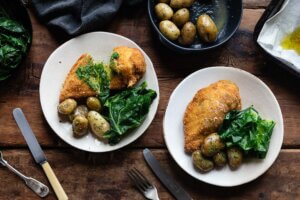
While the recipe above pairs beautifully with classic roast dinner trimmings, there are other delicious directions to explore. Try serving the slow-roasted belly with an endive gratin and a peppery watercress salad for something a little lighter.

For a more adventurous take, Georger Ryle’s Taiwanese Pork Belly Bao Buns with Pickled Vegetables offer a richly satisfying alternative — soft, pillowy, and full of flavour.

Order meat online

Instagram

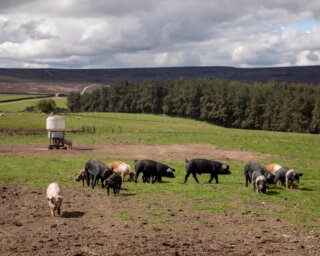
  • A recent visit to see Ed Stavely’s pigs on the Swinton Estate, where a landscape not traditionally associated with pig keeping is slowly being reshaped through careful management and a willingness to do things a little differently.

The pigs are largely native breeds, often crossed with Duroc to help them fare better through the long Yorkshire winters and the exposed conditions up on the estate. Hardy, slow-growing animals that seem to suit both the land and the philosophy behind the system.

They are part of a wider effort to restore ground that had, in places, drifted too far from balance. Their rooting clears rougher areas, disturbs the soil naturally and creates opportunities for new herbal lays, healthier pasture and eventually species-rich hay meadows to return.

There are certainly easier places to rear pigs, but it is difficult not to admire the determination to make this sort of farming work in a landscape like this, where the focus stretches beyond production alone and towards the long-term health of the land itself.
  • Take a little inspiration from our very own grill master @grylos when it comes to cooking your big, bone in steaks. This method takes time, skill and plenty of patience but the result is a deep, dark char, beautiful blushing pink flesh and melting buttery fat. We can safely say, after this day we spent in the field, that it is well worth the effort. Close to steak perfection. 

Plus, he knocked up a charred spring vegetable green sauce, which was an ideal foil for that most delicious of steaks – clever boy. 

The idea is to spend time building a char and crust with many short visits to the hottest part of the grill, interspersed with time away from the grill, somewhere warm, slowly coming up to temperature. Placing it directly on the coals at the end is a bit of a gimmick, however, it did yield excellent results, so maybe give it a go (only if you have good quality charcoal though!)!

Steak perfection!!
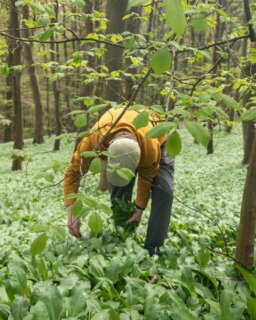
  • To our friends down south, you might have noticed Yorkshire is still a good few weeks behind the march towards summer. The trees are only just coming into leaf in the Dales, especially up in Upper Wharfedale, and that gives us a little more time with the wild garlic.

Here is @grylos with what feels like one of his best ideas to date.

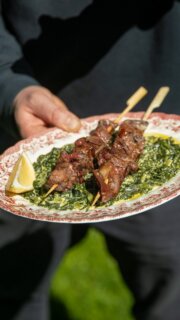
A proper use of those essential carcass balance cuts. Lamb hearts, though this would work just as well with tongues, sweetbreads or liver. Cooked simply, well seasoned, finished with a little lemon.

Alongside it, wild garlic taken from the darker, shaded parts of the woodland where it is still fresh. Even if it has started to turn, it holds up. Treated like spinach, wilted down, then cooked with oil, salt and cream, left to reduce until it becomes rich and full of flavour.

A brilliant little starter for our chefs blackboards, and something that will more than hold its own at home.

A dish for the season, if ever there was one.
  • We are reaching the end of our wild garlic sausages, as the season begins to slip away and only the deeper, shaded pockets of woodland still offer the tender leaves we rely on.

It is from these cooler, quieter areas that we are still able to gather what we need, though even here the plants are beginning to turn, and once the flowers arrive, the flavour shifts and our time with wild garlic comes to a close for another year.

As ever, we follow the season rather than stretch it, working with what is left while it is still at its best, which means if you have been enjoying them, or have been meaning to try them, now is the time to cook them or put a few aside for later.

Before long, they will be gone, and we will wait for spring to bring them back again.
  • A while back we had the pleasure of visiting @petea25 at the @cantonarms Arms, where we spoke about their ever evolving menu, a place that is not afraid to cook things until they are gone and then move on to something new.

We saw how they treated the Swaledale pork chop, and it told you everything you needed to know. Cooked with care, handled properly, and full of flavour.
It was, simply, delicious.
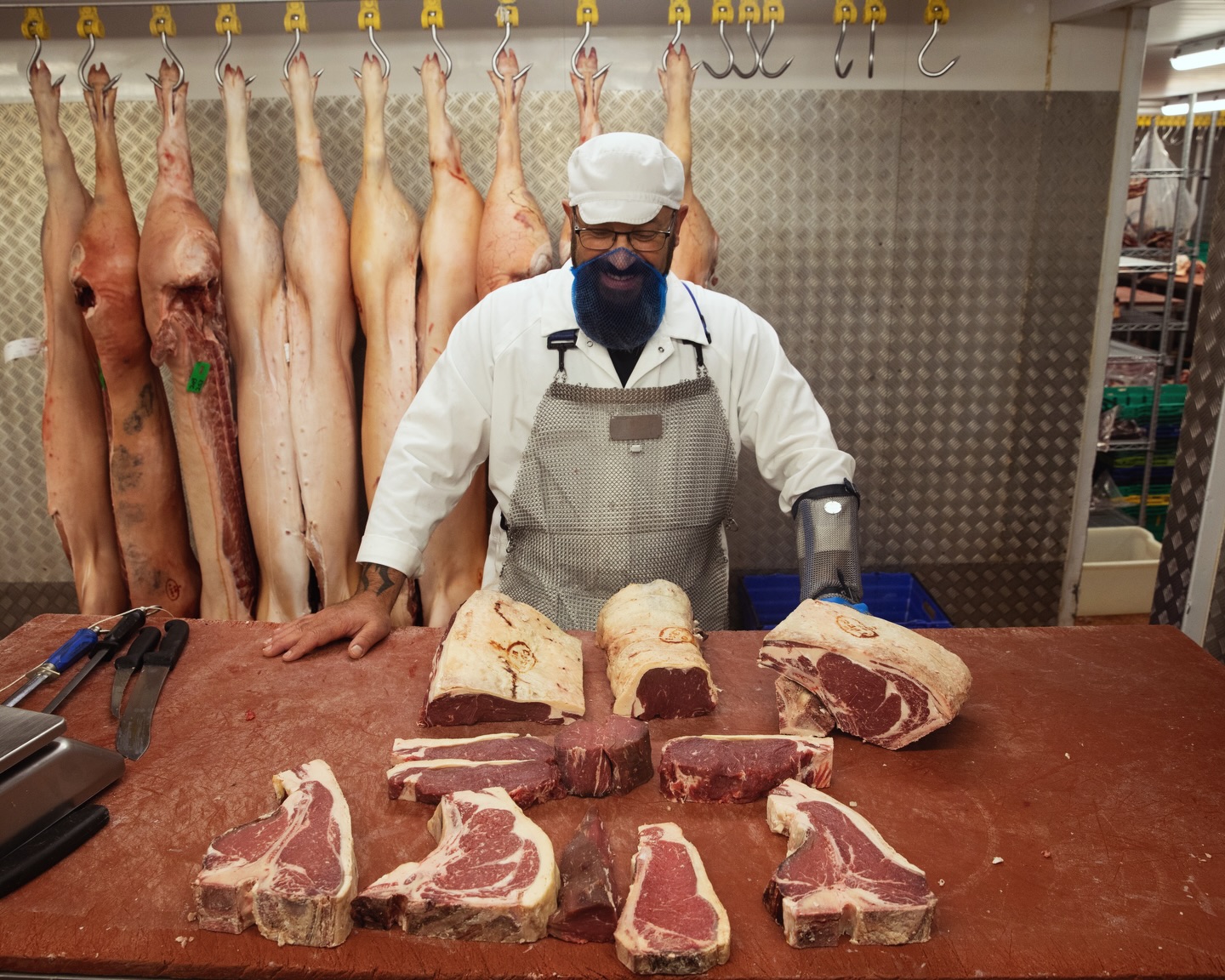
  • Here’s our Trevor, stood in front of an expertly butchered sirloin section.

Porterhouse, T bone, Wing rib, New York strip, fillet, sirloin.

All cut from the same part of the animal, each one offering something slightly different.

Key question is; which one are you taking?
  • The Dales never hurry themselves into spring, and this year is no different. You can drive through them and still feel winter holding on, yet something has shifted all the same.

It begins quietly. Hawthorn shows along the hedgerows, just enough to catch the eye. The grass is lifting, the fields softening, losing that tired, flattened look they carry through the colder months.

Out on the land, the change is clearer. Lambs are scattered across the fields, finding their feet, while cattle have been turned back out and settle easily into the pasture. There is a rhythm to it again, a sense that the farms are beginning to move.

Nothing arrives all at once. It comes on steadily, almost cautiously, as the land turns back to life.
  • The fallacy of Spring lamb!

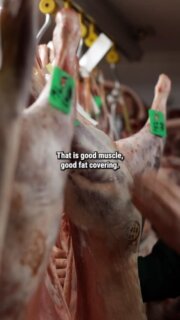
When we eat lamb in early April, we aren’t eating the lovely little fluffy things people see hopping about in the fields. In fact, you’re actually eating – or at least you are if you are buying from us – old season lamb. The animals that were born the previous springtime. They are age wise, on the verge of morphing into hogget and, in our opinion, it is lamb at its very best. More flavourful as the meat has developed with age, but still with the tenderness one expects with lamb. 
One thing that is not in doubt is that it pairs perfectly with a lot of the seasonal ingredients of this time of year, the peas, broad beans and courgettes from the continent, plus Jersey royals, asparagus and wild garlic from these shores. 
We have plenty of these wonderful carcasses ageing in our fridges, so embrace the idea of eating last years spring lamb!
A recent visit to see Ed Stavely’s pigs on the Swinton Estate, where a landscape not traditionally associated with pig keeping is slowly being reshaped through careful management and a willingness to do things a little differently.

The pigs are largely native breeds, often crossed with Duroc to help them fare better through the long Yorkshire winters and the exposed conditions up on the estate. Hardy, slow-growing animals that seem to suit both the land and the philosophy behind the system.

They are part of a wider effort to restore ground that had, in places, drifted too far from balance. Their rooting clears rougher areas, disturbs the soil naturally and creates opportunities for new herbal lays, healthier pasture and eventually species-rich hay meadows to return.

There are certainly easier places to rear pigs, but it is difficult not to admire the determination to make this sort of farming work in a landscape like this, where the focus stretches beyond production alone and towards the long-term health of the land itself.
A recent visit to see Ed Stavely’s pigs on the Swinton Estate, where a landscape not traditionally associated with pig keeping is slowly being reshaped through careful management and a willingness to do things a little differently.

The pigs are largely native breeds, often crossed with Duroc to help them fare better through the long Yorkshire winters and the exposed conditions up on the estate. Hardy, slow-growing animals that seem to suit both the land and the philosophy behind the system.

They are part of a wider effort to restore ground that had, in places, drifted too far from balance. Their rooting clears rougher areas, disturbs the soil naturally and creates opportunities for new herbal lays, healthier pasture and eventually species-rich hay meadows to return.

There are certainly easier places to rear pigs, but it is difficult not to admire the determination to make this sort of farming work in a landscape like this, where the focus stretches beyond production alone and towards the long-term health of the land itself.
A recent visit to see Ed Stavely’s pigs on the Swinton Estate, where a landscape not traditionally associated with pig keeping is slowly being reshaped through careful management and a willingness to do things a little differently.

The pigs are largely native breeds, often crossed with Duroc to help them fare better through the long Yorkshire winters and the exposed conditions up on the estate. Hardy, slow-growing animals that seem to suit both the land and the philosophy behind the system.

They are part of a wider effort to restore ground that had, in places, drifted too far from balance. Their rooting clears rougher areas, disturbs the soil naturally and creates opportunities for new herbal lays, healthier pasture and eventually species-rich hay meadows to return.

There are certainly easier places to rear pigs, but it is difficult not to admire the determination to make this sort of farming work in a landscape like this, where the focus stretches beyond production alone and towards the long-term health of the land itself.
A recent visit to see Ed Stavely’s pigs on the Swinton Estate, where a landscape not traditionally associated with pig keeping is slowly being reshaped through careful management and a willingness to do things a little differently.

The pigs are largely native breeds, often crossed with Duroc to help them fare better through the long Yorkshire winters and the exposed conditions up on the estate. Hardy, slow-growing animals that seem to suit both the land and the philosophy behind the system.

They are part of a wider effort to restore ground that had, in places, drifted too far from balance. Their rooting clears rougher areas, disturbs the soil naturally and creates opportunities for new herbal lays, healthier pasture and eventually species-rich hay meadows to return.

There are certainly easier places to rear pigs, but it is difficult not to admire the determination to make this sort of farming work in a landscape like this, where the focus stretches beyond production alone and towards the long-term health of the land itself.
A recent visit to see Ed Stavely’s pigs on the Swinton Estate, where a landscape not traditionally associated with pig keeping is slowly being reshaped through careful management and a willingness to do things a little differently. The pigs are largely native breeds, often crossed with Duroc to help them fare better through the long Yorkshire winters and the exposed conditions up on the estate. Hardy, slow-growing animals that seem to suit both the land and the philosophy behind the system. They are part of a wider effort to restore ground that had, in places, drifted too far from balance. Their rooting clears rougher areas, disturbs the soil naturally and creates opportunities for new herbal lays, healthier pasture and eventually species-rich hay meadows to return. There are certainly easier places to rear pigs, but it is difficult not to admire the determination to make this sort of farming work in a landscape like this, where the focus stretches beyond production alone and towards the long-term health of the land itself.
18 hours ago
121
View on Instagram |
1/8
Take a little inspiration from our very own grill master @grylos when it comes to cooking your big, bone in steaks. This method takes time, skill and plenty of patience but the result is a deep, dark char, beautiful blushing pink flesh and melting buttery fat. We can safely say, after this day we spent in the field, that it is well worth the effort. Close to steak perfection. Plus, he knocked up a charred spring vegetable green sauce, which was an ideal foil for that most delicious of steaks – clever boy. The idea is to spend time building a char and crust with many short visits to the hottest part of the grill, interspersed with time away from the grill, somewhere warm, slowly coming up to temperature. Placing it directly on the coals at the end is a bit of a gimmick, however, it did yield excellent results, so maybe give it a go (only if you have good quality charcoal though!)! Steak perfection!!
2 weeks ago
1,16331
View on Instagram |
2/8
To our friends down south, you might have noticed Yorkshire is still a good few weeks behind the march towards summer. The trees are only just coming into leaf in the Dales, especially up in Upper Wharfedale, and that gives us a little more time with the wild garlic. Here is @grylos with what feels like one of his best ideas to date. A proper use of those essential carcass balance cuts. Lamb hearts, though this would work just as well with tongues, sweetbreads or liver. Cooked simply, well seasoned, finished with a little lemon. Alongside it, wild garlic taken from the darker, shaded parts of the woodland where it is still fresh. Even if it has started to turn, it holds up. Treated like spinach, wilted down, then cooked with oil, salt and cream, left to reduce until it becomes rich and full of flavour. A brilliant little starter for our chefs blackboards, and something that will more than hold its own at home. A dish for the season, if ever there was one.
2 weeks ago
1819
View on Instagram |
3/8
We are reaching the end of our wild garlic sausages, as the season begins to slip away and only the deeper, shaded pockets of woodland still offer the tender leaves we rely on.

It is from these cooler, quieter areas that we are still able to gather what we need, though even here the plants are beginning to turn, and once the flowers arrive, the flavour shifts and our time with wild garlic comes to a close for another year.

As ever, we follow the season rather than stretch it, working with what is left while it is still at its best, which means if you have been enjoying them, or have been meaning to try them, now is the time to cook them or put a few aside for later.

Before long, they will be gone, and we will wait for spring to bring them back again.
We are reaching the end of our wild garlic sausages, as the season begins to slip away and only the deeper, shaded pockets of woodland still offer the tender leaves we rely on.

It is from these cooler, quieter areas that we are still able to gather what we need, though even here the plants are beginning to turn, and once the flowers arrive, the flavour shifts and our time with wild garlic comes to a close for another year.

As ever, we follow the season rather than stretch it, working with what is left while it is still at its best, which means if you have been enjoying them, or have been meaning to try them, now is the time to cook them or put a few aside for later.

Before long, they will be gone, and we will wait for spring to bring them back again.
We are reaching the end of our wild garlic sausages, as the season begins to slip away and only the deeper, shaded pockets of woodland still offer the tender leaves we rely on.

It is from these cooler, quieter areas that we are still able to gather what we need, though even here the plants are beginning to turn, and once the flowers arrive, the flavour shifts and our time with wild garlic comes to a close for another year.

As ever, we follow the season rather than stretch it, working with what is left while it is still at its best, which means if you have been enjoying them, or have been meaning to try them, now is the time to cook them or put a few aside for later.

Before long, they will be gone, and we will wait for spring to bring them back again.
We are reaching the end of our wild garlic sausages, as the season begins to slip away and only the deeper, shaded pockets of woodland still offer the tender leaves we rely on. It is from these cooler, quieter areas that we are still able to gather what we need, though even here the plants are beginning to turn, and once the flowers arrive, the flavour shifts and our time with wild garlic comes to a close for another year. As ever, we follow the season rather than stretch it, working with what is left while it is still at its best, which means if you have been enjoying them, or have been meaning to try them, now is the time to cook them or put a few aside for later. Before long, they will be gone, and we will wait for spring to bring them back again.
3 weeks ago
751
View on Instagram |
4/8
A while back we had the pleasure of visiting @petea25 at the @cantonarms Arms, where we spoke about their ever evolving menu, a place that is not afraid to cook things until they are gone and then move on to something new. We saw how they treated the Swaledale pork chop, and it told you everything you needed to know. Cooked with care, handled properly, and full of flavour. It was, simply, delicious.
3 weeks ago
37610
View on Instagram |
5/8
Here’s our Trevor, stood in front of an expertly butchered sirloin section.

Porterhouse, T bone, Wing rib, New York strip, fillet, sirloin.

All cut from the same part of the animal, each one offering something slightly different.

Key question is; which one are you taking?
Here’s our Trevor, stood in front of an expertly butchered sirloin section. Porterhouse, T bone, Wing rib, New York strip, fillet, sirloin. All cut from the same part of the animal, each one offering something slightly different. Key question is; which one are you taking?
4 weeks ago
601
View on Instagram |
6/8
The Dales never hurry themselves into spring, and this year is no different. You can drive through them and still feel winter holding on, yet something has shifted all the same.

It begins quietly. Hawthorn shows along the hedgerows, just enough to catch the eye. The grass is lifting, the fields softening, losing that tired, flattened look they carry through the colder months.

Out on the land, the change is clearer. Lambs are scattered across the fields, finding their feet, while cattle have been turned back out and settle easily into the pasture. There is a rhythm to it again, a sense that the farms are beginning to move.

Nothing arrives all at once. It comes on steadily, almost cautiously, as the land turns back to life.
The Dales never hurry themselves into spring, and this year is no different. You can drive through them and still feel winter holding on, yet something has shifted all the same.

It begins quietly. Hawthorn shows along the hedgerows, just enough to catch the eye. The grass is lifting, the fields softening, losing that tired, flattened look they carry through the colder months.

Out on the land, the change is clearer. Lambs are scattered across the fields, finding their feet, while cattle have been turned back out and settle easily into the pasture. There is a rhythm to it again, a sense that the farms are beginning to move.

Nothing arrives all at once. It comes on steadily, almost cautiously, as the land turns back to life.
The Dales never hurry themselves into spring, and this year is no different. You can drive through them and still feel winter holding on, yet something has shifted all the same.

It begins quietly. Hawthorn shows along the hedgerows, just enough to catch the eye. The grass is lifting, the fields softening, losing that tired, flattened look they carry through the colder months.

Out on the land, the change is clearer. Lambs are scattered across the fields, finding their feet, while cattle have been turned back out and settle easily into the pasture. There is a rhythm to it again, a sense that the farms are beginning to move.

Nothing arrives all at once. It comes on steadily, almost cautiously, as the land turns back to life.
The Dales never hurry themselves into spring, and this year is no different. You can drive through them and still feel winter holding on, yet something has shifted all the same.

It begins quietly. Hawthorn shows along the hedgerows, just enough to catch the eye. The grass is lifting, the fields softening, losing that tired, flattened look they carry through the colder months.

Out on the land, the change is clearer. Lambs are scattered across the fields, finding their feet, while cattle have been turned back out and settle easily into the pasture. There is a rhythm to it again, a sense that the farms are beginning to move.

Nothing arrives all at once. It comes on steadily, almost cautiously, as the land turns back to life.
The Dales never hurry themselves into spring, and this year is no different. You can drive through them and still feel winter holding on, yet something has shifted all the same.

It begins quietly. Hawthorn shows along the hedgerows, just enough to catch the eye. The grass is lifting, the fields softening, losing that tired, flattened look they carry through the colder months.

Out on the land, the change is clearer. Lambs are scattered across the fields, finding their feet, while cattle have been turned back out and settle easily into the pasture. There is a rhythm to it again, a sense that the farms are beginning to move.

Nothing arrives all at once. It comes on steadily, almost cautiously, as the land turns back to life.
The Dales never hurry themselves into spring, and this year is no different. You can drive through them and still feel winter holding on, yet something has shifted all the same. It begins quietly. Hawthorn shows along the hedgerows, just enough to catch the eye. The grass is lifting, the fields softening, losing that tired, flattened look they carry through the colder months. Out on the land, the change is clearer. Lambs are scattered across the fields, finding their feet, while cattle have been turned back out and settle easily into the pasture. There is a rhythm to it again, a sense that the farms are beginning to move. Nothing arrives all at once. It comes on steadily, almost cautiously, as the land turns back to life.
4 weeks ago
491
View on Instagram |
7/8
The fallacy of Spring lamb! When we eat lamb in early April, we aren’t eating the lovely little fluffy things people see hopping about in the fields. In fact, you’re actually eating – or at least you are if you are buying from us – old season lamb. The animals that were born the previous springtime. They are age wise, on the verge of morphing into hogget and, in our opinion, it is lamb at its very best. More flavourful as the meat has developed with age, but still with the tenderness one expects with lamb. One thing that is not in doubt is that it pairs perfectly with a lot of the seasonal ingredients of this time of year, the peas, broad beans and courgettes from the continent, plus Jersey royals, asparagus and wild garlic from these shores. We have plenty of these wonderful carcasses ageing in our fridges, so embrace the idea of eating last years spring lamb!
1 month ago
662
View on Instagram |
8/8