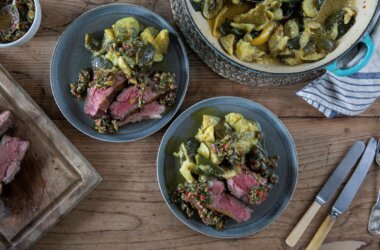
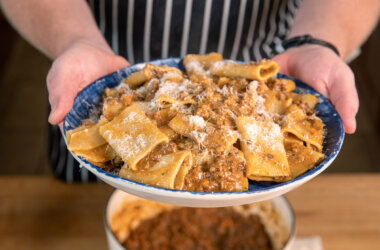
If you get this recipe right, and I’ve laid out exactly how to achieve that below, then this is a fabulous dish, fit for any table. Beautifully roasted aged native-breed beef, a side of potatoes and ceps, and a salad. Like most of the best things in food, it’s simple and it makes sense. You know you want it.
There are occasions in kitchens when, without even really trying, everything just falls into place. Clarity and harmony present themselves, out of the blue, and it is both pleasing and stimulating in almost equal measure, especially if you are drawn to the simpler, more restrained end of the recipe spectrum. This recipe was one of those rare moments for me. The moment I saw the fresh ceps and that majestic piece of beef, I knew exactly what I wanted to cook. And I felt fairly sure how it would taste; my suspicions were confirmed when, after a couple of hours of cooking and photo shooting, we were able to eat some. A truly delicious plate of food.
Serves: 4
Prep time: 30 minutes (plus resting time for the rump)
Cook time: 2 hours
Ingredients
Salad
Method
First Start with the Potatoes
- Preheat your oven to 150°C.
- Place the cream, milk, garlic, sage and a good few twists of black pepper into a saucepan and set over a low heat for 15 minutes to allow the flavours to infuse.
- Meanwhile, slice the ceps about 1cm thick. Set a frying pan or cast-iron skillet over a high heat and sauté the ceps in butter with a good pinch of salt until beautifully golden brown. Do this in batches so as not to overcrowd the pan. Once golden, set aside on a plate.
- Using a very sharp knife or, better still, a mandolin, slice the potatoes to approximately 2mm thickness and pop them in a large bowl.
- Pour the cream mixture through a sieve onto the potatoes, then add the ceps and season well with sea salt. Mix everything with your hands, ensuring the potatoes are well coated.
- In a large ovenproof dish, start to layer the potatoes and ceps. This doesn’t need to be too neat, though layering helps distribute the ceps evenly. Once everything is in the dish, pour over any excess cream.
- Place in the oven and cook for 1 hour. Remove, grate the Gruyère cheese all over the top, then return to the oven for a further 30 minutes.
To Cook the Beef
- Remove the beef from the fridge at least 3 hours before cooking so it comes up to room temperature. About an hour before cooking, season the rump well with sea salt.
- Set a large pan or cast-iron skillet over a medium heat.
- Add a small glug of oil, then place the rump, fat side down, into the pan. Allow the fat to render and brown, then rotate the rump until browned all over. This might take up to 10 minutes.
- Transfer to the oven and cook for around 50 minutes, flipping halfway through. To test if it is cooked, insert a cake tester or small sharp knife into the centre of the joint, then touch the metal to your bottom lip. It should feel warm, roughly 3–7°C above body temperature.
- Remove from the oven and leave to rest for 1 hour.
For the Salad
- Put the Dijon, vinegar, olive oil and a good pinch of sea salt into a small jar with a lid. Close the lid and shake vigorously to make the dressing.
- Pop the watercress, radicchio and hazelnuts into a salad bowl. Dress well and toss, then shave the Parmesan over the top.