Recipes, Pork Recipes, Steak Recipes

Pork Ribeye Steak with Broccoli & Anchovy Mayonnaise

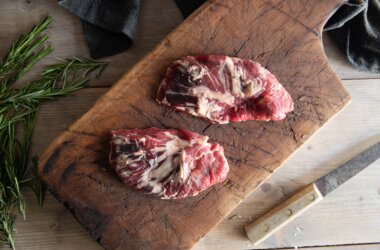
I think you’ll find this pork ribeye steak recipe something of a revelation, perfectly marbled and cooked to a blushing medium. Paired with a punchy anchovy and caper mayonnaise, it makes for a quick and relatively easy supper.

This is a versatile cut from the pig, and whilst it lends itself well to slow-cooking, I believe it’s at its best treated like a steak: deeply coloured and flavourful on the outside, pink and tender within. The natural marbling ensures a juicy, satisfying finish.

Anchovy, in my view, deserves a reclassification as the chef’s best friend. It’s a standout ingredient in its own right – think of it on top of a slice of good bread with a ripe summer tomato – but it also forms the backbone of countless salsas, dressings and emulsions that bring life to meat, fish and vegetables alike. It’s a gift – use it with abandon.

Serves 2

Ingredients

Anchovy Mayonnaise

Method

To Make the Anchovy Mayonnaise

  1. A couple of disclaimers: you’ll need a food processor or blender for this, and it will make more than you need for one meal. (It’s difficult to make a small batch of an emulsion like this.) The excess will keep in the fridge for 3 to 4 days and is excellent with grilled vegetables, cold meats or fish.
  2. Add the anchovies, capers, garlic, a teaspoon of vinegar and the egg yolks to the blender. Blend on high speed for a couple of minutes until completely smooth.
  3. Add 1 tablespoon of warm water and blitz again. Measure out 75ml of vegetable oil. Since extra virgin olive oil has a strong flavour and can turn slightly bitter in emulsions, it’s best to blend it with a more neutral oil.
  4. With the blender running on medium speed, slowly drizzle in the vegetable oil. Once fully incorporated, switch to extra virgin olive oil, adding it steadily until the mayonnaise reaches your desired consistency.
  5. Add half the lemon juice and blend again. Taste and adjust the seasoning. Additional salt may not be necessary due to the anchovies and capers. Balance the acidity with more lemon juice or vinegar if needed.

To Cook the Steaks and Char the Broccoli

  1. Remove the steaks from the fridge and their packaging at least an hour before cooking.
  2. Season generously with salt.
  3. Heat a frying pan or cast-iron skillet over high heat and add a tablespoon of olive oil. When the oil is just beginning to smoke, carefully add the steaks. Reduce the heat to medium and cook for 1 minute on one side, then turn and cook for 1 minute on the other.
  4. Flip the steaks again, then add a knob of butter, the garlic and the sage leaves. As the butter begins to foam, keep the steaks moving in the pan, turning them every 30 seconds. Continue cooking like this for 3 to 4 minutes over a medium to low heat, ensuring the butter stays foaming but does not burn.
  5. Remove the steaks from the pan and place on a plate to rest, pouring the butter, garlic and sage over the top. Rest for 10 minutes.
  6. While the steaks are resting, douse the shallot rings in a little Moscatel vinegar or another good-quality white wine vinegar.
  7. Blanch the broccoli in salted boiling water until just cooked. Drain, then add to the same pan used for the steaks. Set over high heat and fry, allowing the edges of the broccoli to char slightly.
  8. Toss the shallot rings through the broccoli and check the seasoning.
  9. Slice the steaks and serve with a generous dollop of the anchovy mayonnaise.

Order meat online

Instagram

  • Highland cattle get photographed a lot. They are turned into cuddly toys. But beneath the coat is a hardy animal that can stand the worst of a Yorkshire winter. That is why Andy Lambert grazes them high on the Dales, on rough ground where few other breeds would thrive. They are the one of the few cattle that can turn this hard landscape into rich, delicious beef. It feeds our chefs and home cooks across the country. We are grateful for them, and it is always a pleasure to see them on the tops.
  • A ragù alla bolognese with a few top tips from chef @grylos.

Beef, pork, and a little surprise at the end for real depth. Slow cooked until rich, deep, and properly delicious.

Find the full recipe on our journal and cook it slow this weekend. What’s your secret to a good bolognese?

@grylos 
@tom_saunderson
  • We love yellow fat. Do you?

This is an old Dexter. You do not see beef like this every day. When one comes in, we get a little excited.
  • One of the motivations for operating a whole carcass butchery model is access to the other bits – offal and ‘butchers cuts’. For us, they are just as important a part of the picture as the more famous, prime cuts. 
So, it gives us immense satisfaction that we now sell more of these delights then we ever have. For chefs understand that these cuts and organs offer something a little different. Yes, in terms of flavour and value but also, we think, in terms of creativity. A ribeye or a rack of lamb might inspire more classic garnishes, whereas an ox heart or a pig’s tongue allow the imaginations run a little freer. It takes skill and touch to cook these cuts well and the results can be extraordinary.
We’ll keep buying the whole carcasses, you guys keep cooking the offal and butcher’s cuts!
  • Small herds, native breeds, and wild game, all farmed and sourced with care, are what we’re about and what we care deeply for.

The partridge, often called the hedge chicken, is one of the best introductions to game. Mild, tender, full of flavour, and truly sustainable. In fact, we should be eating more of it to help prevent wastage from wild-shot game.

Here’s @grylos with an autumnal take on a classic: a partridge Caesar salad. It might just inspire you to give this delicious wild game a go.
  • Ceps, butter, onglet. A proper celebration of the season.

Available via our website…

Thanks @grylos
  • Anyone can age beef. Doesn’t make it good beef.

Great beef starts at its source. Well bred, right breed for the terrain, working with nature, not against it. Low stress, low stock density, fed on diverse pasture that isn’t overly rich or monocultured.

From there it’s about time. Then more time. And patience. And, to be honest, the right kit.

As ageing beef has become more popular, you see it in supermarkets and on high streets. But the reality is a lot of the kit used doesn’t stack up. It looks wow but creates mould. People push bad beef too far and try to make it sound interesting.

We’ve done our tests. We’ve listened to our chefs. We’ve custom-built our dry ager. And we know that when you start with quality, proper controlled ageing just enhances the flavour.
  • We’ve been gently reminded that, as butchers, we should probably say something about National Sausage Week.

Truth is, every week’s sausage week here. We love them. We make a lot of them. And, if we’re honest, we think they’re some of the best you’ll find anywhere.

Sausages sit right at the heart of proper whole-carcass butchery. They let us use everything — nose to tail — with care and craft. Made fresh, checked constantly, and built on great ingredients.

So yes, we’re partaking. Here’s 7 sausage recipes that you can find on our journal, with contributions from Jorge the Butcher, @grylos, @samnixon18, and @jacobkenedy
Highland cattle get photographed a lot. They are turned into cuddly toys. But beneath the coat is a hardy animal that can stand the worst of a Yorkshire winter. That is why Andy Lambert grazes them high on the Dales, on rough ground where few other breeds would thrive. They are the one of the few cattle that can turn this hard landscape into rich, delicious beef. It feeds our chefs and home cooks across the country. We are grateful for them, and it is always a pleasure to see them on the tops.
4 days ago
View on Instagram |
1/8
A ragù alla bolognese with a few top tips from chef @grylos. Beef, pork, and a little surprise at the end for real depth. Slow cooked until rich, deep, and properly delicious. Find the full recipe on our journal and cook it slow this weekend. What’s your secret to a good bolognese? @grylos @tom_saunderson
4 days ago
View on Instagram |
2/8
We love yellow fat. Do you? This is an old Dexter. You do not see beef like this every day. When one comes in, we get a little excited.
1 week ago
View on Instagram |
3/8
One of the motivations for operating a whole carcass butchery model is access to the other bits – offal and ‘butchers cuts’. For us, they are just as important a part of the picture as the more famous, prime cuts. 
So, it gives us immense satisfaction that we now sell more of these delights then we ever have. For chefs understand that these cuts and organs offer something a little different. Yes, in terms of flavour and value but also, we think, in terms of creativity. A ribeye or a rack of lamb might inspire more classic garnishes, whereas an ox heart or a pig’s tongue allow the imaginations run a little freer. It takes skill and touch to cook these cuts well and the results can be extraordinary.
We’ll keep buying the whole carcasses, you guys keep cooking the offal and butcher’s cuts!
One of the motivations for operating a whole carcass butchery model is access to the other bits – offal and ‘butchers cuts’. For us, they are just as important a part of the picture as the more famous, prime cuts. 
So, it gives us immense satisfaction that we now sell more of these delights then we ever have. For chefs understand that these cuts and organs offer something a little different. Yes, in terms of flavour and value but also, we think, in terms of creativity. A ribeye or a rack of lamb might inspire more classic garnishes, whereas an ox heart or a pig’s tongue allow the imaginations run a little freer. It takes skill and touch to cook these cuts well and the results can be extraordinary.
We’ll keep buying the whole carcasses, you guys keep cooking the offal and butcher’s cuts!
One of the motivations for operating a whole carcass butchery model is access to the other bits – offal and ‘butchers cuts’. For us, they are just as important a part of the picture as the more famous, prime cuts. 
So, it gives us immense satisfaction that we now sell more of these delights then we ever have. For chefs understand that these cuts and organs offer something a little different. Yes, in terms of flavour and value but also, we think, in terms of creativity. A ribeye or a rack of lamb might inspire more classic garnishes, whereas an ox heart or a pig’s tongue allow the imaginations run a little freer. It takes skill and touch to cook these cuts well and the results can be extraordinary.
We’ll keep buying the whole carcasses, you guys keep cooking the offal and butcher’s cuts!
One of the motivations for operating a whole carcass butchery model is access to the other bits – offal and ‘butchers cuts’. For us, they are just as important a part of the picture as the more famous, prime cuts. So, it gives us immense satisfaction that we now sell more of these delights then we ever have. For chefs understand that these cuts and organs offer something a little different. Yes, in terms of flavour and value but also, we think, in terms of creativity. A ribeye or a rack of lamb might inspire more classic garnishes, whereas an ox heart or a pig’s tongue allow the imaginations run a little freer. It takes skill and touch to cook these cuts well and the results can be extraordinary. We’ll keep buying the whole carcasses, you guys keep cooking the offal and butcher’s cuts!
3 weeks ago
View on Instagram |
4/8
Small herds, native breeds, and wild game, all farmed and sourced with care, are what we’re about and what we care deeply for. The partridge, often called the hedge chicken, is one of the best introductions to game. Mild, tender, full of flavour, and truly sustainable. In fact, we should be eating more of it to help prevent wastage from wild-shot game. Here’s @grylos with an autumnal take on a classic: a partridge Caesar salad. It might just inspire you to give this delicious wild game a go.
3 weeks ago
View on Instagram |
5/8
Ceps, butter, onglet. A proper celebration of the season. Available via our website… Thanks @grylos
4 weeks ago
View on Instagram |
6/8
Anyone can age beef. Doesn’t make it good beef. Great beef starts at its source. Well bred, right breed for the terrain, working with nature, not against it. Low stress, low stock density, fed on diverse pasture that isn’t overly rich or monocultured. From there it’s about time. Then more time. And patience. And, to be honest, the right kit. As ageing beef has become more popular, you see it in supermarkets and on high streets. But the reality is a lot of the kit used doesn’t stack up. It looks wow but creates mould. People push bad beef too far and try to make it sound interesting. We’ve done our tests. We’ve listened to our chefs. We’ve custom-built our dry ager. And we know that when you start with quality, proper controlled ageing just enhances the flavour.
1 month ago
View on Instagram |
7/8
We’ve been gently reminded that, as butchers, we should probably say something about National Sausage Week.

Truth is, every week’s sausage week here. We love them. We make a lot of them. And, if we’re honest, we think they’re some of the best you’ll find anywhere.

Sausages sit right at the heart of proper whole-carcass butchery. They let us use everything — nose to tail — with care and craft. Made fresh, checked constantly, and built on great ingredients.

So yes, we’re partaking. Here’s 7 sausage recipes that you can find on our journal, with contributions from Jorge the Butcher, @grylos, @samnixon18, and @jacobkenedy
We’ve been gently reminded that, as butchers, we should probably say something about National Sausage Week.

Truth is, every week’s sausage week here. We love them. We make a lot of them. And, if we’re honest, we think they’re some of the best you’ll find anywhere.

Sausages sit right at the heart of proper whole-carcass butchery. They let us use everything — nose to tail — with care and craft. Made fresh, checked constantly, and built on great ingredients.

So yes, we’re partaking. Here’s 7 sausage recipes that you can find on our journal, with contributions from Jorge the Butcher, @grylos, @samnixon18, and @jacobkenedy
We’ve been gently reminded that, as butchers, we should probably say something about National Sausage Week.

Truth is, every week’s sausage week here. We love them. We make a lot of them. And, if we’re honest, we think they’re some of the best you’ll find anywhere.

Sausages sit right at the heart of proper whole-carcass butchery. They let us use everything — nose to tail — with care and craft. Made fresh, checked constantly, and built on great ingredients.

So yes, we’re partaking. Here’s 7 sausage recipes that you can find on our journal, with contributions from Jorge the Butcher, @grylos, @samnixon18, and @jacobkenedy
We’ve been gently reminded that, as butchers, we should probably say something about National Sausage Week.

Truth is, every week’s sausage week here. We love them. We make a lot of them. And, if we’re honest, we think they’re some of the best you’ll find anywhere.

Sausages sit right at the heart of proper whole-carcass butchery. They let us use everything — nose to tail — with care and craft. Made fresh, checked constantly, and built on great ingredients.

So yes, we’re partaking. Here’s 7 sausage recipes that you can find on our journal, with contributions from Jorge the Butcher, @grylos, @samnixon18, and @jacobkenedy
We’ve been gently reminded that, as butchers, we should probably say something about National Sausage Week.

Truth is, every week’s sausage week here. We love them. We make a lot of them. And, if we’re honest, we think they’re some of the best you’ll find anywhere.

Sausages sit right at the heart of proper whole-carcass butchery. They let us use everything — nose to tail — with care and craft. Made fresh, checked constantly, and built on great ingredients.

So yes, we’re partaking. Here’s 7 sausage recipes that you can find on our journal, with contributions from Jorge the Butcher, @grylos, @samnixon18, and @jacobkenedy
We’ve been gently reminded that, as butchers, we should probably say something about National Sausage Week.

Truth is, every week’s sausage week here. We love them. We make a lot of them. And, if we’re honest, we think they’re some of the best you’ll find anywhere.

Sausages sit right at the heart of proper whole-carcass butchery. They let us use everything — nose to tail — with care and craft. Made fresh, checked constantly, and built on great ingredients.

So yes, we’re partaking. Here’s 7 sausage recipes that you can find on our journal, with contributions from Jorge the Butcher, @grylos, @samnixon18, and @jacobkenedy
We’ve been gently reminded that, as butchers, we should probably say something about National Sausage Week.

Truth is, every week’s sausage week here. We love them. We make a lot of them. And, if we’re honest, we think they’re some of the best you’ll find anywhere.

Sausages sit right at the heart of proper whole-carcass butchery. They let us use everything — nose to tail — with care and craft. Made fresh, checked constantly, and built on great ingredients.

So yes, we’re partaking. Here’s 7 sausage recipes that you can find on our journal, with contributions from Jorge the Butcher, @grylos, @samnixon18, and @jacobkenedy
We’ve been gently reminded that, as butchers, we should probably say something about National Sausage Week.

Truth is, every week’s sausage week here. We love them. We make a lot of them. And, if we’re honest, we think they’re some of the best you’ll find anywhere.

Sausages sit right at the heart of proper whole-carcass butchery. They let us use everything — nose to tail — with care and craft. Made fresh, checked constantly, and built on great ingredients.

So yes, we’re partaking. Here’s 7 sausage recipes that you can find on our journal, with contributions from Jorge the Butcher, @grylos, @samnixon18, and @jacobkenedy
We’ve been gently reminded that, as butchers, we should probably say something about National Sausage Week. Truth is, every week’s sausage week here. We love them. We make a lot of them. And, if we’re honest, we think they’re some of the best you’ll find anywhere. Sausages sit right at the heart of proper whole-carcass butchery. They let us use everything — nose to tail — with care and craft. Made fresh, checked constantly, and built on great ingredients. So yes, we’re partaking. Here’s 7 sausage recipes that you can find on our journal, with contributions from Jorge the Butcher, @grylos, @samnixon18, and @jacobkenedy
1 month ago
View on Instagram |
8/8