
A good steak does not need much interference, but the cut, fat content, seasoning, cooking method and final temperature all matter. Jorge Thomas, founder of Swaledale Butchers and a trained chef and butcher, answers the questions that make the biggest difference.
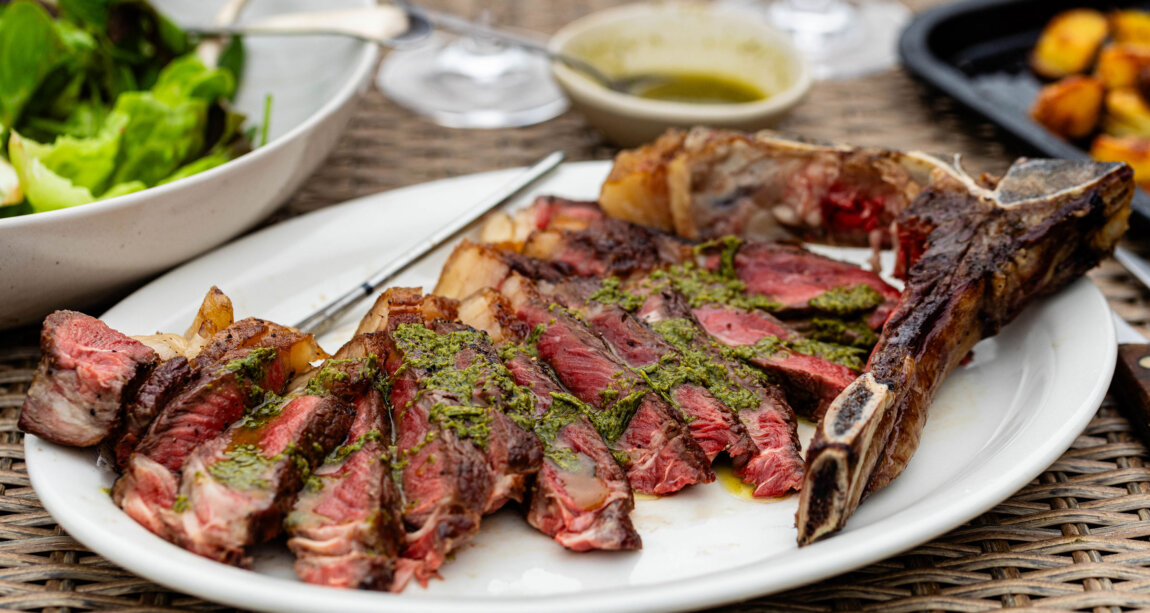
How does the cut of steak affect flavour?
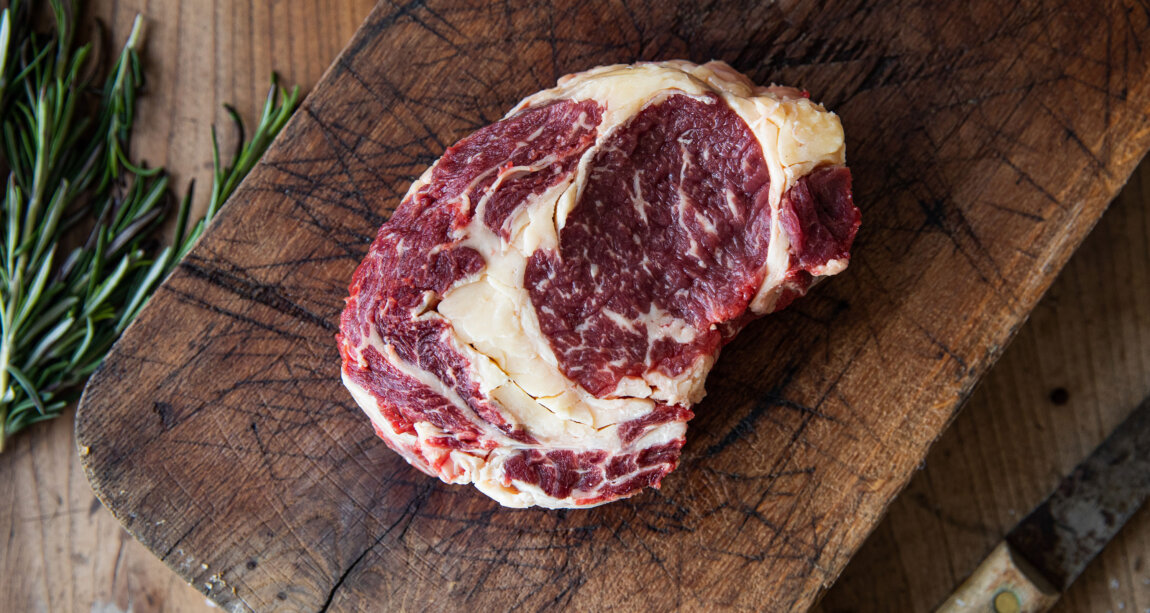
Fat plays a huge role. The saying goes that fat is flavour, and there is plenty of truth in that. Ribeye is the obvious example because the marbling brings both flavour and juiciness.
That said, leaner cuts are not without flavour. Where the muscle comes from matters too. Forequarter cuts such as flat iron or Denver often have more depth than tighter hindquarter muscles.
Texture comes into it as well. An open-textured steak like onglet is brilliant cooked rare to medium-rare, but take it too far and it can become almost carpet-like. A well-marbled ribeye gives you much more room for error.
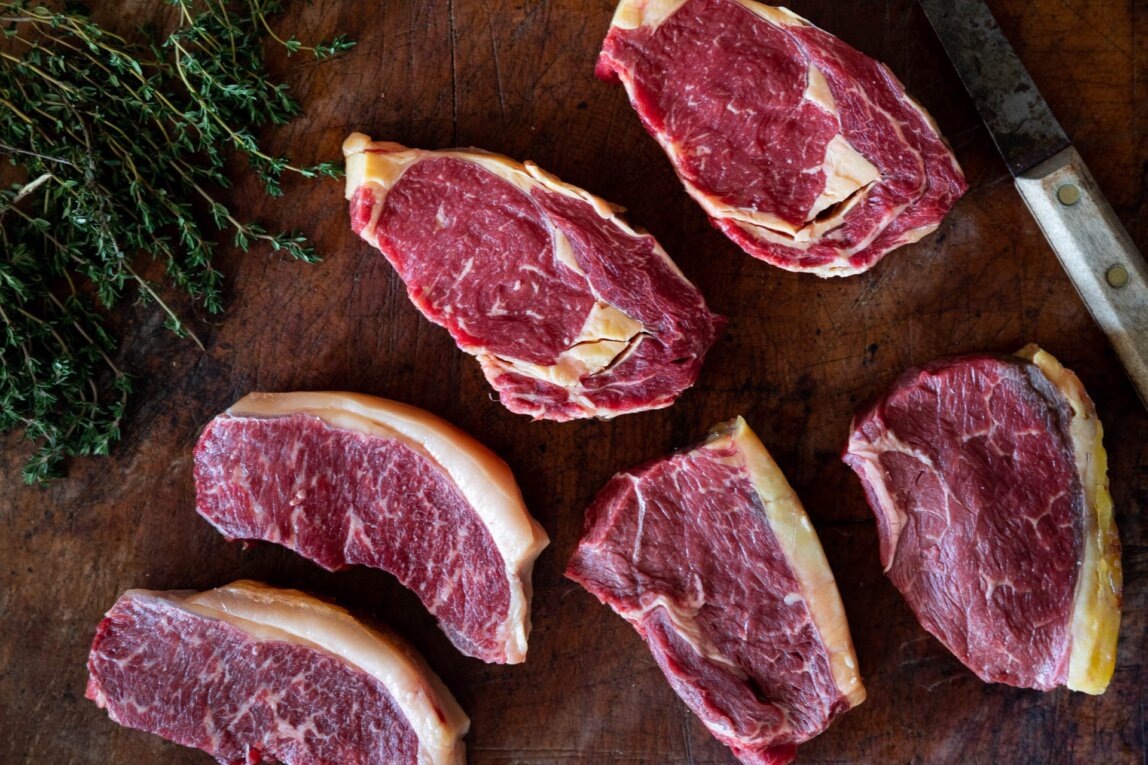
Which steak cuts have the most flavour?
There is no single answer, because flavour comes from fat, ageing, breed, how the animal was reared and the part of the carcass the steak comes from.
Ribeye is one of the richest because of its marbling. Onglet, skirt, flat iron and Denver all bring plenty of flavour too, although they eat very differently.
The important thing is to match the cut to the cooking method. A lean, tightly structured steak gives you less room for error. A more marbled cut is generally more forgiving.
Should you bring steak to room temperature before cooking?
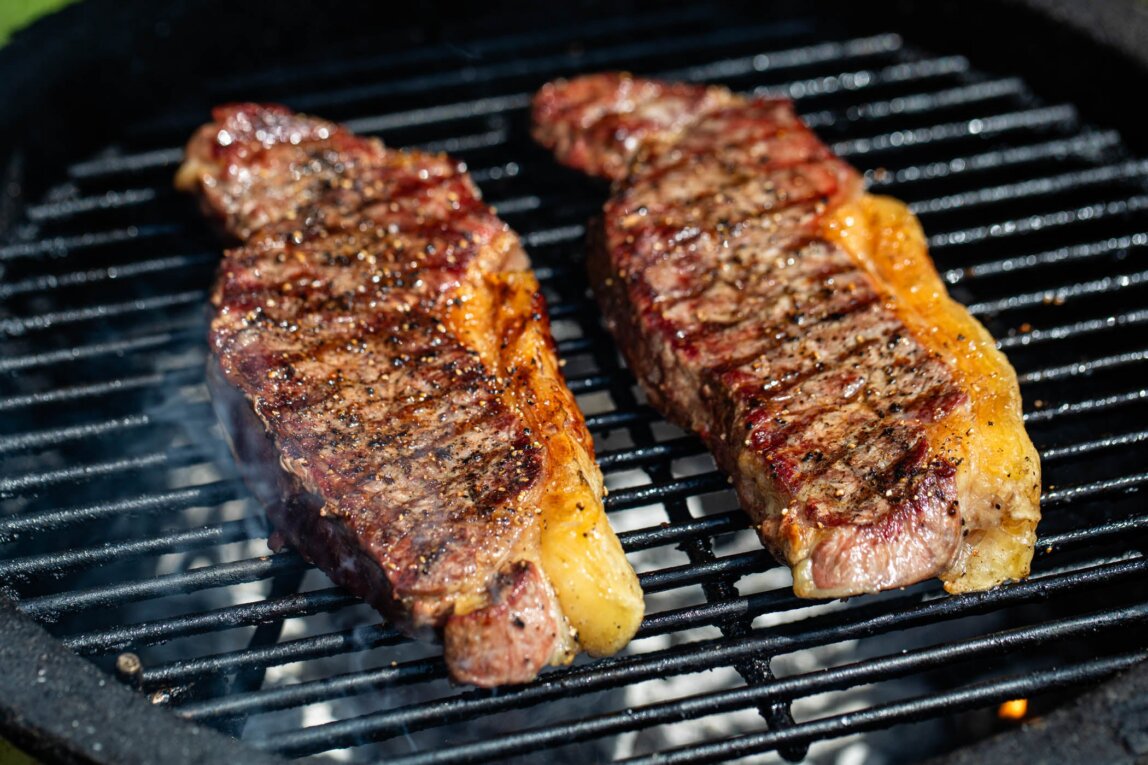
I prefer a room-temperature steak when cooking in a pan, but a colder steak can actually be an advantage when cooking over very high heat, for example on a barbecue.
A colder steak gives you more time to build colour and render fat before the centre reaches the correct level of doneness.
The bigger point is not to get hung up on one fixed rule. Think about the cut, its thickness and how you are cooking it.
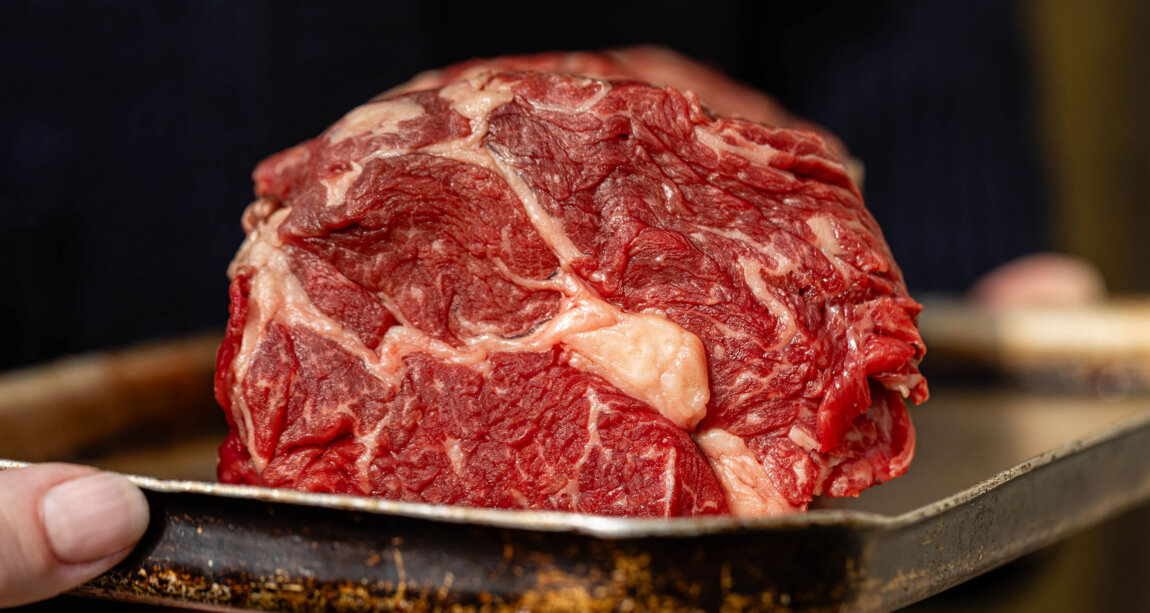
Why you should pat steak dry before cooking
Start by patting the steak dry.
Moisture encourages steaming rather than searing, whether you are cooking in a pan or on the barbecue. A dry surface gives you a much better chance of proper caramelisation and colour.
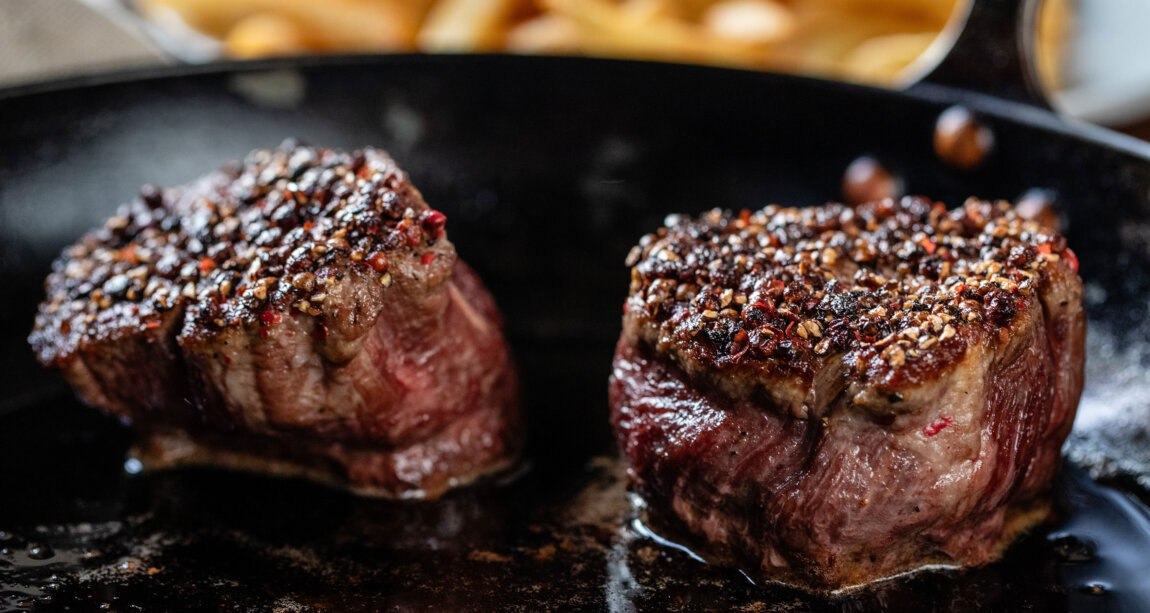
Season well with coarse sea salt and cracked black pepper. If cooking in a pan, use a neutral oil with a high smoking point, then add butter and hard herbs once you have the initial sear.
How should you season steak?
If you are starting with heritage-breed beef, raised on grass and properly dry-aged, salt and perhaps pepper should be enough. Let the flavour that is already there do the work.
I would usually rather add interest with a sauce than throw lots of seasoning at the steak itself.
Rosemary, thyme, garlic and spices such as cumin or ancho chilli can all work, but they should support the beef rather than bury it.
I am not a fan of soaking steak overnight in large amounts of red wine or other liquid. In my experience it does more harm than good.
How important is salt when cooking steak?
Very important.
I am completely in favour of seasoning before cooking, and often again afterwards. A steak seasoned properly before cooking develops a depth of flavour that you simply do not get by adding salt at the end.
You can also be more generous than people think because some of it will inevitably remain in the pan or on the grill.
The exception is when you are making a pan sauce. In that case, hold back slightly at the start because the seasoning left in the pan can make the sauce too salty.
Do you need to marinate or tenderise steak?
If the steak is good, no.
If you are working with a tougher muscle such as top rump, tenderising can help, but I would rather choose a cut suited to the cooking method in the first place.
Marinades can be useful, but they are not essential. Herbs, garlic, spices, vinegar, citrus and soy can all add something when used with restraint.
The beef should still be the point.
Should you cook steak with butter and herbs?
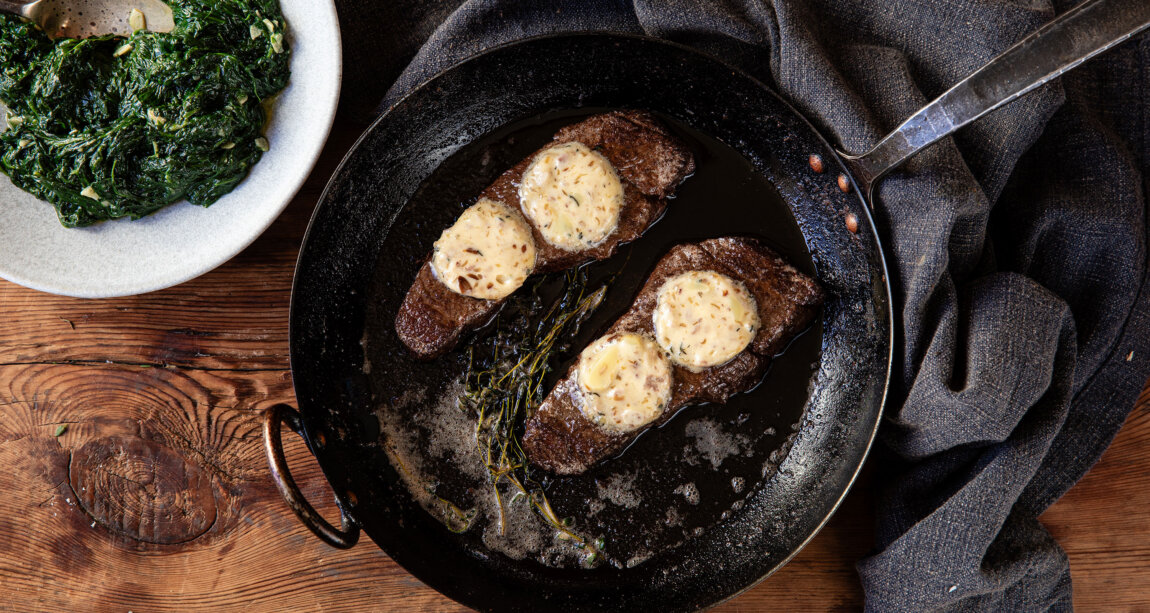
Yes. Butter helps with colour and flavour, but add it after the initial high-heat sear and reduce the heat once it goes into the pan.
Foaming, nut-brown butter is exactly what you want. Add hard herbs such as rosemary or thyme, then baste the steak continually.
It adds flavour, helps retain moisture and keeps the butter moving so it is less likely to burn.
Burnt butter will leave an acrid taste, so keep an eye on the heat.
Is steak better cooked over charcoal or in a pan?
I love steak over charcoal. Smoke, fire and a proper char can give you an incredible flavour, although I do think of smoke as a seasoning. Sometimes it is exactly what you want, sometimes it is not.
A steak cooked in a heavy pan and basted with foaming butter gives you a purer beef flavour, and you can use everything left in the pan to make a sauce. Cast iron works particularly well.
Both are excellent. Neither is better. They are just different.
For larger sharing steaks such as côte de boeuf, I like to sear first and then use a short spell in the oven to cook the meat more evenly.
I would not use the oven alone because you would struggle to get the same crust without overcooking the steak.

What temperature should steak be cooked to?
Temperature is everything. Experienced cooks can use touch and visual cues, but a simple probe thermometer is invaluable if you are unsure.
For medium-rare, around 52–53°C after resting is a good guide.
The mistake people make is waiting until the steak reaches the final target temperature before taking it off the heat.
Why steak keeps cooking whilst it rests
A steak does not stop cooking the second it leaves the pan or grill.
Heat from the outside continues to move towards the centre, so the internal temperature can rise by several degrees whilst the meat rests.
If you want a medium-rare steak at around 52–53°C, remove it from the heat roughly 4–5°C earlier and let the resting period finish the job.
That final bit of restraint makes a real difference.
Good beef should still taste of beef. Start with the right cut, season it properly, cook it with care and do not take it further than it needs to go.