How to Cook Wild Mushrooms: Autumn is the best time of year for foraging wild mushrooms in the UK. The combination of wet yet still mild weather and lowering ground temperatures creates perfect conditions for mushrooms to spawn and grow. Predominantly found in woodland, forests and occasionally fields, there are hundreds of varieties native to the UK, many of which are not edible. Of the edible varieties, a handful stand out for flavour, so keep an eye out for ceps (also known as penny buns or porcini), girolles, grey and black chanterelles, hen of the woods, beefsteak and morels. If you are planning to forage, please do your research and be certain you know what you are looking for. Wild mushrooms are also available from good greengrocers.
They are a true seasonal gem and, if you are lucky enough to have them in the kitchen, you have myriad options for how to use them. Before you start cooking, a little prep and cleaning helps. Two bits of kit make life easier: a paring knife and a mushroom brush. First, use the paring knife to cut away any dirt from the base of the stems, then scrape any dirt from the stem. Turn the mushroom upside down and use the brush to remove any dirt from the gills, brushing in the same direction as the gills and away from the mushroom. Continue with the brush to remove any remaining dirt from the cap.
In the case of morels, or very dirty mushrooms of any variety, give them a very quick rinse in cold water. Mushrooms behave like sponges, so do not let them soak. Fill a bowl or container with cold water and briefly drop the mushrooms in, agitate with your fingers, then lift out onto kitchen paper or a clean cloth.
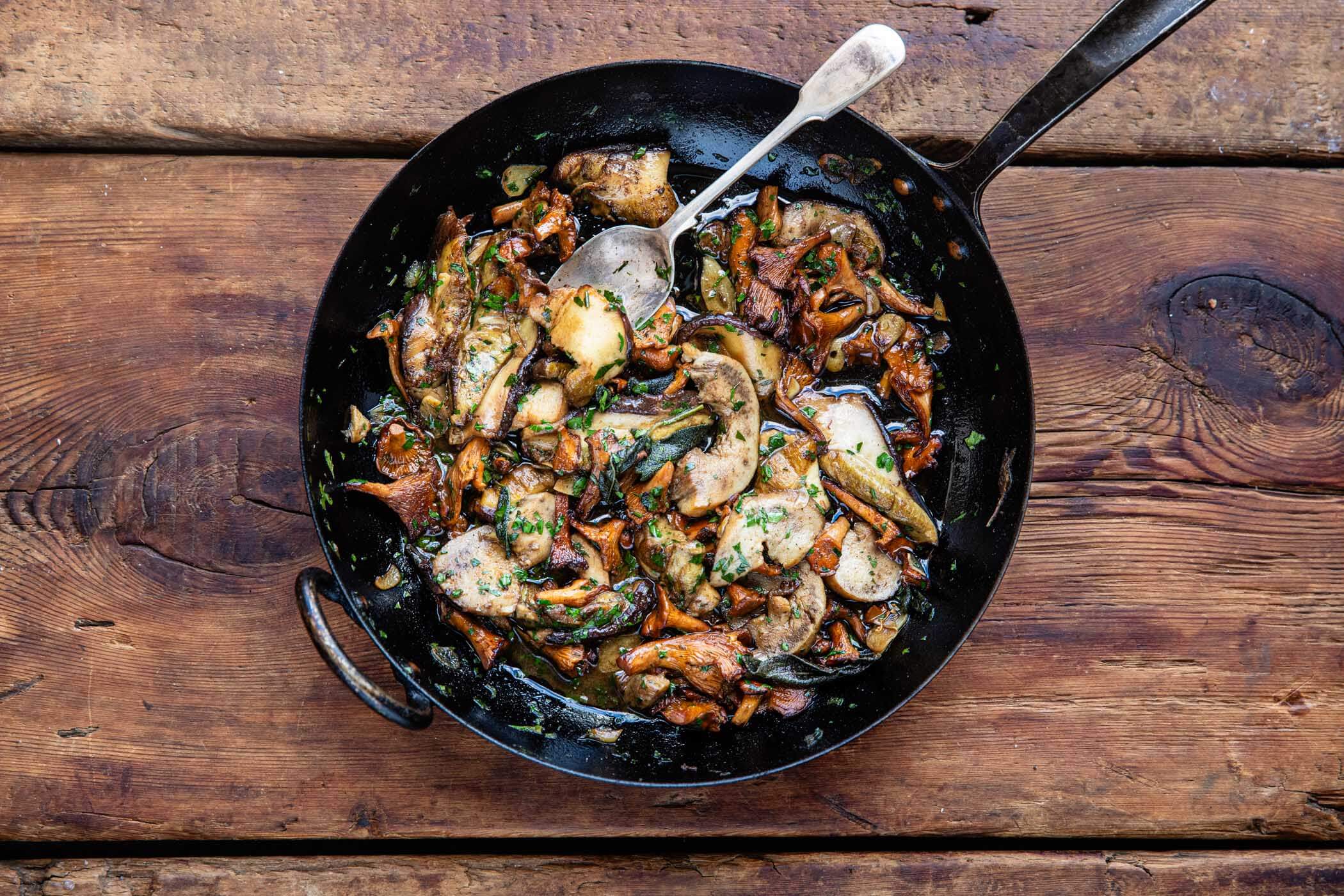
Wild mushrooms offer plenty of cooking options. They can be sautéed or fried, braised or poached, pickled or marinated, and even eaten raw. The method below outlines what is likely the most common preparation: sautéing.
How to Sauté Wild Mushrooms
- Cut the mushrooms into even, bite-sized pieces. Slice or halve larger mushrooms and leave the small ones whole so they cook evenly. Trim and cut into similar-sized pieces, about 1cm thick for slices.
- Set a heavy-based frying pan or cast-iron skillet over a medium to medium-high heat and add a glug of oil and a knob of butter. When the butter is foaming and lightly nut-brown, add the mushrooms in batches as necessary. Season with a little fine sea salt and shake the pan so they are evenly spread.
- Cook in the foaming butter for 90 seconds without moving the pan to achieve browning. Toss or turn the mushrooms and cook for a further 60–90 seconds until golden and caramelised at the edges.
- Check the seasoning and adjust as necessary. If you like, add sliced garlic and chopped parsley for the final 30 seconds, then finish with a squeeze of lemon or a spoon of the browned butter.
Top Tips for Sautéing Wild Mushrooms
- Don’t crowd the pan. For proper browning and caramelisation, work in batches. If the pan is crowded, the heat drops, the mushrooms release moisture and end up poaching and turning slimy.
- Keep the heat up. You want the butter foaming and lightly browned, not dark and never burning. Adjust the hob rather than letting the pan smoke.
- Minimal tossing. Too much movement makes mushrooms break up and lose texture. Let colour develop, then turn once.
- Finish with flavour. Once nicely coloured, add sliced garlic, chopped parsley and a squeeze of lemon. Or try a splash of Marsala, a glug of cream and a little chopped tarragon. They’re also lovely left simply, with a spoon of the browned butter from the pan.
Other Ideas for Cooking Wild Mushrooms
- Mushroom fritti. Sliced porcini (cep) deep-fried in a light tempura batter is a lovely thing.
- Simple broths. Chanterelles and morels dropped into simmering stock create a wonderful broth, ready for pasta or spätzle.
- Baked with cream. Mushrooms baked with cream, garlic and a little white wine are decadent and delicious.
- Quick pickles. Very fresh girolles in a light, delicate pickling liquor, jarred, make a treat in a couple of months.
- Drying and storing. For preserving, wild mushrooms dry brilliantly. Use a very low fan oven for 24 hours, or a dehydrator if you have one. Once dried they keep for months and perk up many a dish or stock.
- Stews and braises. Added to a stew or braise, they provide a lovely background note. Think boeuf bourguignon or coq au Riesling.
Best Meat Pairings for Wild Mushrooms
Wild mushrooms pair naturally with beef, chicken, pork and game, their earthy richness enhancing each with deep, savoury flavour. They work beautifully in steak sauces, creamy chicken dishes, pork chops with mushrooms, and slow-cooked game stews.
For a great example of this classic pairing, see George Ryle’s Bavette Steak with Ceps, Garlic & Parsley, a simple autumnal recipe where buttery golden ceps meet juicy, medium-rare bavette. It’s a dish that shows how well wild mushrooms like ceps, girolles and chanterelles complement the flavour of heritage breed beef.
Whether pan-fried, roasted or braised, wild mushrooms bring an unmistakable umami depth to meat dishes throughout the season.