How-To Guides

How to Cook Ox Cheek

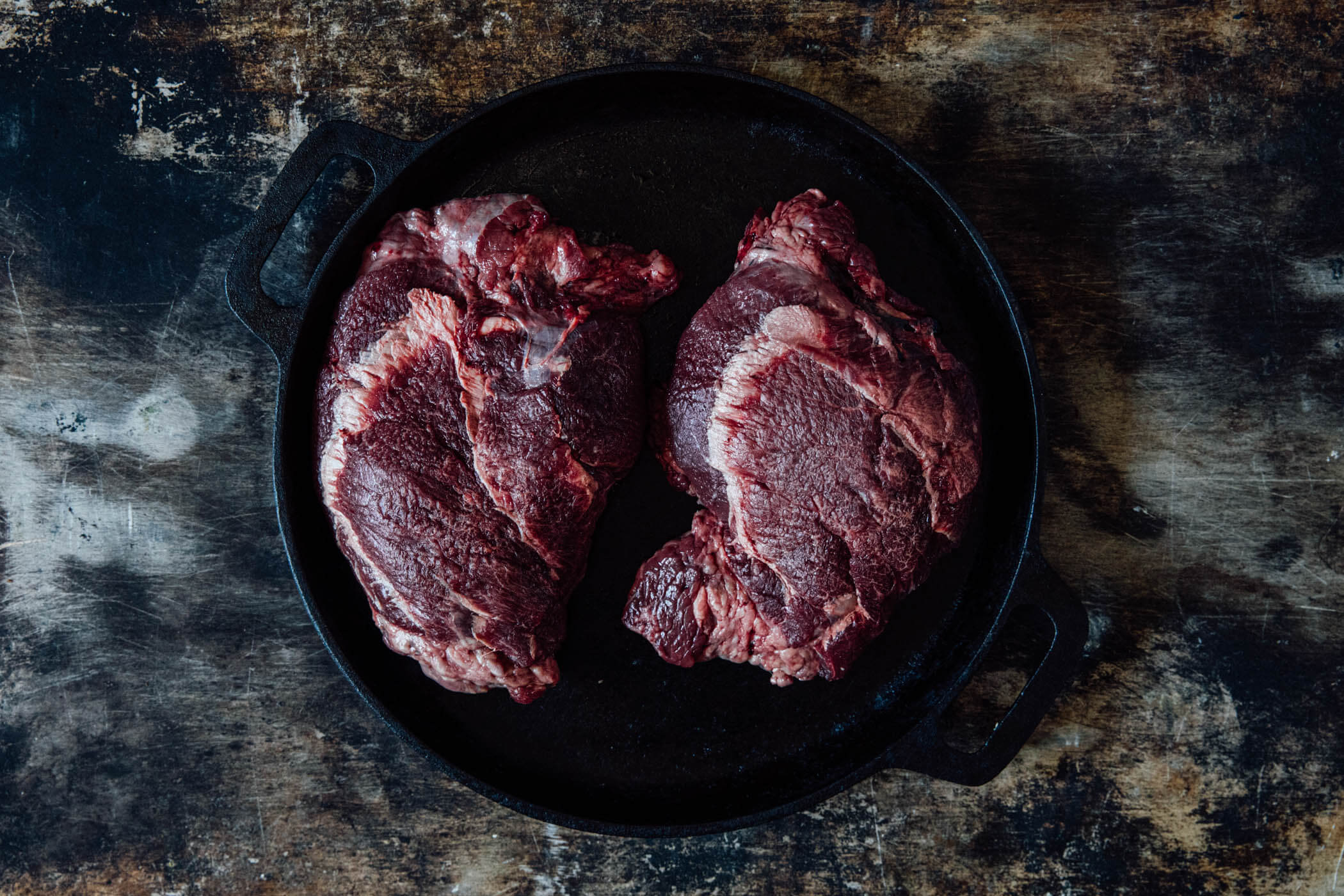
Overhead shot of two raw ox cheeks.

What Are Ox Cheeks?

How to Cook Ox Cheek: As the name suggests, ox cheek is the meat taken from the cheek of a cow. Despite the term ‘ox’, it doesn’t come from an ox. Most beef offal is traditionally labelled this way, including ox heart, ox tongue and oxtail. It’s simply a traditional naming convention used by butchers.

A cow spends much of its life grazing, which means the cheek muscles are very well used. This gives ox cheek its characteristic lean and dense texture, making it ideal for slow cooking. Whether you’re preparing a rich braise, a slow-smoked BBQ dish or a pulled beef recipe, ox cheek delivers deep flavour and tenderness when cooked low and slow.

This heritage breed cut is a favourite among chefs and home cooks alike, valued for its flavour, texture and versatility in slow-cooked beef dishes.

BBQ Method
Ox cheek can also be cooked on the barbecue, ideal for summer gatherings. Start by placing the vacuum-packed cheeks in a pot of water, two-thirds full. Bring to a gentle simmer over low heat and cook for 4 to 5 hours until the cheeks are fully tender. Allow them to cool completely — overnight in the fridge is ideal.

Once chilled, fire up the barbecue and allow the coals to burn down to a steady, indirect heat. Place the cheeks on the grill and close the lid. Reheat gently, turning regularly for 30 to 40 minutes, allowing the meat to warm through and pick up a subtle smokiness.

The cheeks are now ready to be sliced or pulled, perfect served in buns with slaw and barbecue sauce.

Smoking Method
To slow smoke ox cheek, light your smoker and bring it to a steady 105 to 120°C. Remove the cheeks from the fridge, take off the packaging, and pat dry with kitchen paper. Allow them to reach room temperature, about an hour.

Place the cheeks directly on the grill and close the lid. Smoke for 2 hours, turning twice, until a good bark has formed. Then wrap each cheek in barbecue paper with a splash of beer, and return them to the smoker for another 3 to 4 hours, flipping occasionally.

Rest the cheeks for an hour before unwrapping. The meat should be tender enough to slice or pull, with a deep, smoky flavour that works brilliantly in buns with slaw and sauce.

Is Ox Cheek Healthy?

In addition to being deeply flavourful, ox cheek is also a highly nutritious choice. It’s an excellent source of lean, low-fat protein, making it ideal for those looking to enjoy slow-cooked beef with both taste and health benefits in mind.

Ox cheek is naturally rich in collagen, which supports joint and skin health, and provides essential minerals such as iron and zinc. Iron is important for energy and focus, while zinc helps support the immune system. As part of a balanced diet, this slow-cooking cut offers both substance and nourishment.

Whether you’re preparing a heritage breed ox cheek stew or a barbecue recipe, it’s a cut that delivers on flavour and nutritional value.

How Long to Cook Ox Cheeks?

When it comes to cooking ox cheek, slow and steady is essential. This is a hard-working muscle with plenty of sinew and connective tissue, which means it needs time and gentle heat to break down properly.

The result is worth the wait. Once cooked, ox cheek becomes meltingly tender, rich in flavour and beautifully gelatinous. For best results, cook for at least 4 hours in a medium to low oven, ideally in a braise with stock or wine.

Slow-cooked ox cheek is perfect for hearty stews, pulled beef, or any dish that calls for deep, savoury flavour and a tender finish.

Barbecue or smoker methods typically take a similar amount of time, around 4 to 5 hours, and work well when cheeks are first cooked sous vide or simmered, then finished over indirect heat to absorb smoky flavour.

What Is the Best Way to Cook Ox Cheek?

Braised ox cheek is one of the most satisfying ways to prepare this richly flavoured cut. Slow cooking brings out its natural depth, making it ideal for a comforting, slow-cooked beef dish.

  1. Start by removing the cheeks from their packaging and patting them dry with kitchen paper. Season three tablespoons of plain flour with sea salt and cracked black pepper, then toss the cheeks in the flour to coat.
  2. In a large casserole, heat a little oil and butter. Brown the cheeks on all sides until well coloured, then remove and set aside. Add roughly chopped carrots, onions, celery and garlic to the same pan and cook gently until softened.
  3. Return the cheeks to the pan along with two bay leaves and a star anise. Pour in red wine and good-quality beef or chicken stock, then bring to a gentle simmer.
  4. Cover and transfer to an oven preheated to 130°C. Cook for 4 to 5 hours until the cheeks are tender and yielding.
  5. Let rest for at least 30 minutes before serving. Creamy mashed potatoes, flageolet beans or crusty bread make excellent accompaniments.

Top Tips When Cooking Ox Cheeks

  • Take the time to brown the ox cheeks well in a little oil or butter before braising. This step adds depth of flavour and helps build a rich base for your slow-cooked dish.
  • To check whether the cheeks are fully cooked, insert a knife into the centre and twist gently. If there is little or no resistance, the meat is ready.
  • If your braising liquid feels too thin once the cheeks are done, carefully lift them out and return the pan to the hob. Simmer uncovered to reduce the liquid to your preferred consistency.
  • For even greater flavour, prepare the dish a day ahead. Ox cheek benefits from resting and reheating, allowing the flavours to develop and the texture to soften further.
  • Always cook low and slow. A gentle heat over several hours is key to breaking down the connective tissue and achieving that tender, melting result.
  • If you’re finishing the cheeks on the barbecue, keep the lid closed as much as possible to maintain a steady temperature and allow the meat to take on a gentle smokiness. A splash of beer or stock in a foil wrap can help keep the meat moist during the final stage.

These tips will help you get the most out of heritage breed ox cheek, whether you’re making a braise, ragu, pulled beef or barbecue recipe.

Ox Cheek Recipes

For something rooted in French tradition, try Valentine Warner’s Braised Ox Cheek with Flageolet Beans and Turnip. It’s a simple, hearty dish that celebrates the colder months with slow-cooked depth and warmth.

Ox cheeks also work beautifully in a classic bœuf à la Bourguignonne, where their rich flavour and melting texture hold their own against red wine and aromatics. Or, for a change of pace, try a spiced ox cheek rendang inspired by Southeast Asian cooking.

These ox cheek recipes show the versatility of this heritage breed cut across a range of comforting, slow-cooked dishes.

Order meat online

Instagram

  • A classic of French cooking, built on combinations that have stood their ground for good reason, and long may they do so.

Chicken breast roasted in brown butter, creamy mash worked with plenty of butter and dairy, and a mustard sauce brought together with cream. It reads rich, but it eats with balance. The Dijon and tarragon cut through, lifting the dish and keeping it in check.
  • A classic of French cooking, built on combinations that have stood their ground for good reason, and long may they do so.

Chicken breast roasted in brown butter, creamy mash worked with plenty of butter and dairy, and a mustard sauce brought together with cream. It reads rich, but it eats with balance. The Dijon and tarragon cut through, lifting the dish and keeping it in check.

This is food that does not chase anything. It knows exactly what it is.
  • Filmed on a blustery day at the Harewood House estate, Ellen talks us through the Highland cattle and the wider farming approach shaping the land here.

These short films look at how the estate is guiding the land back towards what it once was, using the right livestock for the right terrain and allowing systems to work with the landscape rather than against it. Hardy cattle, able to outwinter on pasture alone, reduce the need for inputs and bring a different kind of balance to the farm.

For chefs, this is where the story begins. The flavour comes later, but it is built here, in the fields, through decisions made over time rather than in a single season.

It is a strong example of thoughtful farming, where lower inputs and careful management can support both the land and a sustainable margin, all driven by a clear intention to make the estate work for nature as much as it does for people.
  • We love it when a plan comes together! And this little project with @llewelynslondon provides a great example. 

It all started with a trip up to Swaledale HQ, to see the butchery and meet the team; bacon, black pudding and egg baps were laid on fo breakfast. Then it was off to see one of our network of farmers; Jim Mallender, over in Thornton in craven. Jim and his family showed us round and held a sort of farming Q&A. Then we cooked some cuts on a bbq and sampled the llewelyns take on a hotpot. Truly bringing farmers and chef together and a wonderful day for all involved. 

Off the back of the visit a special dinner an d a three course menu of dreams. It celebrates not just our produce and their cooking but also the 6 beautiful years that head chef michael (@skinnylittlefatman) has spent at the helm of this charming restaurant. 

We are extremely excited to eat and drink tonight to celebrate all those things.
  • There might not be a food that is more of this generation than fried chicken. It’s eminently Instagram-able (or TikTok-able depending on your age), malleable to various cuisines and extremely delicious. Plus, it has just the right amount of technique, if you know what I mean. The sort of thing that, if you’re not giving it the requisite thought and attention, can be a bit ropey. No danger of that here though…

@Grylos has given it the Swaledale treatment, i.e. keeping it simple, making it delicious and showing off our incredible meat. So, with no more than a saffron aioli, some shredded iceberg and a few sliced pickles, this is the fried chicken burger of dreams! Oh, sorry, nearly forgot the crispy chicken skin – told you there was just the right amount of technique. 

There are few things that we would want to munch down for lunch more than one of these bad boys. Give ‘em a whirl!
  • Always good to welcome chefs to the butchery. Earlier this week the teams from @llewelynslondon came up to see us. We showed them around the cutting room, talked through how we work, then headed up the hill for a bit of cooking and conversation.

For many chefs it is the first chance to see the whole journey. From the farms and fields where the animals are raised, through our ageing rooms, and finally into the kitchens that cook it.

If you are a chef and fancy a visit this year, you would be very welcome. Send us a message and we will put the kettle on.
  • March sits between seasons. Winter has not quite loosened its grip, and there is still time, and need, for fortifying pleasures. A bowl of chicken broth is one of them.

It begins with a proper chicken stock. Just bones and time in the pot, slowly giving up their flavour until the liquid runs clear and deeply savoury. If you watched our earlier film on how to break down a whole chicken, this is where the rest of it finds its purpose.

From there the broth is built. Pearl barley for substance. Cavolo nero and turnips for the season. Simple things, allowed to do their work in good stock.

Just before serving, a small splash of oloroso lifts the whole bowl.
  • British Pie Week, apparently.

We do not usually pay much attention to themed food weeks. We prefer to make and sell things when they feel right.

This year is different, thanks to our growing friendship with Yorkshire chef and pie obsessive Josh Whitehead, and his excellent pie project, Finer Pleasures.

Josh started @finer_pleasures in 2023 to make pies the way they should be made. Proper fillings, local meat and traditional methods.

So we thought we would join in.

The pie is a classic. Chicken, ham, leek and mushroom.

Brined chicken, smoked ham hock and a rich velouté finished with herbs, mustard and chestnut mushrooms or leeks.

A proper pie.

Available this week while they last.
A classic of French cooking, built on combinations that have stood their ground for good reason, and long may they do so. Chicken breast roasted in brown butter, creamy mash worked with plenty of butter and dairy, and a mustard sauce brought together with cream. It reads rich, but it eats with balance. The Dijon and tarragon cut through, lifting the dish and keeping it in check.
2 days ago
7
View on Instagram |
1/8
A classic of French cooking, built on combinations that have stood their ground for good reason, and long may they do so. Chicken breast roasted in brown butter, creamy mash worked with plenty of butter and dairy, and a mustard sauce brought together with cream. It reads rich, but it eats with balance. The Dijon and tarragon cut through, lifting the dish and keeping it in check. This is food that does not chase anything. It knows exactly what it is.
3 days ago
475
View on Instagram |
2/8
Filmed on a blustery day at the Harewood House estate, Ellen talks us through the Highland cattle and the wider farming approach shaping the land here. These short films look at how the estate is guiding the land back towards what it once was, using the right livestock for the right terrain and allowing systems to work with the landscape rather than against it. Hardy cattle, able to outwinter on pasture alone, reduce the need for inputs and bring a different kind of balance to the farm. For chefs, this is where the story begins. The flavour comes later, but it is built here, in the fields, through decisions made over time rather than in a single season. It is a strong example of thoughtful farming, where lower inputs and careful management can support both the land and a sustainable margin, all driven by a clear intention to make the estate work for nature as much as it does for people.
7 days ago
62
View on Instagram |
3/8
We love it when a plan comes together! And this little project with @llewelynslondon provides a great example. It all started with a trip up to Swaledale HQ, to see the butchery and meet the team; bacon, black pudding and egg baps were laid on fo breakfast. Then it was off to see one of our network of farmers; Jim Mallender, over in Thornton in craven. Jim and his family showed us round and held a sort of farming Q&A. Then we cooked some cuts on a bbq and sampled the llewelyns take on a hotpot. Truly bringing farmers and chef together and a wonderful day for all involved. Off the back of the visit a special dinner an d a three course menu of dreams. It celebrates not just our produce and their cooking but also the 6 beautiful years that head chef michael (@skinnylittlefatman) has spent at the helm of this charming restaurant. We are extremely excited to eat and drink tonight to celebrate all those things.
1 week ago
56
View on Instagram |
4/8
There might not be a food that is more of this generation than fried chicken. It’s eminently Instagram-able (or TikTok-able depending on your age), malleable to various cuisines and extremely delicious. Plus, it has just the right amount of technique, if you know what I mean. The sort of thing that, if you’re not giving it the requisite thought and attention, can be a bit ropey. No danger of that here though… @Grylos has given it the Swaledale treatment, i.e. keeping it simple, making it delicious and showing off our incredible meat. So, with no more than a saffron aioli, some shredded iceberg and a few sliced pickles, this is the fried chicken burger of dreams! Oh, sorry, nearly forgot the crispy chicken skin – told you there was just the right amount of technique. There are few things that we would want to munch down for lunch more than one of these bad boys. Give ‘em a whirl!
2 weeks ago
665
View on Instagram |
5/8
Always good to welcome chefs to the butchery. Earlier this week the teams from @llewelynslondon came up to see us. We showed them around the cutting room, talked through how we work, then headed up the hill for a bit of cooking and conversation.

For many chefs it is the first chance to see the whole journey. From the farms and fields where the animals are raised, through our ageing rooms, and finally into the kitchens that cook it.

If you are a chef and fancy a visit this year, you would be very welcome. Send us a message and we will put the kettle on.
Always good to welcome chefs to the butchery. Earlier this week the teams from @llewelynslondon came up to see us. We showed them around the cutting room, talked through how we work, then headed up the hill for a bit of cooking and conversation.

For many chefs it is the first chance to see the whole journey. From the farms and fields where the animals are raised, through our ageing rooms, and finally into the kitchens that cook it.

If you are a chef and fancy a visit this year, you would be very welcome. Send us a message and we will put the kettle on.
Always good to welcome chefs to the butchery. Earlier this week the teams from @llewelynslondon came up to see us. We showed them around the cutting room, talked through how we work, then headed up the hill for a bit of cooking and conversation.

For many chefs it is the first chance to see the whole journey. From the farms and fields where the animals are raised, through our ageing rooms, and finally into the kitchens that cook it.

If you are a chef and fancy a visit this year, you would be very welcome. Send us a message and we will put the kettle on.
Always good to welcome chefs to the butchery. Earlier this week the teams from @llewelynslondon came up to see us. We showed them around the cutting room, talked through how we work, then headed up the hill for a bit of cooking and conversation. For many chefs it is the first chance to see the whole journey. From the farms and fields where the animals are raised, through our ageing rooms, and finally into the kitchens that cook it. If you are a chef and fancy a visit this year, you would be very welcome. Send us a message and we will put the kettle on.
3 weeks ago
52
View on Instagram |
6/8
March sits between seasons. Winter has not quite loosened its grip, and there is still time, and need, for fortifying pleasures. A bowl of chicken broth is one of them. It begins with a proper chicken stock. Just bones and time in the pot, slowly giving up their flavour until the liquid runs clear and deeply savoury. If you watched our earlier film on how to break down a whole chicken, this is where the rest of it finds its purpose. From there the broth is built. Pearl barley for substance. Cavolo nero and turnips for the season. Simple things, allowed to do their work in good stock. Just before serving, a small splash of oloroso lifts the whole bowl.
4 weeks ago
952
View on Instagram |
7/8
British Pie Week, apparently.

We do not usually pay much attention to themed food weeks. We prefer to make and sell things when they feel right.

This year is different, thanks to our growing friendship with Yorkshire chef and pie obsessive Josh Whitehead, and his excellent pie project, Finer Pleasures.

Josh started @finer_pleasures in 2023 to make pies the way they should be made. Proper fillings, local meat and traditional methods.

So we thought we would join in.

The pie is a classic. Chicken, ham, leek and mushroom.

Brined chicken, smoked ham hock and a rich velouté finished with herbs, mustard and chestnut mushrooms or leeks.

A proper pie.

Available this week while they last.
British Pie Week, apparently.

We do not usually pay much attention to themed food weeks. We prefer to make and sell things when they feel right.

This year is different, thanks to our growing friendship with Yorkshire chef and pie obsessive Josh Whitehead, and his excellent pie project, Finer Pleasures.

Josh started @finer_pleasures in 2023 to make pies the way they should be made. Proper fillings, local meat and traditional methods.

So we thought we would join in.

The pie is a classic. Chicken, ham, leek and mushroom.

Brined chicken, smoked ham hock and a rich velouté finished with herbs, mustard and chestnut mushrooms or leeks.

A proper pie.

Available this week while they last.
British Pie Week, apparently.

We do not usually pay much attention to themed food weeks. We prefer to make and sell things when they feel right.

This year is different, thanks to our growing friendship with Yorkshire chef and pie obsessive Josh Whitehead, and his excellent pie project, Finer Pleasures.

Josh started @finer_pleasures in 2023 to make pies the way they should be made. Proper fillings, local meat and traditional methods.

So we thought we would join in.

The pie is a classic. Chicken, ham, leek and mushroom.

Brined chicken, smoked ham hock and a rich velouté finished with herbs, mustard and chestnut mushrooms or leeks.

A proper pie.

Available this week while they last.
British Pie Week, apparently. We do not usually pay much attention to themed food weeks. We prefer to make and sell things when they feel right. This year is different, thanks to our growing friendship with Yorkshire chef and pie obsessive Josh Whitehead, and his excellent pie project, Finer Pleasures. Josh started @finer_pleasures in 2023 to make pies the way they should be made. Proper fillings, local meat and traditional methods. So we thought we would join in. The pie is a classic. Chicken, ham, leek and mushroom. Brined chicken, smoked ham hock and a rich velouté finished with herbs, mustard and chestnut mushrooms or leeks. A proper pie. Available this week while they last.
4 weeks ago
611
View on Instagram |
8/8