Pork Recipes

Braised Shoulder of Pork in Milk with Polenta & Crispy Sage

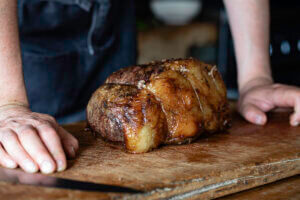
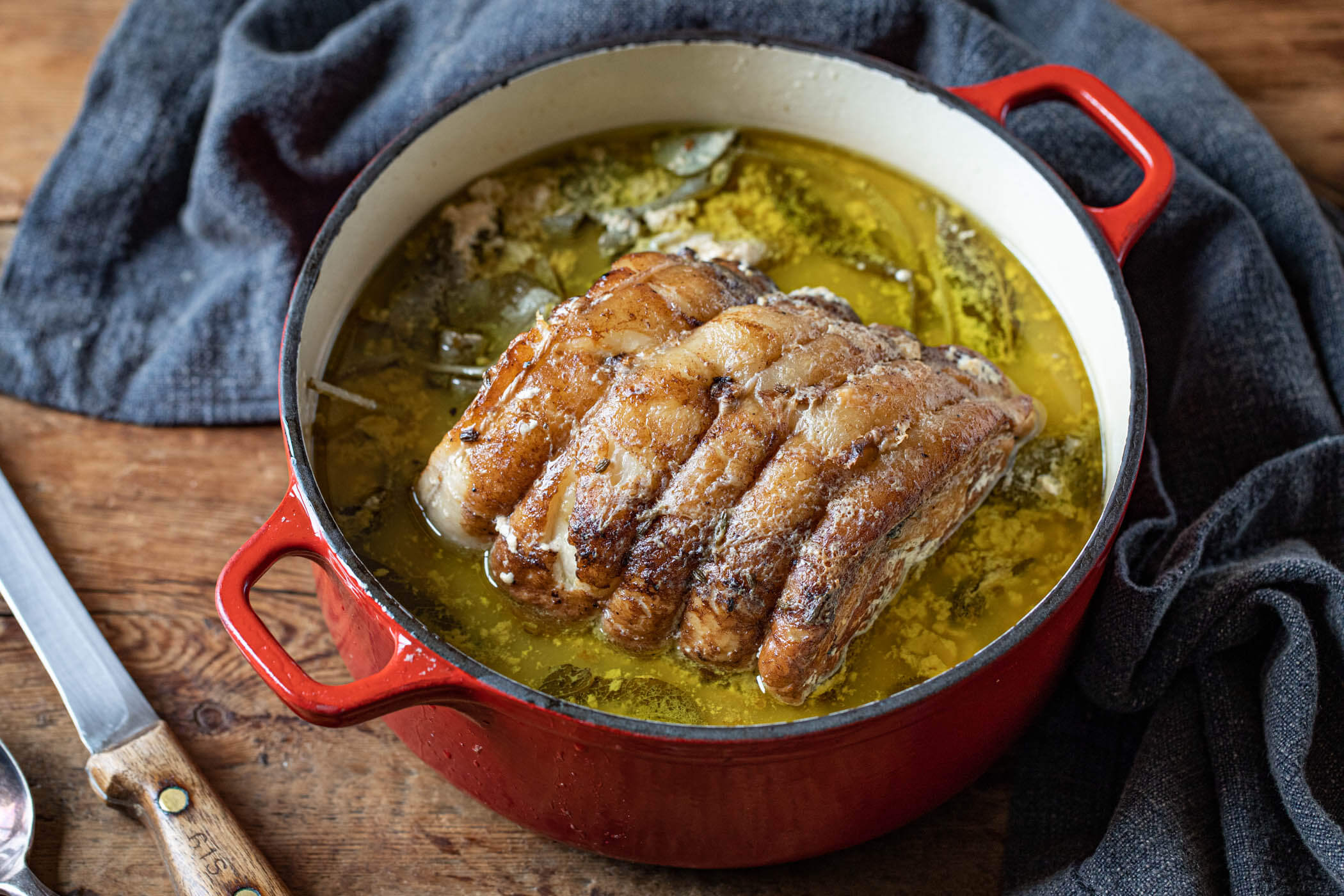
Pork shoulder in a casserole dish cooked in milk with polenta and crispy sage.

Braised Pork Shoulder in Milk with Polenta & Crispy Sage: The shoulder is slowly braised until you can pull it apart with a spoon and a fork, given an unusual lift by the curdled milk. All sitting on a comforting, parmesan-fuelled, bed of polenta — that great stalwart of Northern Italian cooking.

This might sound a little strange if it is something that you have never come across before — it certainly blew my mum’s mind when I told her I was cooking it. But it is a traditional old method for cooking pork, although I think usually a loin, and returns a distinctive and pleasing flavour. As the milk curdles in the cooking process, it lends an almost cheesy tang to the pork, whilst its great friends sage and fennel are there to help add a more familiar edge.

Serves: 6-7

Cook time: 4 hours 30 minutes

Ingredients

Pork

Polenta

Crispy Sage

Method

Start With The Pork Shoulder, Which Needs A Slow Cook

  1. Preheat your oven to 125°C.
  2. Find a casserole pot with a lid that fits and place it over a medium heat, with half a tablespoon of olive oil.
  3. Season the pork well with salt and black pepper and add it to the pan. We want to colour the fat off a little bit to start building the layers of flavour and also release some lovely pork fat into the pan. Colour the shoulder evenly on all sides and then the fennel seeds and garlic. Let them fry briefly in the fat before adding the milk, sage, lemon zest, and the remaining olive oil.
  4. Season the pan with salt and turn the heat down to low. It is relatively easy for the milk to catch and burn on the bottom of the pan — this will ruin the dish, so be wary.
  5. Let the milk come up to a simmer, fit the lid and place it in the oven. Set a timer for 4 hours.
  6. After 4 hours, remove the pan from the oven and check the meat by inserting a small knife into the joint. It should feel soft, as if with slightly more pressure, the whole thing might just fall apart. If it is still a little firm, then return it to the oven and check after another half an hour. Do not be alarmed by what you are seeing, the milk will have curdled and possibly not look too appealing, but it is all part of the plan, so go with it. If the shoulder is cooked, then leave to one side to rest and cool slightly.

For The Polenta

  1. In a large heavy bottomed pan, bring the water, plus a good pinch of salt, to the boil. Add the olive oil.
  2. Have a whisk to hand. Whisk the water and begin adding the polenta in a steady stream, whisking continuously. Once all the polenta is in, then turn the heat down as low as possible.
  3. Swap the whisk for a wooden spoon. Let the polenta cook on this low heat for about 45 minutes, stirring regularly. You will notice that it will thicken very quickly as the grains cook. If the heat is too high, then polenta can bubble and spit — like lava. Try to avoid this as it will be very hot and can burn.
  4. Add the butter and parmesan and stir continuously until both have melted completely. At this stage, it should, in terms of consistency, resemble a loose mashed potato. If it seems a little firm, then loosen with a splash of water.
  5. Keep the polenta warm until you serve. When the polenta is allowed to cool, it makes a good substitute for cement (don’t actually try to build anything with it), not what this dish calls for.

Just Before Serving

  1. Heat about 250ml of vegetable oil in a pan — approximately an inch.
  2. Carefully dip the tip of a sage leaf in the oil to check its temperature. It should instantly begin to sizzle but not burn. About 170°C, if you have a thermometer.
  3. In batches, add the sage leaves to the oil. The leaves will sizzle quite aggressively at first, but will calm down fairly quickly as the moisture in the leaves evaporates, leaving us with a crispy finish.  We are looking for a crispy, dark green leaf, not a burned one. If they are burning, then turn the heat down.
  4. Season with salt as they come out of the oil.To serve, remove the pork from the pan and pull it apart with a fork. Serve it on a good dollop of polenta, with a little of the cooking liquor. Adorn with crispy sage leaves and enjoy!

Order meat online

Instagram

  • A classic of French cooking, built on combinations that have stood their ground for good reason, and long may they do so.

Chicken breast roasted in brown butter, creamy mash worked with plenty of butter and dairy, and a mustard sauce brought together with cream. It reads rich, but it eats with balance. The Dijon and tarragon cut through, lifting the dish and keeping it in check.
  • A classic of French cooking, built on combinations that have stood their ground for good reason, and long may they do so.

Chicken breast roasted in brown butter, creamy mash worked with plenty of butter and dairy, and a mustard sauce brought together with cream. It reads rich, but it eats with balance. The Dijon and tarragon cut through, lifting the dish and keeping it in check.

This is food that does not chase anything. It knows exactly what it is.
  • Filmed on a blustery day at the Harewood House estate, Ellen talks us through the Highland cattle and the wider farming approach shaping the land here.

These short films look at how the estate is guiding the land back towards what it once was, using the right livestock for the right terrain and allowing systems to work with the landscape rather than against it. Hardy cattle, able to outwinter on pasture alone, reduce the need for inputs and bring a different kind of balance to the farm.

For chefs, this is where the story begins. The flavour comes later, but it is built here, in the fields, through decisions made over time rather than in a single season.

It is a strong example of thoughtful farming, where lower inputs and careful management can support both the land and a sustainable margin, all driven by a clear intention to make the estate work for nature as much as it does for people.
  • We love it when a plan comes together! And this little project with @llewelynslondon provides a great example. 

It all started with a trip up to Swaledale HQ, to see the butchery and meet the team; bacon, black pudding and egg baps were laid on fo breakfast. Then it was off to see one of our network of farmers; Jim Mallender, over in Thornton in craven. Jim and his family showed us round and held a sort of farming Q&A. Then we cooked some cuts on a bbq and sampled the llewelyns take on a hotpot. Truly bringing farmers and chef together and a wonderful day for all involved. 

Off the back of the visit a special dinner an d a three course menu of dreams. It celebrates not just our produce and their cooking but also the 6 beautiful years that head chef michael (@skinnylittlefatman) has spent at the helm of this charming restaurant. 

We are extremely excited to eat and drink tonight to celebrate all those things.
  • There might not be a food that is more of this generation than fried chicken. It’s eminently Instagram-able (or TikTok-able depending on your age), malleable to various cuisines and extremely delicious. Plus, it has just the right amount of technique, if you know what I mean. The sort of thing that, if you’re not giving it the requisite thought and attention, can be a bit ropey. No danger of that here though…

@Grylos has given it the Swaledale treatment, i.e. keeping it simple, making it delicious and showing off our incredible meat. So, with no more than a saffron aioli, some shredded iceberg and a few sliced pickles, this is the fried chicken burger of dreams! Oh, sorry, nearly forgot the crispy chicken skin – told you there was just the right amount of technique. 

There are few things that we would want to munch down for lunch more than one of these bad boys. Give ‘em a whirl!
  • Always good to welcome chefs to the butchery. Earlier this week the teams from @llewelynslondon came up to see us. We showed them around the cutting room, talked through how we work, then headed up the hill for a bit of cooking and conversation.

For many chefs it is the first chance to see the whole journey. From the farms and fields where the animals are raised, through our ageing rooms, and finally into the kitchens that cook it.

If you are a chef and fancy a visit this year, you would be very welcome. Send us a message and we will put the kettle on.
  • March sits between seasons. Winter has not quite loosened its grip, and there is still time, and need, for fortifying pleasures. A bowl of chicken broth is one of them.

It begins with a proper chicken stock. Just bones and time in the pot, slowly giving up their flavour until the liquid runs clear and deeply savoury. If you watched our earlier film on how to break down a whole chicken, this is where the rest of it finds its purpose.

From there the broth is built. Pearl barley for substance. Cavolo nero and turnips for the season. Simple things, allowed to do their work in good stock.

Just before serving, a small splash of oloroso lifts the whole bowl.
  • On a recent trip down to London we spent time in some very good kitchens, talking to serious chefs, and the conversation kept returning to farming. Not trends or noise, but where the beef is truly coming from.

We kept bringing up the work at the Harewood House estate.

It is a project we intend to give real focus to this year, because what has been achieved there, and what continues to develop, deserves attention. On a recent visit we walked the fields with Ellen, spending time with the Highlands that many walkers know from the estate’s mires, quietly becoming unlikely stars of TikTok. Beautiful cattle, carefully and thoughtfully managed.

They have been fully outwintered and fed only on pasture. Stock levels are low, grazing is controlled, and the result is clear in their condition.

This beef is now heading into some of the most loved kitchens in the country and the response is and feedback is very good.

A short film will follow, but for now it is worth recognising the work. We look forward to sharing more from Harewood in the months ahead.
A classic of French cooking, built on combinations that have stood their ground for good reason, and long may they do so. Chicken breast roasted in brown butter, creamy mash worked with plenty of butter and dairy, and a mustard sauce brought together with cream. It reads rich, but it eats with balance. The Dijon and tarragon cut through, lifting the dish and keeping it in check.
7 days ago
7
View on Instagram |
1/8
A classic of French cooking, built on combinations that have stood their ground for good reason, and long may they do so. Chicken breast roasted in brown butter, creamy mash worked with plenty of butter and dairy, and a mustard sauce brought together with cream. It reads rich, but it eats with balance. The Dijon and tarragon cut through, lifting the dish and keeping it in check. This is food that does not chase anything. It knows exactly what it is.
7 days ago
525
View on Instagram |
2/8
Filmed on a blustery day at the Harewood House estate, Ellen talks us through the Highland cattle and the wider farming approach shaping the land here. These short films look at how the estate is guiding the land back towards what it once was, using the right livestock for the right terrain and allowing systems to work with the landscape rather than against it. Hardy cattle, able to outwinter on pasture alone, reduce the need for inputs and bring a different kind of balance to the farm. For chefs, this is where the story begins. The flavour comes later, but it is built here, in the fields, through decisions made over time rather than in a single season. It is a strong example of thoughtful farming, where lower inputs and careful management can support both the land and a sustainable margin, all driven by a clear intention to make the estate work for nature as much as it does for people.
2 weeks ago
63
View on Instagram |
3/8
We love it when a plan comes together! And this little project with @llewelynslondon provides a great example. It all started with a trip up to Swaledale HQ, to see the butchery and meet the team; bacon, black pudding and egg baps were laid on fo breakfast. Then it was off to see one of our network of farmers; Jim Mallender, over in Thornton in craven. Jim and his family showed us round and held a sort of farming Q&A. Then we cooked some cuts on a bbq and sampled the llewelyns take on a hotpot. Truly bringing farmers and chef together and a wonderful day for all involved. Off the back of the visit a special dinner an d a three course menu of dreams. It celebrates not just our produce and their cooking but also the 6 beautiful years that head chef michael (@skinnylittlefatman) has spent at the helm of this charming restaurant. We are extremely excited to eat and drink tonight to celebrate all those things.
2 weeks ago
57
View on Instagram |
4/8
There might not be a food that is more of this generation than fried chicken. It’s eminently Instagram-able (or TikTok-able depending on your age), malleable to various cuisines and extremely delicious. Plus, it has just the right amount of technique, if you know what I mean. The sort of thing that, if you’re not giving it the requisite thought and attention, can be a bit ropey. No danger of that here though… @Grylos has given it the Swaledale treatment, i.e. keeping it simple, making it delicious and showing off our incredible meat. So, with no more than a saffron aioli, some shredded iceberg and a few sliced pickles, this is the fried chicken burger of dreams! Oh, sorry, nearly forgot the crispy chicken skin – told you there was just the right amount of technique. There are few things that we would want to munch down for lunch more than one of these bad boys. Give ‘em a whirl!
3 weeks ago
665
View on Instagram |
5/8
Always good to welcome chefs to the butchery. Earlier this week the teams from @llewelynslondon came up to see us. We showed them around the cutting room, talked through how we work, then headed up the hill for a bit of cooking and conversation.

For many chefs it is the first chance to see the whole journey. From the farms and fields where the animals are raised, through our ageing rooms, and finally into the kitchens that cook it.

If you are a chef and fancy a visit this year, you would be very welcome. Send us a message and we will put the kettle on.
Always good to welcome chefs to the butchery. Earlier this week the teams from @llewelynslondon came up to see us. We showed them around the cutting room, talked through how we work, then headed up the hill for a bit of cooking and conversation.

For many chefs it is the first chance to see the whole journey. From the farms and fields where the animals are raised, through our ageing rooms, and finally into the kitchens that cook it.

If you are a chef and fancy a visit this year, you would be very welcome. Send us a message and we will put the kettle on.
Always good to welcome chefs to the butchery. Earlier this week the teams from @llewelynslondon came up to see us. We showed them around the cutting room, talked through how we work, then headed up the hill for a bit of cooking and conversation.

For many chefs it is the first chance to see the whole journey. From the farms and fields where the animals are raised, through our ageing rooms, and finally into the kitchens that cook it.

If you are a chef and fancy a visit this year, you would be very welcome. Send us a message and we will put the kettle on.
Always good to welcome chefs to the butchery. Earlier this week the teams from @llewelynslondon came up to see us. We showed them around the cutting room, talked through how we work, then headed up the hill for a bit of cooking and conversation. For many chefs it is the first chance to see the whole journey. From the farms and fields where the animals are raised, through our ageing rooms, and finally into the kitchens that cook it. If you are a chef and fancy a visit this year, you would be very welcome. Send us a message and we will put the kettle on.
4 weeks ago
52
View on Instagram |
6/8
March sits between seasons. Winter has not quite loosened its grip, and there is still time, and need, for fortifying pleasures. A bowl of chicken broth is one of them. It begins with a proper chicken stock. Just bones and time in the pot, slowly giving up their flavour until the liquid runs clear and deeply savoury. If you watched our earlier film on how to break down a whole chicken, this is where the rest of it finds its purpose. From there the broth is built. Pearl barley for substance. Cavolo nero and turnips for the season. Simple things, allowed to do their work in good stock. Just before serving, a small splash of oloroso lifts the whole bowl.
4 weeks ago
962
View on Instagram |
7/8
On a recent trip down to London we spent time in some very good kitchens, talking to serious chefs, and the conversation kept returning to farming. Not trends or noise, but where the beef is truly coming from.

We kept bringing up the work at the Harewood House estate.

It is a project we intend to give real focus to this year, because what has been achieved there, and what continues to develop, deserves attention. On a recent visit we walked the fields with Ellen, spending time with the Highlands that many walkers know from the estate’s mires, quietly becoming unlikely stars of TikTok. Beautiful cattle, carefully and thoughtfully managed.

They have been fully outwintered and fed only on pasture. Stock levels are low, grazing is controlled, and the result is clear in their condition.

This beef is now heading into some of the most loved kitchens in the country and the response is and feedback is very good.

A short film will follow, but for now it is worth recognising the work. We look forward to sharing more from Harewood in the months ahead.
On a recent trip down to London we spent time in some very good kitchens, talking to serious chefs, and the conversation kept returning to farming. Not trends or noise, but where the beef is truly coming from.

We kept bringing up the work at the Harewood House estate.

It is a project we intend to give real focus to this year, because what has been achieved there, and what continues to develop, deserves attention. On a recent visit we walked the fields with Ellen, spending time with the Highlands that many walkers know from the estate’s mires, quietly becoming unlikely stars of TikTok. Beautiful cattle, carefully and thoughtfully managed.

They have been fully outwintered and fed only on pasture. Stock levels are low, grazing is controlled, and the result is clear in their condition.

This beef is now heading into some of the most loved kitchens in the country and the response is and feedback is very good.

A short film will follow, but for now it is worth recognising the work. We look forward to sharing more from Harewood in the months ahead.
On a recent trip down to London we spent time in some very good kitchens, talking to serious chefs, and the conversation kept returning to farming. Not trends or noise, but where the beef is truly coming from. We kept bringing up the work at the Harewood House estate. It is a project we intend to give real focus to this year, because what has been achieved there, and what continues to develop, deserves attention. On a recent visit we walked the fields with Ellen, spending time with the Highlands that many walkers know from the estate’s mires, quietly becoming unlikely stars of TikTok. Beautiful cattle, carefully and thoughtfully managed. They have been fully outwintered and fed only on pasture. Stock levels are low, grazing is controlled, and the result is clear in their condition. This beef is now heading into some of the most loved kitchens in the country and the response is and feedback is very good. A short film will follow, but for now it is worth recognising the work. We look forward to sharing more from Harewood in the months ahead.
1 month ago
58
View on Instagram |
8/8