How-To Guides

How to Cook Beef Mince

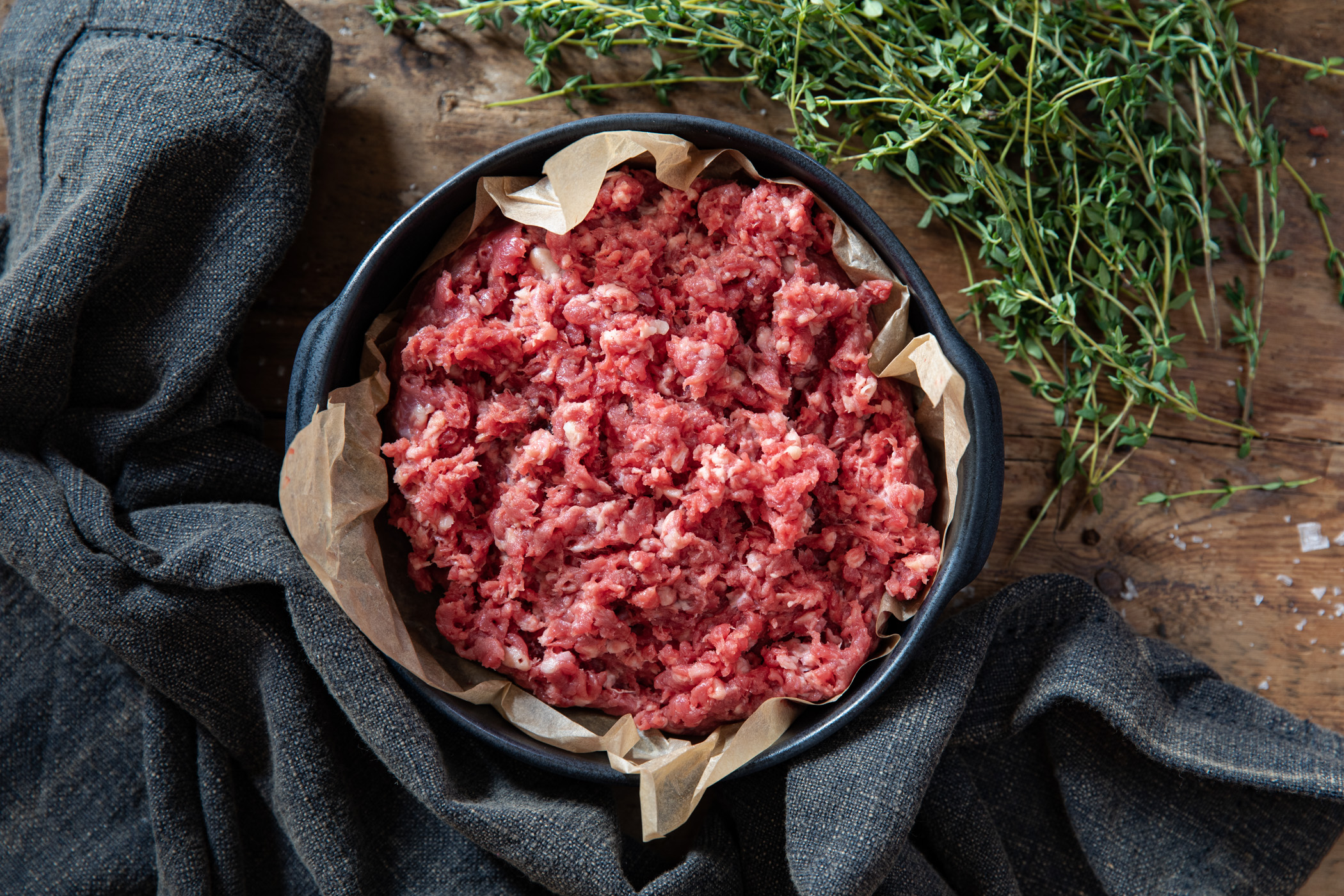
Raw beef mince in a bowl, made from heritage breed, grass-fed cattle – fresh, coarse-ground, and ready for cooking

What is Beef Mince?

How to Cook Beef Mince: Minced beef is one of the most versatile cuts of meat, forming the base of countless family favourites such as lasagne, a rich beef ragu, chilli con carne, and juicy homemade steak burgers. Its depth of flavour and ease of cooking make it a kitchen essential.

At Swaledale, our heritage breed, grass-fed beef mince is different. Made from 100% meat with no fillers or additions, it’s prepared using a carefully selected blend from the forequarter, including chuck and rib cap. Coarsely ground twice, this gives our mince exceptional flavour, texture, and succulence.

Knowing how to cook beef mince well unlocks its full potential. Quick, economical, and endlessly adaptable, it’s little wonder this ingredient is a staple in weekly meal plans. From slow-cooked mince recipes to speedy midweek suppers, our beef mince is perfect for everything from hearty pies and pasta sauces to spiced tacos and meatballs.

Beef Mince Cooking Time

Beef mince cooks quickly, making it ideal for fast midweek meals. Although cooking time depends on the recipe, as a guide 500g of beef mince will take around 6–8 minutes to brown and colour in a hot frying pan. Stir regularly to ensure even cooking and break up any clumps for the best texture. Once browned, the mince is ready to be combined with other ingredients in your chosen dish, whether that’s a ragu, chilli, curry, or classic cottage pie.

The Best Way to Cook Beef Mince

For the best flavour and texture, beef mince should be cooked quickly over high heat. Here’s how to do it:

  1. Add a dash of oil to a hot frying pan, then remove the mince from its packaging and distribute it evenly across the pan. Stir over high heat for around 6–8 minutes, so it doesn’t stick and browns evenly. Season early with sea salt and freshly ground black pepper.
  2. You may notice some liquid is released before the meat begins to brown — using a large, hot pan helps prevent the mince from stewing in its juices. Try not to overstir; instead, allow the mince to take on a rich brown colour before breaking it up and turning. This caramelisation is key to unlocking depth of flavour in dishes like Bolognese, chilli, and tacos.

Top Tips for Cooking Mince

  • Use a hot pan: Always start with a large, hot frying pan so the mince browns rather than stews.
  • Don’t overcrowd: Cook in batches if necessary; too much mince in one pan lowers the heat and prevents caramelisation.
  • Season early: Add sea salt and black pepper at the start to build depth of flavour.
  • Avoid overstirring: Let the mince take on colour before breaking it up; browning adds essential richness.
  • Drain excess fat if needed: Depending on the cut, you may want to spoon off any excess fat before adding sauces.
  • Finish with flavour: Once browned, add aromatics like garlic, onions, or spices to build layers of taste.

Beef Mince Recipes

The possibilities with beef mince recipes are endless. A staple in classics such as ragù alla Bolognese, chilli con carne, and cottage pie, beef mince is also perfect for global flavours. For something more unusual, try Middle Eastern-inspired beef kofta kebabs or use it as the star ingredient in a Greek moussaka, where it makes a delicious alternative to lamb.

From hearty stews to quick midweek suppers, beef mince adapts to almost any cuisine, making it one of the most versatile and rewarding cuts to cook with.

Order meat online

Instagram

  • The process of developing a dish with chefs is a rewarding one, made all the more so when we have the chance to eat the end product. As was the case here upon a recent (ish) visit to @rambutan_ldn 

Conversations around the best steak to use for this dish began months ago and we were able to offer our expert advice as Sofia and her team fine-tuned the balance of flavours, spices and textures. A few different cuts were trialled, and, in the end, it was our rump steaks which triumphed! Their flavour and fat able to be carried by that rich and deep curry sauce, with brighter notes and acidity being offered up by the parsley temper and little pearls of onion. It is truly a triumph. A marriage of Yorkshire beef and traditional Sri Lankan flavours and we couldn’t be prouder to see it on the menu and being enjoyed by their lucky guests!
  • What salt should you use when cooking steaks and chops? Does it matter?

Well, we have, in the past, taken some heat in the comments from people saying that we are using the wrong salt on our steaks. “You should be using fine salt!”, “flaky salt on steaks!! NO WAY!”, “It just falls off!”, to give you a few examples. 

So, to put the debate to bed we undertook an extremely controlled, scientific experiment to determine which salt is the best salt to use on your steaks. In a field, with a piece of goose skirt, a barbecue and two varieties of sea salt (that’s one important detail, to use sea salt, not table salt) and a desire to eat well seasoned steak. Poor us!

Watch the video to find our conclusions, which will also feature in an academic journal soon – a seminal piece of scientific research. 

#sodiyum #flakysalt4life
  • A recent visit to see Ed Stavely’s pigs on the Swinton Estate, where a landscape not traditionally associated with pig keeping is slowly being reshaped through careful management and a willingness to do things a little differently.

The pigs are largely native breeds, often crossed with Duroc to help them fare better through the long Yorkshire winters and the exposed conditions up on the estate. Hardy, slow-growing animals that seem to suit both the land and the philosophy behind the system.

They are part of a wider effort to restore ground that had, in places, drifted too far from balance. Their rooting clears rougher areas, disturbs the soil naturally and creates opportunities for new herbal lays, healthier pasture and eventually species-rich hay meadows to return.

There are certainly easier places to rear pigs, but it is difficult not to admire the determination to make this sort of farming work in a landscape like this, where the focus stretches beyond production alone and towards the long-term health of the land itself.
  • Take a little inspiration from our very own grill master @grylos when it comes to cooking your big, bone in steaks. This method takes time, skill and plenty of patience but the result is a deep, dark char, beautiful blushing pink flesh and melting buttery fat. We can safely say, after this day we spent in the field, that it is well worth the effort. Close to steak perfection. 

Plus, he knocked up a charred spring vegetable green sauce, which was an ideal foil for that most delicious of steaks – clever boy. 

The idea is to spend time building a char and crust with many short visits to the hottest part of the grill, interspersed with time away from the grill, somewhere warm, slowly coming up to temperature. Placing it directly on the coals at the end is a bit of a gimmick, however, it did yield excellent results, so maybe give it a go (only if you have good quality charcoal though!)!

Steak perfection!!
  • To our friends down south, you might have noticed Yorkshire is still a good few weeks behind the march towards summer. The trees are only just coming into leaf in the Dales, especially up in Upper Wharfedale, and that gives us a little more time with the wild garlic.

Here is @grylos with what feels like one of his best ideas to date.

A proper use of those essential carcass balance cuts. Lamb hearts, though this would work just as well with tongues, sweetbreads or liver. Cooked simply, well seasoned, finished with a little lemon.

Alongside it, wild garlic taken from the darker, shaded parts of the woodland where it is still fresh. Even if it has started to turn, it holds up. Treated like spinach, wilted down, then cooked with oil, salt and cream, left to reduce until it becomes rich and full of flavour.

A brilliant little starter for our chefs blackboards, and something that will more than hold its own at home.

A dish for the season, if ever there was one.
  • We are reaching the end of our wild garlic sausages, as the season begins to slip away and only the deeper, shaded pockets of woodland still offer the tender leaves we rely on.

It is from these cooler, quieter areas that we are still able to gather what we need, though even here the plants are beginning to turn, and once the flowers arrive, the flavour shifts and our time with wild garlic comes to a close for another year.

As ever, we follow the season rather than stretch it, working with what is left while it is still at its best, which means if you have been enjoying them, or have been meaning to try them, now is the time to cook them or put a few aside for later.

Before long, they will be gone, and we will wait for spring to bring them back again.
  • A while back we had the pleasure of visiting @petea25 at the @cantonarms Arms, where we spoke about their ever evolving menu, a place that is not afraid to cook things until they are gone and then move on to something new.

We saw how they treated the Swaledale pork chop, and it told you everything you needed to know. Cooked with care, handled properly, and full of flavour.

It was, simply, delicious.
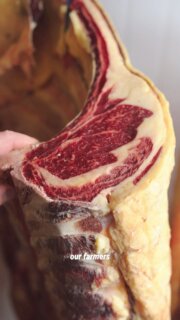
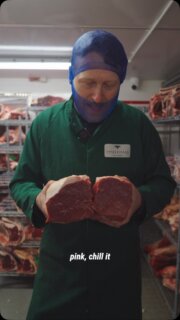
  • Here’s our Trevor, stood in front of an expertly butchered sirloin section.

Porterhouse, T bone, Wing rib, New York strip, fillet, sirloin.

All cut from the same part of the animal, each one offering something slightly different.

Key question is; which one are you taking?
The process of developing a dish with chefs is a rewarding one, made all the more so when we have the chance to eat the end product. As was the case here upon a recent (ish) visit to @rambutan_ldn Conversations around the best steak to use for this dish began months ago and we were able to offer our expert advice as Sofia and her team fine-tuned the balance of flavours, spices and textures. A few different cuts were trialled, and, in the end, it was our rump steaks which triumphed! Their flavour and fat able to be carried by that rich and deep curry sauce, with brighter notes and acidity being offered up by the parsley temper and little pearls of onion. It is truly a triumph. A marriage of Yorkshire beef and traditional Sri Lankan flavours and we couldn’t be prouder to see it on the menu and being enjoyed by their lucky guests!
3 days ago
675
View on Instagram |
1/8
What salt should you use when cooking steaks and chops? Does it matter? Well, we have, in the past, taken some heat in the comments from people saying that we are using the wrong salt on our steaks. “You should be using fine salt!”, “flaky salt on steaks!! NO WAY!”, “It just falls off!”, to give you a few examples. So, to put the debate to bed we undertook an extremely controlled, scientific experiment to determine which salt is the best salt to use on your steaks. In a field, with a piece of goose skirt, a barbecue and two varieties of sea salt (that’s one important detail, to use sea salt, not table salt) and a desire to eat well seasoned steak. Poor us! Watch the video to find our conclusions, which will also feature in an academic journal soon – a seminal piece of scientific research. #sodiyum #flakysalt4life
1 week ago
12415
View on Instagram |
2/8
A recent visit to see Ed Stavely’s pigs on the Swinton Estate, where a landscape not traditionally associated with pig keeping is slowly being reshaped through careful management and a willingness to do things a little differently.

The pigs are largely native breeds, often crossed with Duroc to help them fare better through the long Yorkshire winters and the exposed conditions up on the estate. Hardy, slow-growing animals that seem to suit both the land and the philosophy behind the system.

They are part of a wider effort to restore ground that had, in places, drifted too far from balance. Their rooting clears rougher areas, disturbs the soil naturally and creates opportunities for new herbal lays, healthier pasture and eventually species-rich hay meadows to return.

There are certainly easier places to rear pigs, but it is difficult not to admire the determination to make this sort of farming work in a landscape like this, where the focus stretches beyond production alone and towards the long-term health of the land itself.
A recent visit to see Ed Stavely’s pigs on the Swinton Estate, where a landscape not traditionally associated with pig keeping is slowly being reshaped through careful management and a willingness to do things a little differently.

The pigs are largely native breeds, often crossed with Duroc to help them fare better through the long Yorkshire winters and the exposed conditions up on the estate. Hardy, slow-growing animals that seem to suit both the land and the philosophy behind the system.

They are part of a wider effort to restore ground that had, in places, drifted too far from balance. Their rooting clears rougher areas, disturbs the soil naturally and creates opportunities for new herbal lays, healthier pasture and eventually species-rich hay meadows to return.

There are certainly easier places to rear pigs, but it is difficult not to admire the determination to make this sort of farming work in a landscape like this, where the focus stretches beyond production alone and towards the long-term health of the land itself.
A recent visit to see Ed Stavely’s pigs on the Swinton Estate, where a landscape not traditionally associated with pig keeping is slowly being reshaped through careful management and a willingness to do things a little differently.

The pigs are largely native breeds, often crossed with Duroc to help them fare better through the long Yorkshire winters and the exposed conditions up on the estate. Hardy, slow-growing animals that seem to suit both the land and the philosophy behind the system.

They are part of a wider effort to restore ground that had, in places, drifted too far from balance. Their rooting clears rougher areas, disturbs the soil naturally and creates opportunities for new herbal lays, healthier pasture and eventually species-rich hay meadows to return.

There are certainly easier places to rear pigs, but it is difficult not to admire the determination to make this sort of farming work in a landscape like this, where the focus stretches beyond production alone and towards the long-term health of the land itself.
A recent visit to see Ed Stavely’s pigs on the Swinton Estate, where a landscape not traditionally associated with pig keeping is slowly being reshaped through careful management and a willingness to do things a little differently.

The pigs are largely native breeds, often crossed with Duroc to help them fare better through the long Yorkshire winters and the exposed conditions up on the estate. Hardy, slow-growing animals that seem to suit both the land and the philosophy behind the system.

They are part of a wider effort to restore ground that had, in places, drifted too far from balance. Their rooting clears rougher areas, disturbs the soil naturally and creates opportunities for new herbal lays, healthier pasture and eventually species-rich hay meadows to return.

There are certainly easier places to rear pigs, but it is difficult not to admire the determination to make this sort of farming work in a landscape like this, where the focus stretches beyond production alone and towards the long-term health of the land itself.
A recent visit to see Ed Stavely’s pigs on the Swinton Estate, where a landscape not traditionally associated with pig keeping is slowly being reshaped through careful management and a willingness to do things a little differently. The pigs are largely native breeds, often crossed with Duroc to help them fare better through the long Yorkshire winters and the exposed conditions up on the estate. Hardy, slow-growing animals that seem to suit both the land and the philosophy behind the system. They are part of a wider effort to restore ground that had, in places, drifted too far from balance. Their rooting clears rougher areas, disturbs the soil naturally and creates opportunities for new herbal lays, healthier pasture and eventually species-rich hay meadows to return. There are certainly easier places to rear pigs, but it is difficult not to admire the determination to make this sort of farming work in a landscape like this, where the focus stretches beyond production alone and towards the long-term health of the land itself.
2 weeks ago
452
View on Instagram |
3/8
Take a little inspiration from our very own grill master @grylos when it comes to cooking your big, bone in steaks. This method takes time, skill and plenty of patience but the result is a deep, dark char, beautiful blushing pink flesh and melting buttery fat. We can safely say, after this day we spent in the field, that it is well worth the effort. Close to steak perfection. Plus, he knocked up a charred spring vegetable green sauce, which was an ideal foil for that most delicious of steaks – clever boy. The idea is to spend time building a char and crust with many short visits to the hottest part of the grill, interspersed with time away from the grill, somewhere warm, slowly coming up to temperature. Placing it directly on the coals at the end is a bit of a gimmick, however, it did yield excellent results, so maybe give it a go (only if you have good quality charcoal though!)! Steak perfection!!
4 weeks ago
1,26632
View on Instagram |
4/8
To our friends down south, you might have noticed Yorkshire is still a good few weeks behind the march towards summer. The trees are only just coming into leaf in the Dales, especially up in Upper Wharfedale, and that gives us a little more time with the wild garlic. Here is @grylos with what feels like one of his best ideas to date. A proper use of those essential carcass balance cuts. Lamb hearts, though this would work just as well with tongues, sweetbreads or liver. Cooked simply, well seasoned, finished with a little lemon. Alongside it, wild garlic taken from the darker, shaded parts of the woodland where it is still fresh. Even if it has started to turn, it holds up. Treated like spinach, wilted down, then cooked with oil, salt and cream, left to reduce until it becomes rich and full of flavour. A brilliant little starter for our chefs blackboards, and something that will more than hold its own at home. A dish for the season, if ever there was one.
4 weeks ago
1829
View on Instagram |
5/8
We are reaching the end of our wild garlic sausages, as the season begins to slip away and only the deeper, shaded pockets of woodland still offer the tender leaves we rely on.

It is from these cooler, quieter areas that we are still able to gather what we need, though even here the plants are beginning to turn, and once the flowers arrive, the flavour shifts and our time with wild garlic comes to a close for another year.

As ever, we follow the season rather than stretch it, working with what is left while it is still at its best, which means if you have been enjoying them, or have been meaning to try them, now is the time to cook them or put a few aside for later.

Before long, they will be gone, and we will wait for spring to bring them back again.
We are reaching the end of our wild garlic sausages, as the season begins to slip away and only the deeper, shaded pockets of woodland still offer the tender leaves we rely on.

It is from these cooler, quieter areas that we are still able to gather what we need, though even here the plants are beginning to turn, and once the flowers arrive, the flavour shifts and our time with wild garlic comes to a close for another year.

As ever, we follow the season rather than stretch it, working with what is left while it is still at its best, which means if you have been enjoying them, or have been meaning to try them, now is the time to cook them or put a few aside for later.

Before long, they will be gone, and we will wait for spring to bring them back again.
We are reaching the end of our wild garlic sausages, as the season begins to slip away and only the deeper, shaded pockets of woodland still offer the tender leaves we rely on.

It is from these cooler, quieter areas that we are still able to gather what we need, though even here the plants are beginning to turn, and once the flowers arrive, the flavour shifts and our time with wild garlic comes to a close for another year.

As ever, we follow the season rather than stretch it, working with what is left while it is still at its best, which means if you have been enjoying them, or have been meaning to try them, now is the time to cook them or put a few aside for later.

Before long, they will be gone, and we will wait for spring to bring them back again.
We are reaching the end of our wild garlic sausages, as the season begins to slip away and only the deeper, shaded pockets of woodland still offer the tender leaves we rely on. It is from these cooler, quieter areas that we are still able to gather what we need, though even here the plants are beginning to turn, and once the flowers arrive, the flavour shifts and our time with wild garlic comes to a close for another year. As ever, we follow the season rather than stretch it, working with what is left while it is still at its best, which means if you have been enjoying them, or have been meaning to try them, now is the time to cook them or put a few aside for later. Before long, they will be gone, and we will wait for spring to bring them back again.
1 month ago
751
View on Instagram |
6/8
A while back we had the pleasure of visiting @petea25 at the @cantonarms Arms, where we spoke about their ever evolving menu, a place that is not afraid to cook things until they are gone and then move on to something new. We saw how they treated the Swaledale pork chop, and it told you everything you needed to know. Cooked with care, handled properly, and full of flavour. It was, simply, delicious.
1 month ago
38010
View on Instagram |
7/8
Here’s our Trevor, stood in front of an expertly butchered sirloin section.

Porterhouse, T bone, Wing rib, New York strip, fillet, sirloin.

All cut from the same part of the animal, each one offering something slightly different.

Key question is; which one are you taking?
Here’s our Trevor, stood in front of an expertly butchered sirloin section. Porterhouse, T bone, Wing rib, New York strip, fillet, sirloin. All cut from the same part of the animal, each one offering something slightly different. Key question is; which one are you taking?
1 month ago
601
View on Instagram |
8/8