How-To Guides

How to Smoke a Brisket: A Complete Guide

How Long to Smoke a Brisket

How to Smoke a Brisket: Nothing compares to fork-tender, deliciously smoky brisket cooked low and slow over wood or charcoal. To achieve this, you’ll need a kamado BBQ, pellet grill, or offset smoker — something that can maintain a low, consistent temperature over a long period.

Smoking brisket contains a lot of connective tissue, which means it needs time for everything to break down properly. For a 2.5 kg brisket, you can expect a cook time of around 7–8 hours (not including resting).

However, as with all low ’n’ slow BBQ cooking, always cook to internal temperature, not time. For the best results, aim for an internal temperature of 92–94°C. This is the sweet spot for fall-apart, melt-in-the-mouth beef — and a good meat thermometer is absolutely essential.

Best Way to Smoke a Brisket

  1. Preheat the Smoker: Set your smoker to around 110°C and allow it to stabilise. Maintaining a consistent low temperature is key throughout the cook.
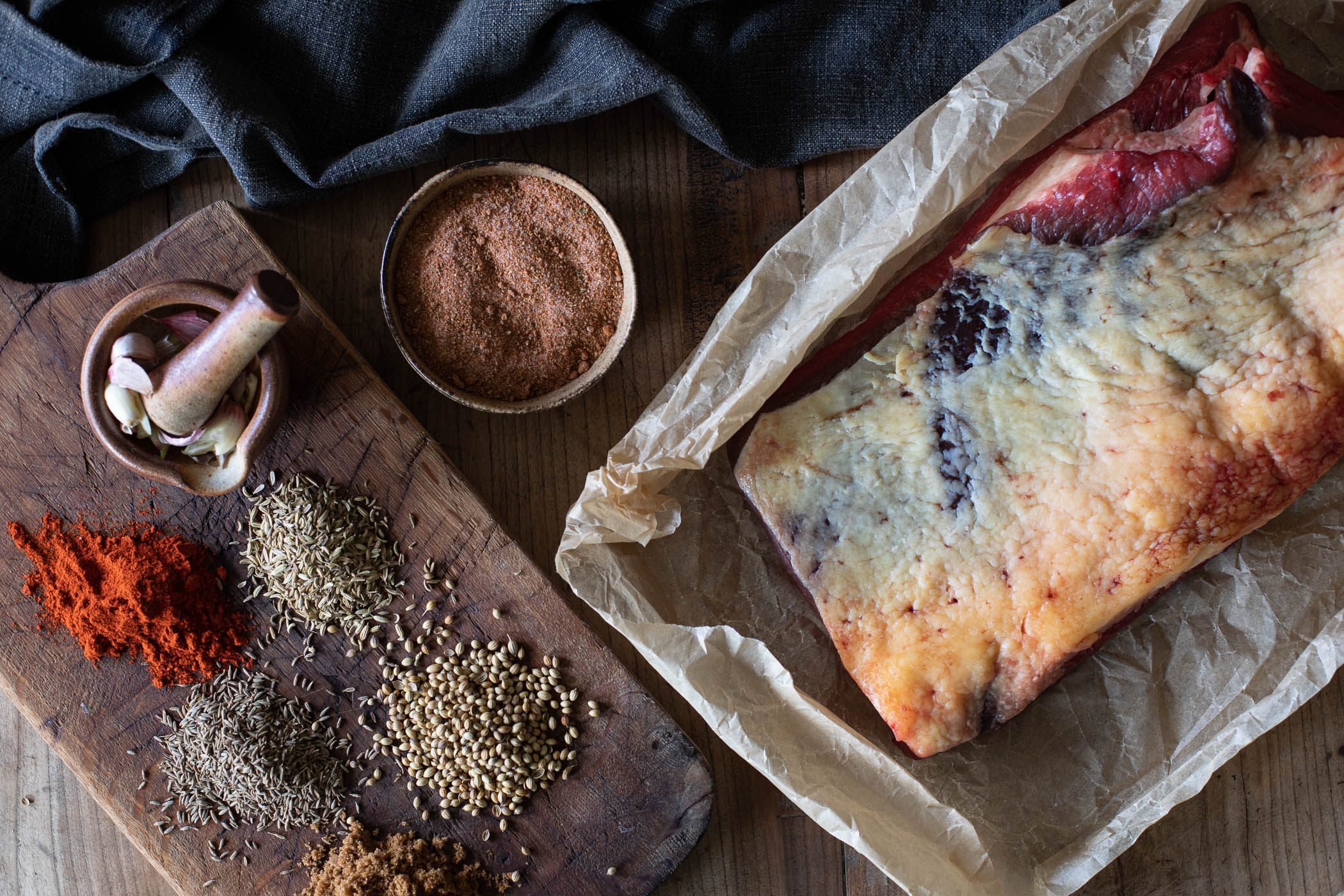
  2. Prepare the Rub: A dry rub — a mix of dried herbs, spices, salt, and sugar — adds flavour and helps develop the bark. You can apply it just before cooking, but for deeper flavour penetration, season the brisket the day before and refrigerate overnight.
  3. Season Generously: Apply your chosen rub (or keep it classic with just coarse sea salt and cracked black pepper) liberally across all sides of the brisket, making sure it’s evenly coated.
  4. Position the Brisket: Place the brisket fat-side up on the smoker grill. Close the lid and allow the brisket to cook undisturbed. This allows the fat to baste the meat as it renders.
  5. Wrapping the Brisket: A bark (dark crust) will begin to form during the cook. Once the bark has set — typically after several hours — wrap the brisket in several layers of greaseproof or butcher’s paper. This prevents the bark from becoming overly hard or bitter while still allowing smoke to penetrate.
  6. Cook to Temperature, Not Time: Continue cooking until the internal temperature reaches 92–94°C. A good sign of doneness is when a sharp knife slides into the meat with no resistance.
  7. Resting is Essential: Rest the brisket in its wrapping for at least 30 minutes, ideally up to an hour. This allows the juices to redistribute and the meat to relax. You can also cool and refrigerate the wrapped brisket if cooking ahead of time — it reheats beautifully.

Pro Tip: Look out for the pink “smoke ring” beneath the surface — a true badge of honour for any pitmaster and a sign of a well-smoked brisket.

Top Tips for Smoking Brisket

  • Every smoker runs differently: No two smokers are identical — airflow, fuel type, insulation, and even the weather play a role. Get to know your setup and monitor the temperature throughout. Brisket likes it steady: aim for around 110°C and resist the urge to lift the lid too often.
  • Choose the right wood: Hardwoods like oak, hickory, or pecan pair beautifully with brisket, lending rich, smoky depth. Fruit woods like apple or cherry offer a lighter touch. To maintain a consistent smoke over several hours, use wood chunks, not chips or pellets — they burn slower and more evenly.
  • Trim to suit the cook: Some pitmasters trim the fat cap down to around ¼ inch to encourage smoke penetration and even rendering. Others leave more on and trim after cooking. Either way, a good layer of fat helps keep the meat moist throughout a long, slow cook.
  • Use a meat thermometer: Brisket isn’t cooked to time — it’s cooked to temperature. Aim for an internal reading of 92–94°C in the thickest part of the meat. At this stage, connective tissue has broken down and the brisket should yield easily to a knife or probe.
  • Look out for the smoke ring: A pink layer just beneath the bark — typically up to 3mm deep — is called the smoke ring. It’s the result of a chemical reaction between the meat’s myoglobin and gases from wood or charcoal. A sure sign things went right.
  • Wrap when the bark is right: Once a solid bark has formed (dry, dark, slightly crusty), wrap your brisket in butcher’s paper or greaseproof paper. This prevents the crust from turning too hard and helps push through the stall — the stage where internal temp stubbornly refuses to rise.
  • Rest it properly: Resting is crucial. Leave the brisket wrapped and rest for at least 30 minutes, ideally up to an hour. This allows the juices to redistribute and the texture to relax. Cooking ahead? Let it cool in the wrap, refrigerate, and reheat gently when needed.

Order meat online

Instagram

  • There might not be a food that is more of this generation than fried chicken. It’s eminently Instagram-able (or TikTok-able depending on your age), malleable to various cuisines and extremely delicious. Plus, it has just the right amount of technique, if you know what I mean. The sort of thing that, if you’re not giving it the requisite thought and attention, can be a bit ropey. No danger of that here though…

@Grylos has given it the Swaledale treatment, i.e. keeping it simple, making it delicious and showing off our incredible meat. So, with no more than a saffron aioli, some shredded iceberg and a few sliced pickles, this is the fried chicken burger of dreams! Oh, sorry, nearly forgot the crispy chicken skin – told you there was just the right amount of technique. 

There are few things that we would want to munch down for lunch more than one of these bad boys. Give ‘em a whirl!
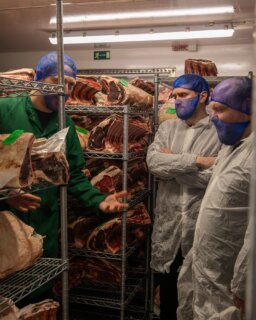
  • Always good to welcome chefs to the butchery. Earlier this week the teams from @llewelynslondon came up to see us. We showed them around the cutting room, talked through how we work, then headed up the hill for a bit of cooking and conversation.

For many chefs it is the first chance to see the whole journey. From the farms and fields where the animals are raised, through our ageing rooms, and finally into the kitchens that cook it.

If you are a chef and fancy a visit this year, you would be very welcome. Send us a message and we will put the kettle on.
  • March sits between seasons. Winter has not quite loosened its grip, and there is still time, and need, for fortifying pleasures. A bowl of chicken broth is one of them.

It begins with a proper chicken stock. Just bones and time in the pot, slowly giving up their flavour until the liquid runs clear and deeply savoury. If you watched our earlier film on how to break down a whole chicken, this is where the rest of it finds its purpose.

From there the broth is built. Pearl barley for substance. Cavolo nero and turnips for the season. Simple things, allowed to do their work in good stock.

Just before serving, a small splash of oloroso lifts the whole bowl.
  • British Pie Week, apparently.

We do not usually pay much attention to themed food weeks. We prefer to make and sell things when they feel right.

This year is different, thanks to our growing friendship with Yorkshire chef and pie obsessive Josh Whitehead, and his excellent pie project, Finer Pleasures.

Josh started @finer_pleasures in 2023 to make pies the way they should be made. Proper fillings, local meat and traditional methods.

So we thought we would join in.

The pie is a classic. Chicken, ham, leek and mushroom.

Brined chicken, smoked ham hock and a rich velouté finished with herbs, mustard and chestnut mushrooms or leeks.

A proper pie.

Available this week while they last.
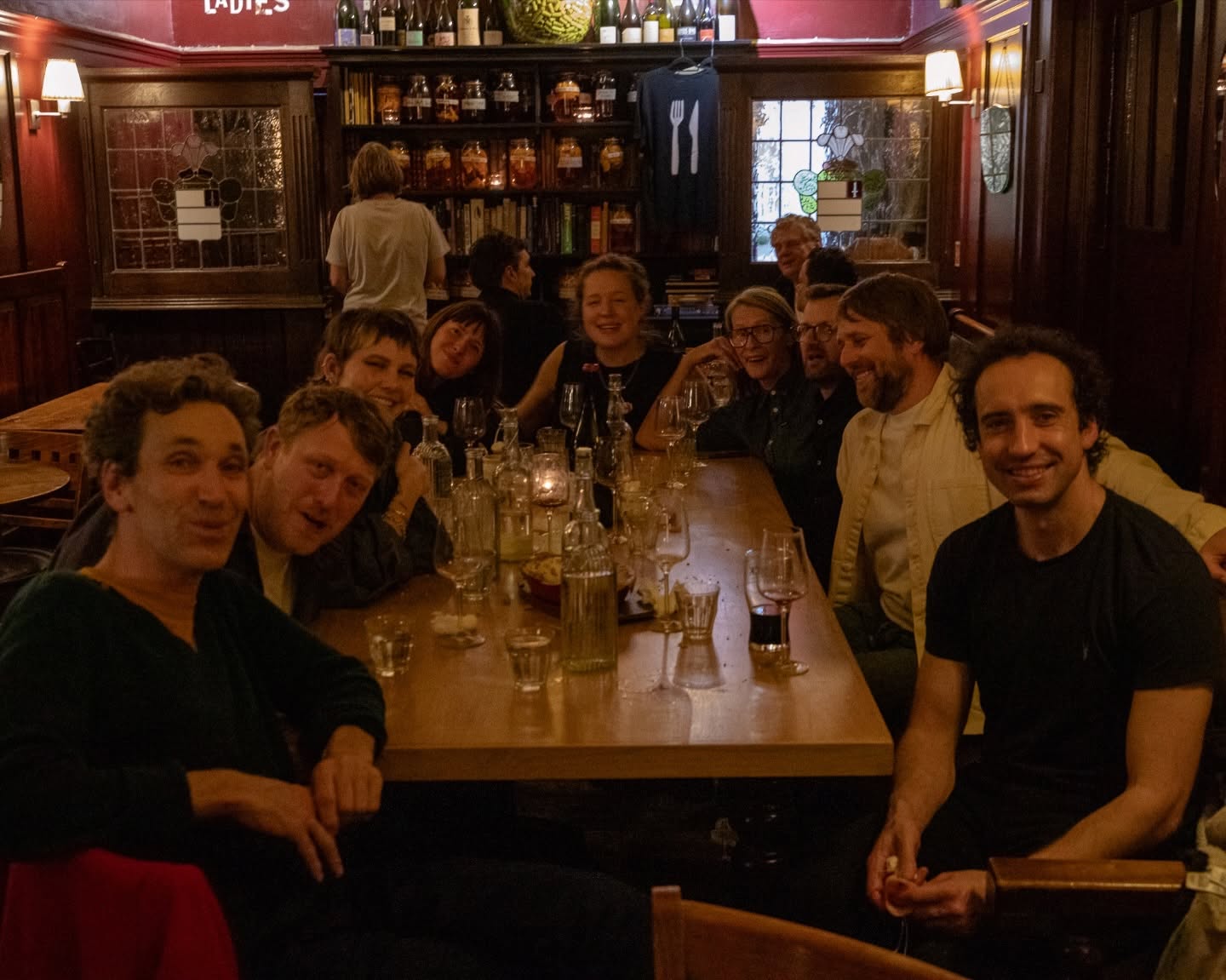
  • It’s easy to become disconnected with the restaurants and kitchens where our meat ends up being prepped, cooked and served. Whilst Instagram can give us a certain understanding of how the food looks; we all know that there is no substitute for experiencing it first-hand. And that is what we had the pleasure of doing this week at the Canton Arms. One of London’s great pubs and one of our oldest, most significant customers. We have been suppling them with exceptional meat since nearly the very beginning of the Swaledale journey. 

Last night was a moment to celebrate that relationship in all its glory; our meat and their cooking and outstanding hospitality coming together for what was a grand evening. We ate, we drank, we chatted in a room that was alive. Long may dining rooms like this thrive and continue to provide people with a space to consume food, booze and hospitality in such a joyous way. 

It was a special night for us, and we hope for everyone who was there. 

Thanks to @chargieb , @cantontrish, @petea25 and the @cantonarms team for being total legends xx

Ps sorry for not getting any decent pics of the food! Was having too much fun.
  • We have all seen the videos. A chicken arrives. Five neat strokes of a knife. It falls apart as if by magic. That comes from thirty years at the block. Most of us do not have that.

So here is a slightly more Radio 4 approach.

A calm, sensible way to take a good chicken and break it down at home. Nothing flashy. Just understanding the joints, working with the bone, and giving each part the respect it deserves. When you do that, you open up a week (almost) of meals. Breasts cooked one way. Legs another. A carcass that becomes stock rather than waste. More on that to follow.

The only things you truly need are a great chicken and a proper knife. Ours is a beautiful honsuki knife kindly supplied by @kitchenprovisions and it does the job expertly. Sharp. Balanced. Delightful.

Watch along as @grylos talks it through.
  • Mutton has earned itself an unfair reputation. For centuries it was simply the meat we ate. Lamb is, in many ways, the modern preference, made possible by refrigeration and global trade. Before that shift, it would have made little sense to slaughter an animal before it had lived fully and bred. Sheep were kept for wool and continuity, and when their working life was complete, they became mutton.

It was part of a cycle. Practical and sustaining. What changed was not the meat, but our habits.

Yet not all mutton is equal. Age alone does not create depth. Mutton reflects the life it has lived. When sheep are kept longer and allowed to graze widely on varied forage, moorland grasses and herbal leys, time and terrain build complexity into the muscle and fat.

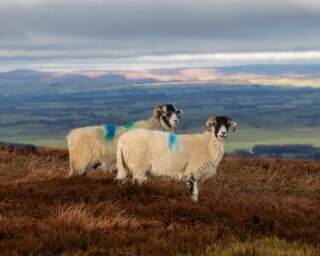
That is the mutton we favour and source. Darker, firmer and deeper in flavour, shaped by prolonged grazing on moorland such as this, just outside Skipton.

There was once a rhythm between wool on our backs and mutton on our tables. Perhaps that rhythm still makes sense.
  • Kindred spirits. Hot pans. Spiced mutton.
Swaledale x Canton Arms supper.
Wednesday 25 February.
To book email Thecantonarms@gmail.com

@cantonarms
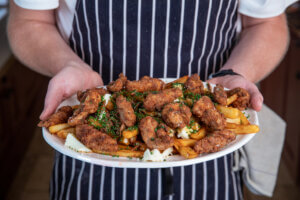
There might not be a food that is more of this generation than fried chicken. It’s eminently Instagram-able (or TikTok-able depending on your age), malleable to various cuisines and extremely delicious. Plus, it has just the right amount of technique, if you know what I mean. The sort of thing that, if you’re not giving it the requisite thought and attention, can be a bit ropey. No danger of that here though… @Grylos has given it the Swaledale treatment, i.e. keeping it simple, making it delicious and showing off our incredible meat. So, with no more than a saffron aioli, some shredded iceberg and a few sliced pickles, this is the fried chicken burger of dreams! Oh, sorry, nearly forgot the crispy chicken skin – told you there was just the right amount of technique. There are few things that we would want to munch down for lunch more than one of these bad boys. Give ‘em a whirl!
1 day ago
503
View on Instagram |
1/8
Always good to welcome chefs to the butchery. Earlier this week the teams from @llewelynslondon came up to see us. We showed them around the cutting room, talked through how we work, then headed up the hill for a bit of cooking and conversation.

For many chefs it is the first chance to see the whole journey. From the farms and fields where the animals are raised, through our ageing rooms, and finally into the kitchens that cook it.

If you are a chef and fancy a visit this year, you would be very welcome. Send us a message and we will put the kettle on.
Always good to welcome chefs to the butchery. Earlier this week the teams from @llewelynslondon came up to see us. We showed them around the cutting room, talked through how we work, then headed up the hill for a bit of cooking and conversation.

For many chefs it is the first chance to see the whole journey. From the farms and fields where the animals are raised, through our ageing rooms, and finally into the kitchens that cook it.

If you are a chef and fancy a visit this year, you would be very welcome. Send us a message and we will put the kettle on.
Always good to welcome chefs to the butchery. Earlier this week the teams from @llewelynslondon came up to see us. We showed them around the cutting room, talked through how we work, then headed up the hill for a bit of cooking and conversation.

For many chefs it is the first chance to see the whole journey. From the farms and fields where the animals are raised, through our ageing rooms, and finally into the kitchens that cook it.

If you are a chef and fancy a visit this year, you would be very welcome. Send us a message and we will put the kettle on.
Always good to welcome chefs to the butchery. Earlier this week the teams from @llewelynslondon came up to see us. We showed them around the cutting room, talked through how we work, then headed up the hill for a bit of cooking and conversation. For many chefs it is the first chance to see the whole journey. From the farms and fields where the animals are raised, through our ageing rooms, and finally into the kitchens that cook it. If you are a chef and fancy a visit this year, you would be very welcome. Send us a message and we will put the kettle on.
1 week ago
49
View on Instagram |
2/8
March sits between seasons. Winter has not quite loosened its grip, and there is still time, and need, for fortifying pleasures. A bowl of chicken broth is one of them. It begins with a proper chicken stock. Just bones and time in the pot, slowly giving up their flavour until the liquid runs clear and deeply savoury. If you watched our earlier film on how to break down a whole chicken, this is where the rest of it finds its purpose. From there the broth is built. Pearl barley for substance. Cavolo nero and turnips for the season. Simple things, allowed to do their work in good stock. Just before serving, a small splash of oloroso lifts the whole bowl.
1 week ago
932
View on Instagram |
3/8
British Pie Week, apparently.

We do not usually pay much attention to themed food weeks. We prefer to make and sell things when they feel right.

This year is different, thanks to our growing friendship with Yorkshire chef and pie obsessive Josh Whitehead, and his excellent pie project, Finer Pleasures.

Josh started @finer_pleasures in 2023 to make pies the way they should be made. Proper fillings, local meat and traditional methods.

So we thought we would join in.

The pie is a classic. Chicken, ham, leek and mushroom.

Brined chicken, smoked ham hock and a rich velouté finished with herbs, mustard and chestnut mushrooms or leeks.

A proper pie.

Available this week while they last.
British Pie Week, apparently.

We do not usually pay much attention to themed food weeks. We prefer to make and sell things when they feel right.

This year is different, thanks to our growing friendship with Yorkshire chef and pie obsessive Josh Whitehead, and his excellent pie project, Finer Pleasures.

Josh started @finer_pleasures in 2023 to make pies the way they should be made. Proper fillings, local meat and traditional methods.

So we thought we would join in.

The pie is a classic. Chicken, ham, leek and mushroom.

Brined chicken, smoked ham hock and a rich velouté finished with herbs, mustard and chestnut mushrooms or leeks.

A proper pie.

Available this week while they last.
British Pie Week, apparently.

We do not usually pay much attention to themed food weeks. We prefer to make and sell things when they feel right.

This year is different, thanks to our growing friendship with Yorkshire chef and pie obsessive Josh Whitehead, and his excellent pie project, Finer Pleasures.

Josh started @finer_pleasures in 2023 to make pies the way they should be made. Proper fillings, local meat and traditional methods.

So we thought we would join in.

The pie is a classic. Chicken, ham, leek and mushroom.

Brined chicken, smoked ham hock and a rich velouté finished with herbs, mustard and chestnut mushrooms or leeks.

A proper pie.

Available this week while they last.
British Pie Week, apparently. We do not usually pay much attention to themed food weeks. We prefer to make and sell things when they feel right. This year is different, thanks to our growing friendship with Yorkshire chef and pie obsessive Josh Whitehead, and his excellent pie project, Finer Pleasures. Josh started @finer_pleasures in 2023 to make pies the way they should be made. Proper fillings, local meat and traditional methods. So we thought we would join in. The pie is a classic. Chicken, ham, leek and mushroom. Brined chicken, smoked ham hock and a rich velouté finished with herbs, mustard and chestnut mushrooms or leeks. A proper pie. Available this week while they last.
2 weeks ago
591
View on Instagram |
4/8
It’s easy to become disconnected with the restaurants and kitchens where our meat ends up being prepped, cooked and served. Whilst Instagram can give us a certain understanding of how the food looks; we all know that there is no substitute for experiencing it first-hand. And that is what we had the pleasure of doing this week at the Canton Arms. One of London’s great pubs and one of our oldest, most significant customers. We have been suppling them with exceptional meat since nearly the very beginning of the Swaledale journey. 

Last night was a moment to celebrate that relationship in all its glory; our meat and their cooking and outstanding hospitality coming together for what was a grand evening. We ate, we drank, we chatted in a room that was alive. Long may dining rooms like this thrive and continue to provide people with a space to consume food, booze and hospitality in such a joyous way. 

It was a special night for us, and we hope for everyone who was there. 

Thanks to @chargieb , @cantontrish, @petea25 and the @cantonarms team for being total legends xx

Ps sorry for not getting any decent pics of the food! Was having too much fun.
It’s easy to become disconnected with the restaurants and kitchens where our meat ends up being prepped, cooked and served. Whilst Instagram can give us a certain understanding of how the food looks; we all know that there is no substitute for experiencing it first-hand. And that is what we had the pleasure of doing this week at the Canton Arms. One of London’s great pubs and one of our oldest, most significant customers. We have been suppling them with exceptional meat since nearly the very beginning of the Swaledale journey. Last night was a moment to celebrate that relationship in all its glory; our meat and their cooking and outstanding hospitality coming together for what was a grand evening. We ate, we drank, we chatted in a room that was alive. Long may dining rooms like this thrive and continue to provide people with a space to consume food, booze and hospitality in such a joyous way. It was a special night for us, and we hope for everyone who was there. Thanks to @chargieb , @cantontrish, @petea25 and the @cantonarms team for being total legends xx Ps sorry for not getting any decent pics of the food! Was having too much fun.
3 weeks ago
1514
View on Instagram |
5/8
We have all seen the videos. A chicken arrives. Five neat strokes of a knife. It falls apart as if by magic. That comes from thirty years at the block. Most of us do not have that. So here is a slightly more Radio 4 approach. A calm, sensible way to take a good chicken and break it down at home. Nothing flashy. Just understanding the joints, working with the bone, and giving each part the respect it deserves. When you do that, you open up a week (almost) of meals. Breasts cooked one way. Legs another. A carcass that becomes stock rather than waste. More on that to follow. The only things you truly need are a great chicken and a proper knife. Ours is a beautiful honsuki knife kindly supplied by @kitchenprovisions and it does the job expertly. Sharp. Balanced. Delightful. Watch along as @grylos talks it through.
1 month ago
652
View on Instagram |
6/8
Mutton has earned itself an unfair reputation. For centuries it was simply the meat we ate. Lamb is, in many ways, the modern preference, made possible by refrigeration and global trade. Before that shift, it would have made little sense to slaughter an animal before it had lived fully and bred. Sheep were kept for wool and continuity, and when their working life was complete, they became mutton.

It was part of a cycle. Practical and sustaining. What changed was not the meat, but our habits.

Yet not all mutton is equal. Age alone does not create depth. Mutton reflects the life it has lived. When sheep are kept longer and allowed to graze widely on varied forage, moorland grasses and herbal leys, time and terrain build complexity into the muscle and fat.

That is the mutton we favour and source. Darker, firmer and deeper in flavour, shaped by prolonged grazing on moorland such as this, just outside Skipton.

There was once a rhythm between wool on our backs and mutton on our tables. Perhaps that rhythm still makes sense.
Mutton has earned itself an unfair reputation. For centuries it was simply the meat we ate. Lamb is, in many ways, the modern preference, made possible by refrigeration and global trade. Before that shift, it would have made little sense to slaughter an animal before it had lived fully and bred. Sheep were kept for wool and continuity, and when their working life was complete, they became mutton.

It was part of a cycle. Practical and sustaining. What changed was not the meat, but our habits.

Yet not all mutton is equal. Age alone does not create depth. Mutton reflects the life it has lived. When sheep are kept longer and allowed to graze widely on varied forage, moorland grasses and herbal leys, time and terrain build complexity into the muscle and fat.

That is the mutton we favour and source. Darker, firmer and deeper in flavour, shaped by prolonged grazing on moorland such as this, just outside Skipton.

There was once a rhythm between wool on our backs and mutton on our tables. Perhaps that rhythm still makes sense.
Mutton has earned itself an unfair reputation. For centuries it was simply the meat we ate. Lamb is, in many ways, the modern preference, made possible by refrigeration and global trade. Before that shift, it would have made little sense to slaughter an animal before it had lived fully and bred. Sheep were kept for wool and continuity, and when their working life was complete, they became mutton.

It was part of a cycle. Practical and sustaining. What changed was not the meat, but our habits.

Yet not all mutton is equal. Age alone does not create depth. Mutton reflects the life it has lived. When sheep are kept longer and allowed to graze widely on varied forage, moorland grasses and herbal leys, time and terrain build complexity into the muscle and fat.

That is the mutton we favour and source. Darker, firmer and deeper in flavour, shaped by prolonged grazing on moorland such as this, just outside Skipton.

There was once a rhythm between wool on our backs and mutton on our tables. Perhaps that rhythm still makes sense.
Mutton has earned itself an unfair reputation. For centuries it was simply the meat we ate. Lamb is, in many ways, the modern preference, made possible by refrigeration and global trade. Before that shift, it would have made little sense to slaughter an animal before it had lived fully and bred. Sheep were kept for wool and continuity, and when their working life was complete, they became mutton.

It was part of a cycle. Practical and sustaining. What changed was not the meat, but our habits.

Yet not all mutton is equal. Age alone does not create depth. Mutton reflects the life it has lived. When sheep are kept longer and allowed to graze widely on varied forage, moorland grasses and herbal leys, time and terrain build complexity into the muscle and fat.

That is the mutton we favour and source. Darker, firmer and deeper in flavour, shaped by prolonged grazing on moorland such as this, just outside Skipton.

There was once a rhythm between wool on our backs and mutton on our tables. Perhaps that rhythm still makes sense.
Mutton has earned itself an unfair reputation. For centuries it was simply the meat we ate. Lamb is, in many ways, the modern preference, made possible by refrigeration and global trade. Before that shift, it would have made little sense to slaughter an animal before it had lived fully and bred. Sheep were kept for wool and continuity, and when their working life was complete, they became mutton. It was part of a cycle. Practical and sustaining. What changed was not the meat, but our habits. Yet not all mutton is equal. Age alone does not create depth. Mutton reflects the life it has lived. When sheep are kept longer and allowed to graze widely on varied forage, moorland grasses and herbal leys, time and terrain build complexity into the muscle and fat. That is the mutton we favour and source. Darker, firmer and deeper in flavour, shaped by prolonged grazing on moorland such as this, just outside Skipton. There was once a rhythm between wool on our backs and mutton on our tables. Perhaps that rhythm still makes sense.
1 month ago
511
View on Instagram |
7/8
Kindred spirits. Hot pans. Spiced mutton. Swaledale x Canton Arms supper. Wednesday 25 February. To book email Thecantonarms@gmail.com @cantonarms
1 month ago
1546
View on Instagram |
8/8