Why Eat Game Meat? A Guide to Wild Meat & Ethical Shooting

Why Eat Game Meat? A Guide to Wild Meat & Ethical Shooting: Spending most of my early life growing up in the countryside, on a dairy farm in 1970s Dorset and then the Berkshire Downs, it was not wholly unsurprising that I came to enjoy hunting and fishing. The latter has become an all-consuming passion when I’m not at the stove. My father was forever picking rosehips for cough syrup or racing lawyer’s wigs homewards before they turned to ink in his pockets rather than on toast. He animated nature with stories and taught me to fall in love with the outdoors, its creatures, deities, hidden secrets and delicious treats. My mother was an endlessly inventive and clever cook, able to conjure up continuous wonders whether the fridge was seemingly empty or full. And so, with a very young, mad keen interest in food I soon learned to view the outdoors, cultivated or wild, in terms of either edible or inedible. In fact I’d go as far as to say that I continue to view the whole world, and even people, under this distinction.

While my father, born in 1918, lost his taste for shooting due to serving in the second war, he nonetheless did not disapprove of me doing it. Giving me his old gun and split cane rods, he taught me the absolute rule of law, “If you kill it, you eat it!”

I remember that sense of finality, those complicated feelings of guilt and grief when that first pigeon tumbled into a hedge, and the first poor rockling was pulled up from the sea wall. I recall cooking and enjoying them both. Holding that lifeless quarry, living only minutes before, owned a sadness I came to realise actually drove my desire to use it properly and respectfully, do something worthy with it, and make it delicious.
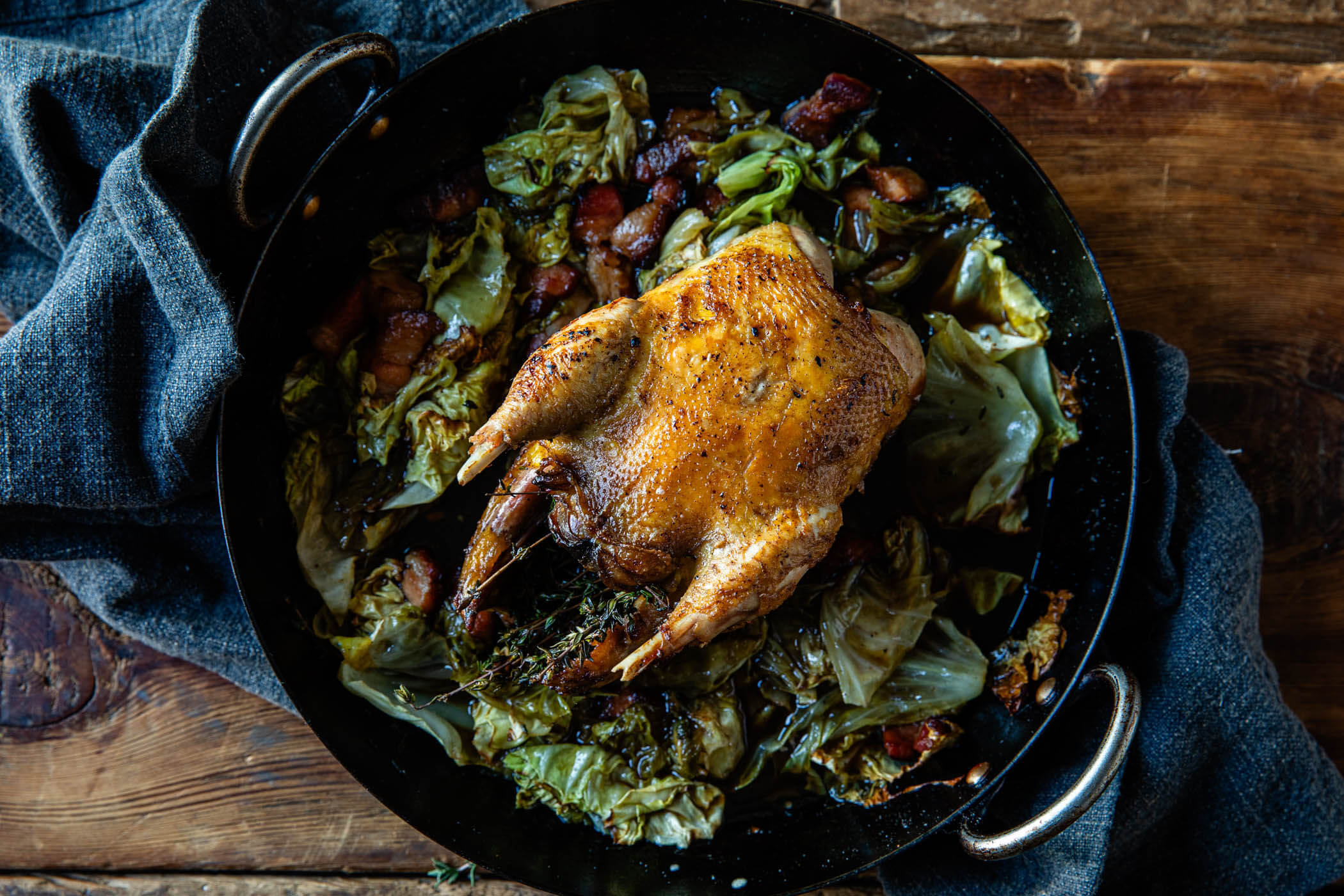
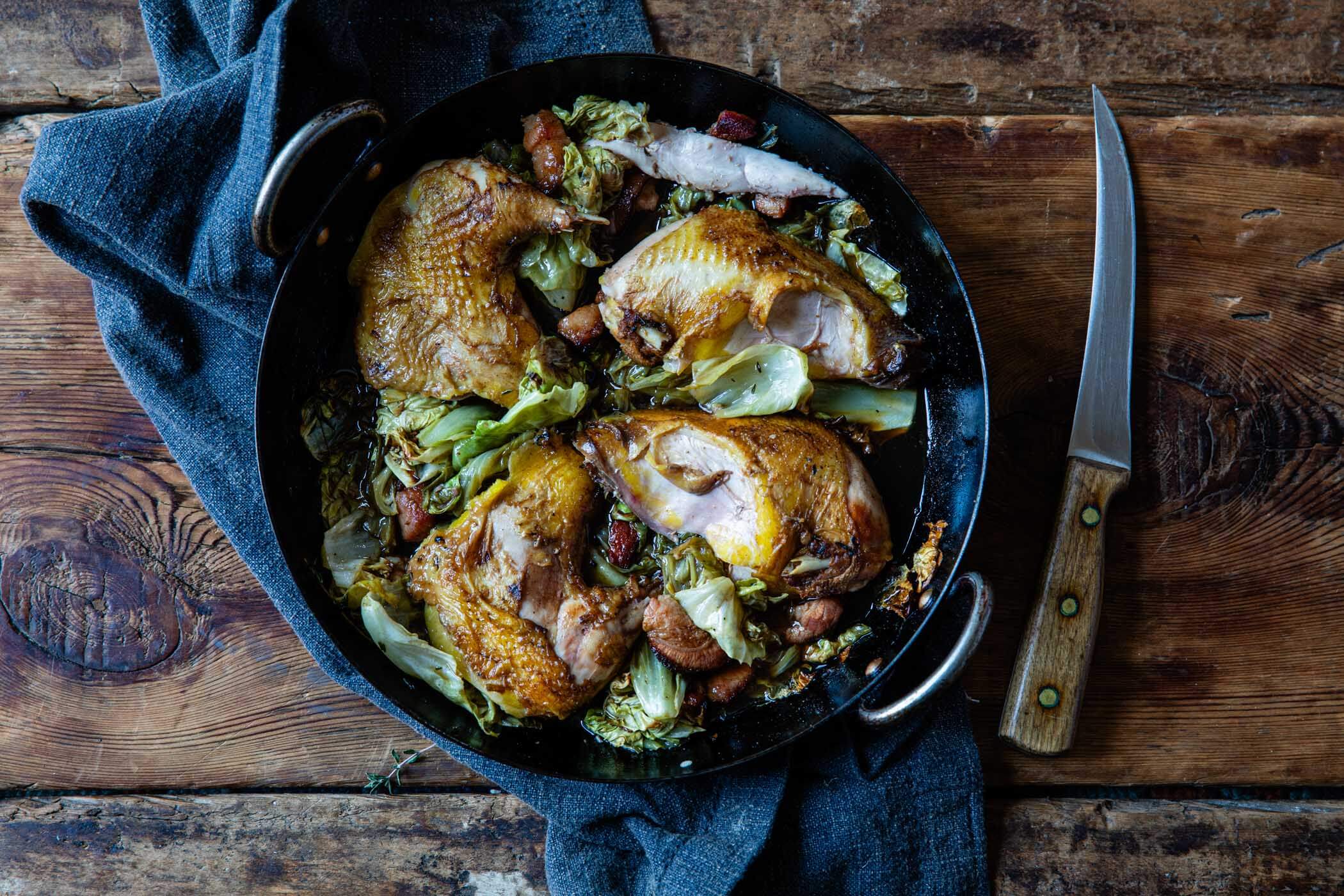
Game, fish, and foraging have become integral to my own way of cooking, my interpretation on the plate of the landscape around me. A cooking perhaps more akin to the food of years ago and long before we became a supermarket nation.

In short, I’ve learnt to understand a lot of the world by tasting it, sometimes unwisely and so here I stand as a 49 year old who feels that ‘surely it is better to know when you are standing next to a cobnut tree or horseradish than not’? My field guides are as important as my cookbooks, the rod and gun kitchen utensils I simply regard as extensions of the whisk and spoon. To go out into nature is my human instinct, and to hopefully return indoors with a wondrous bounty thrills me.
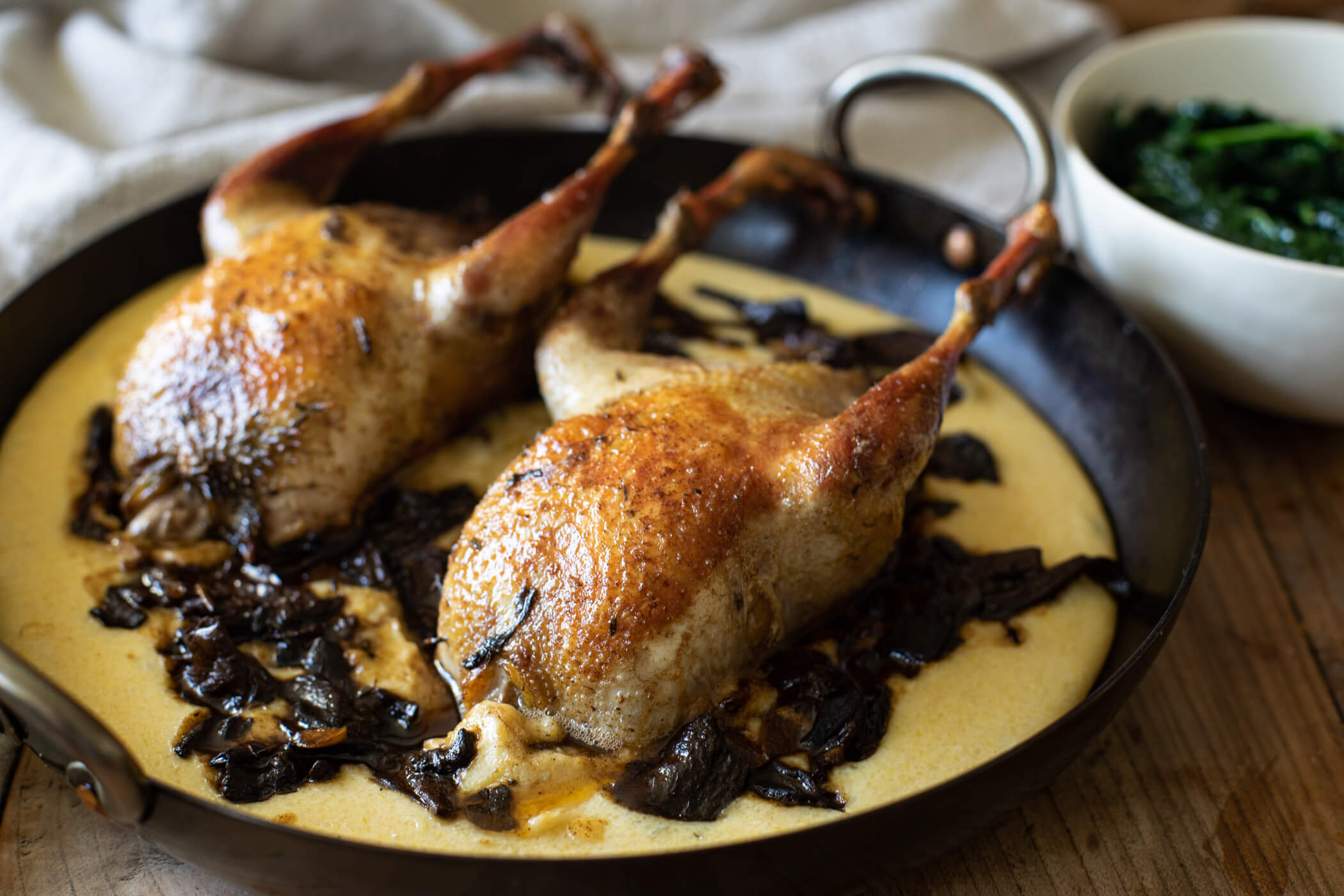
I am happily working alongside Swaledale Butchers as I believe they have a similar respect for the ingredients they handle as I do. I genuinely believe they are ‘passionate’, a word used too often and not applicable to all who use it. Swaledale encourages me to have my say, hunt, gather and cook from the heart; we are aligned in our views and ethos.

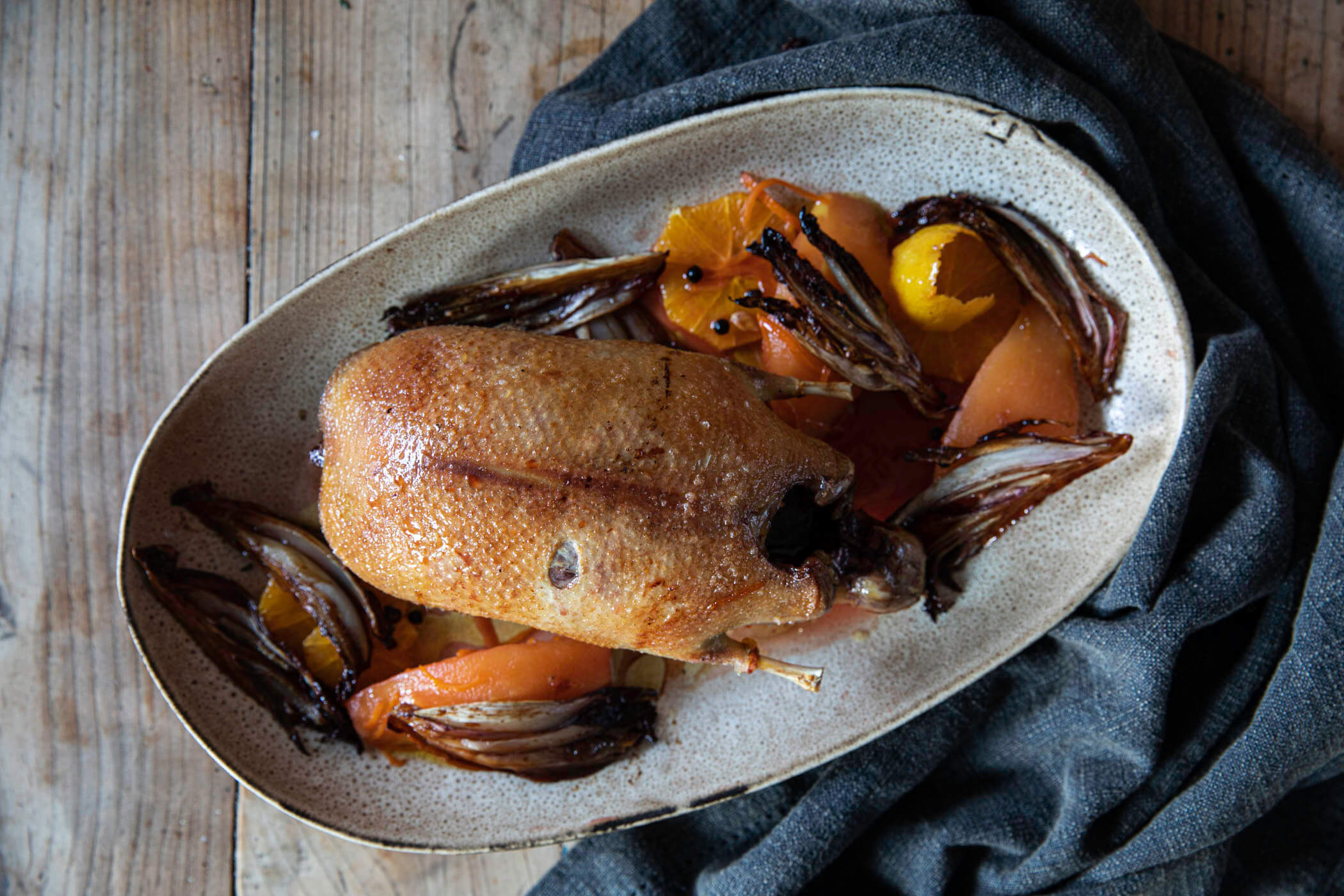
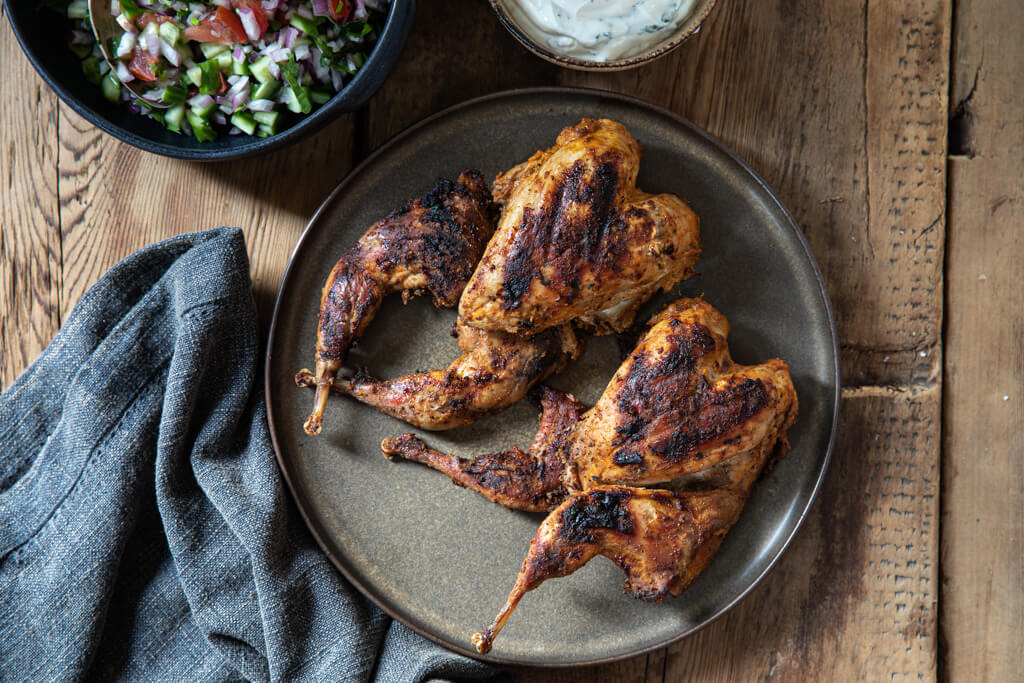
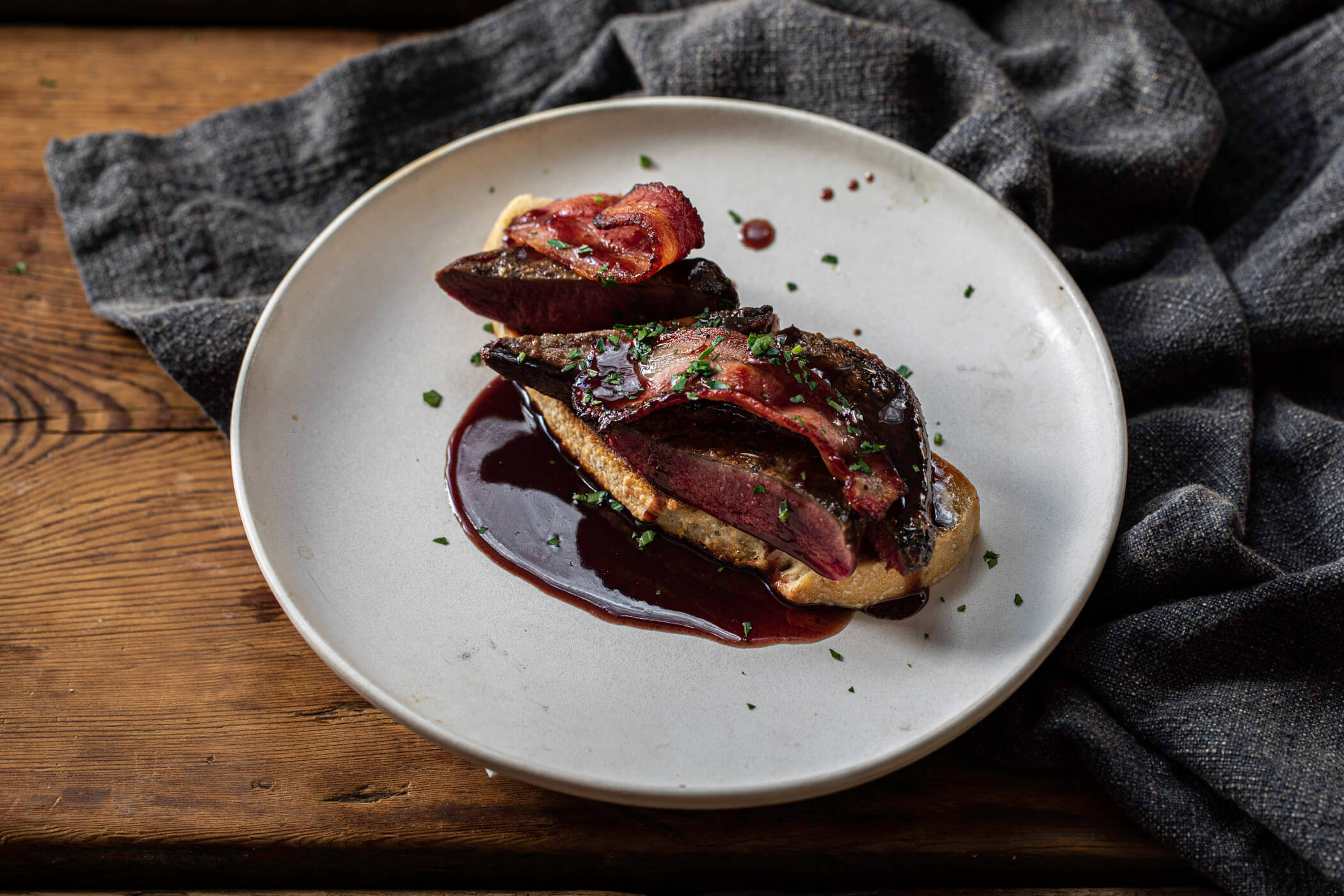
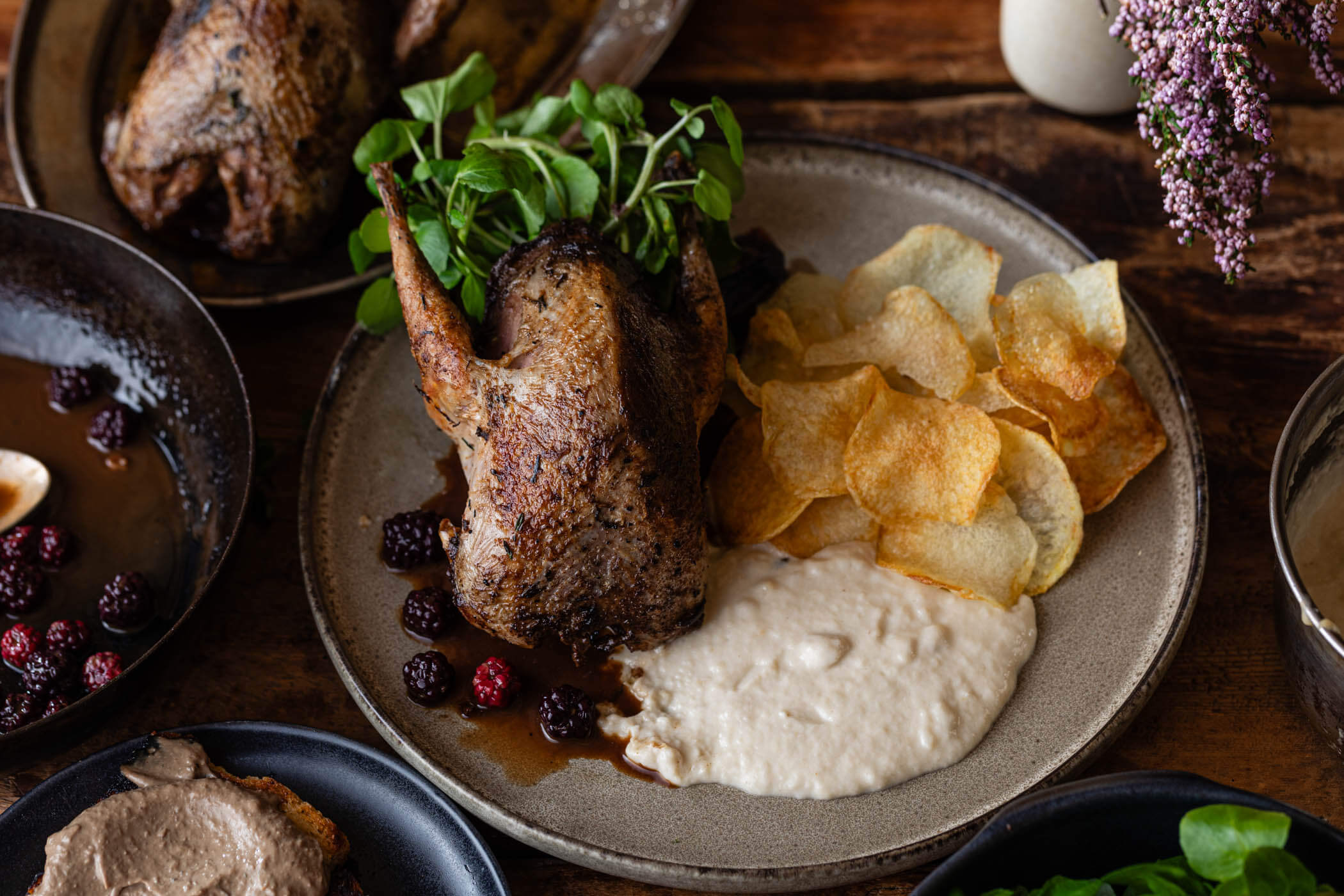
Game is a treat to be savoured. Pigeon on toast with the very black currants it’s been stealing, a roasted mallard with split peas and bacon, the warming comfort of rabbit pie or venison tacos with a deep ancho sauce, yes, these are treats to be eaten slowly and consciously, not rushed in grazing haste. These are wild meats of exquisite and rarified taste.

To change tack now, and a little on the complicated subject of finding joy in hunting.
While some obsessively collect Instagram followers, perhaps sneakers or even sports cars, I believe for this very reason we are all still hunter gatherers in one way or another. An ancient coding, buried deep in our marrow but with the focus perhaps now directed elsewhere. This coding has been integral to our survival for thousands of years and cannot simply be dismissed as a result of vastly increased convenience. I’m an analogue, visceral and feral soul, and I guess this old knowledge just courses closer to the surface of my skin.

When I hunt I would not say those feelings of happy success signify a love of killing. No! They signify an ancient understanding, a joy that one’s survival has been extended with meat to be shared among the wider family or group. It’s a beautiful thing to watch a dog and man hunt side by side, their actions become synchronised, their breathing, their stops, crouches and advances. Ask anyone to stalk something and the changes in movement are automatic. When released from this concentrated pursuit, it’s the release of endorphins post capture that brings this ‘joy’ that is often so hard to explain. ‘Ancient automatic’, that in my case puts food on the table, special food I know far more about than most of my supermarket choices.
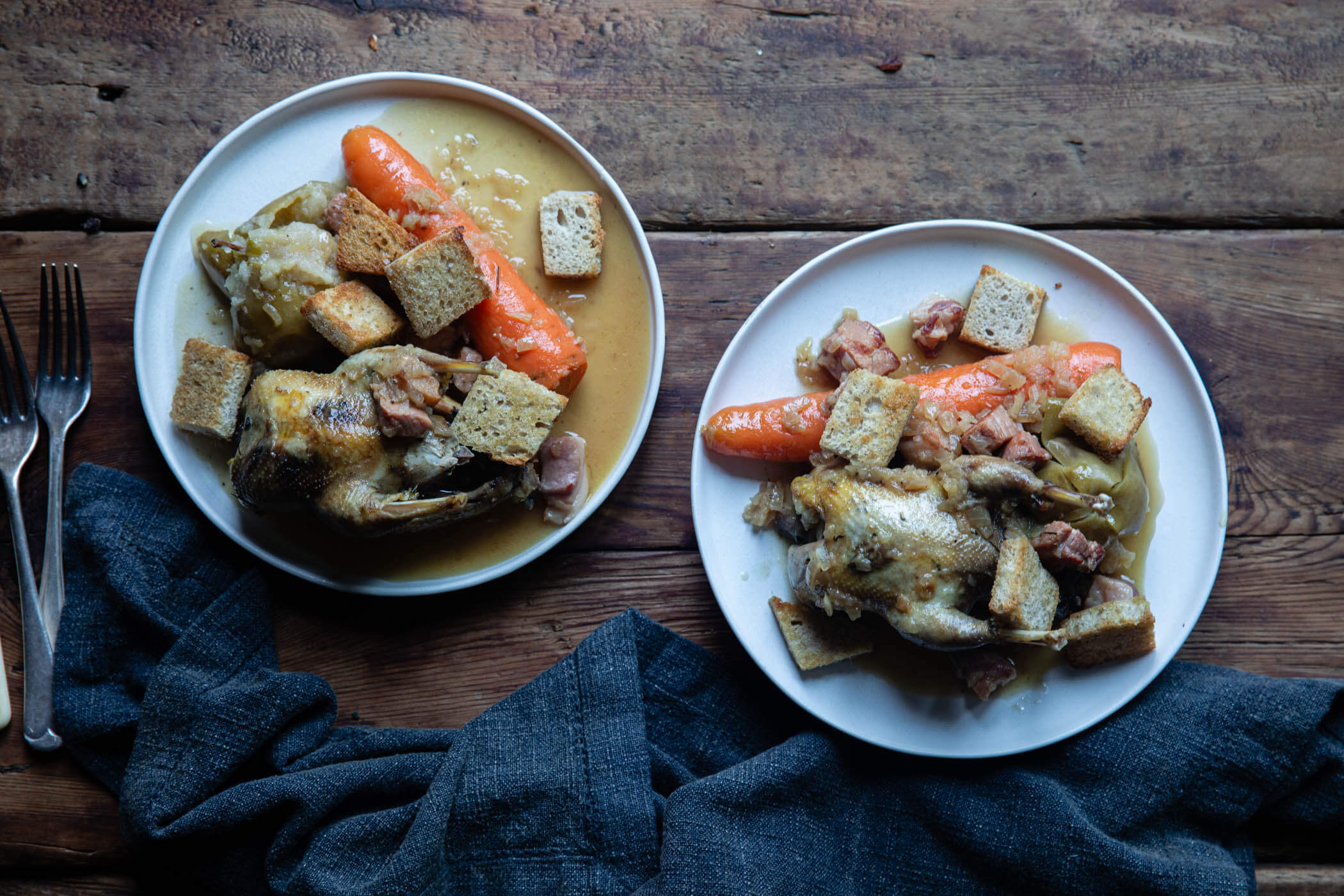
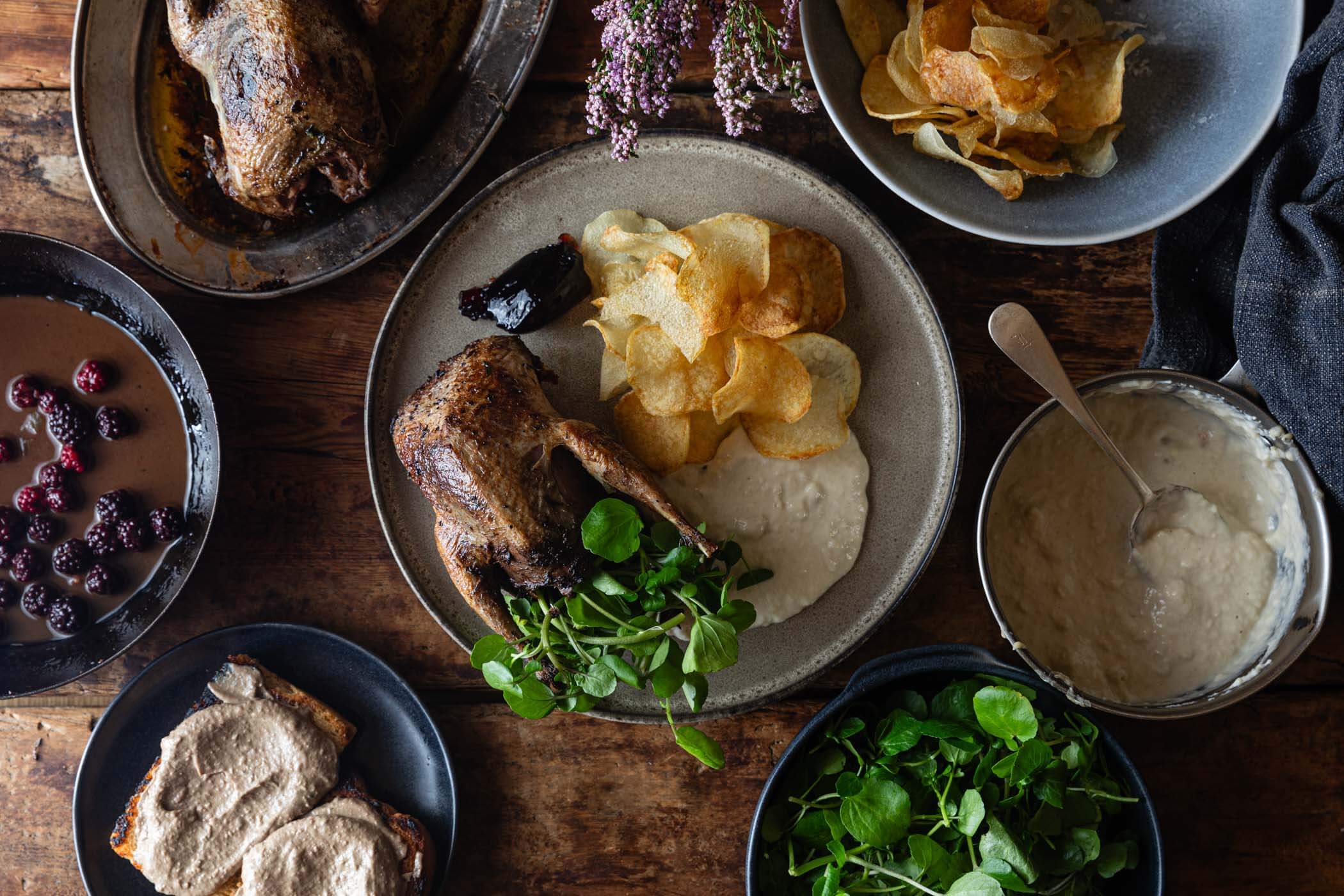
Even if these days survival has little to do with it, (I don’t need to hunt to live) I prefer to have a hand in as much of the meat on my table as is possible. Whether farmer or hunter, provenance is important and to be respected.

Remember that food has only become ‘easy’ very recently. None of the more remote populations across the globe I’ve ever filmed, or spent time with, would ever waste a scrap of what they hunt. Like them I want to understand and become one with my landscape, the habits of animals, the rhythms of nature, and know how to prepare and feed myself too.

I’m an omnivore, but eating game involves killing, so for me it is imperative that a life taken is a life respected. I made a decision to stop shooting driven game, for that’s not a death by nature’s design. The arguments are more complicated than ever, especially today, but it’s important to stick to your convictions.

Most crucial in these modern times is to try and understand when not to eat something and this really comes down to awareness and personal choice. For example, while some parts of England still see healthy populations of brown hares in other parts they have all but disappeared. In such cases then it is up to the individual to make a call. I do not shoot them now as I have had some odd experiences and believe they know secrets we’d be better off knowing but shouldn’t be told. I do still eat them occasionally, but only if a plate is set before me or I’m given a hare.

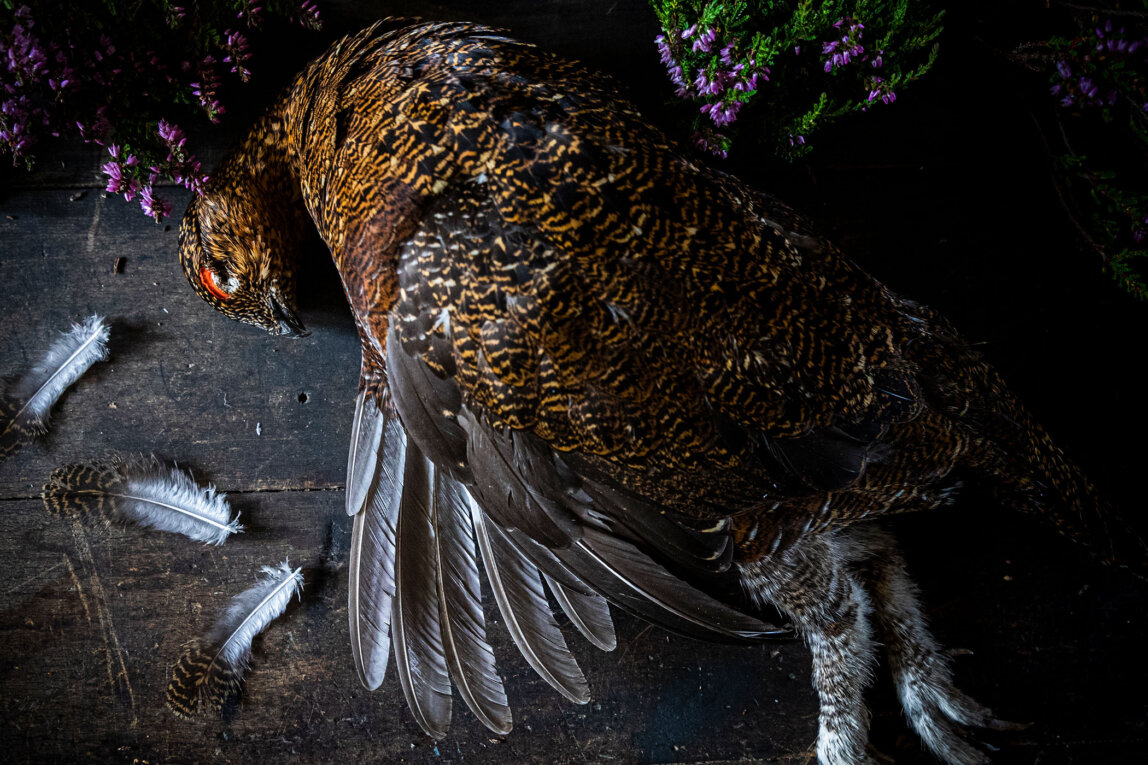
In cases such as the blackcock, a species once found from the south to the north of the country, they have all but vanished and now, I feel, should be protected.

Snipe, woodcock and golden plover I also no longer lift a gun to, as while I have loved to eat them cannot ignore that I’ve seen far less of them over recent years. Their natural habitat is under threat and their numbers are in decline, and so again while I make my own choices, it is for others to do the same. I hopefully await the time that these birds are taken off the list of legal game. I would add though that because these birds are less fashionable to eat now, and rarely if ever seen even in a butcher’s shop, this can only be a good thing.
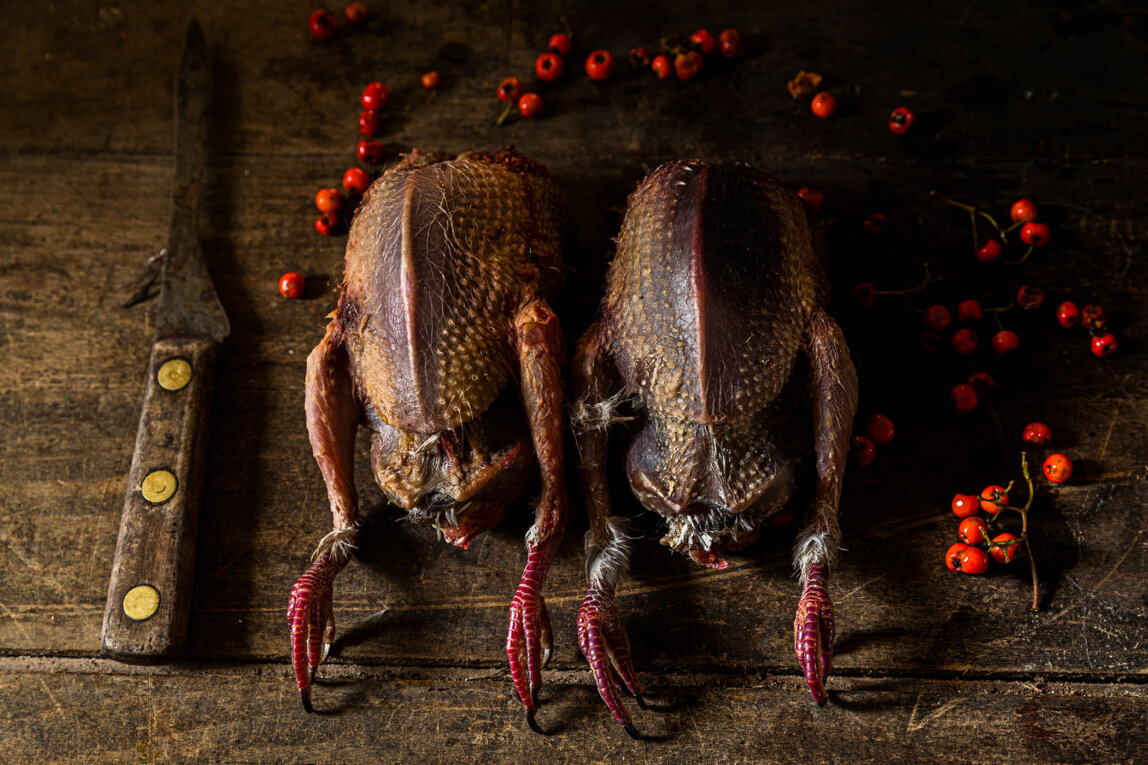
As already stated, I’ve stopped shooting driven game, as I believe that to hunt ethically my quarry should have every possible chance of avoiding me. So I now only rough shoot pheasant and partridge, it seems only fair. However as long as driven shooting continues, one can only hope that the birds are eaten so that the killing is not in vain. That any game simply be shot and disposed of is immoral and will only be-smudge the reputation of such a pursuit (already under close scrutiny) that if tightly controlled, respected and taken seriously could continue to provide fine food. Outside of these issues, partridge and pheasant are delicious and plentiful and I only hope that more people will come to appreciate them. 

There are a lot of wild deer in Britain. I don’t eat them to help reduce road incidents or because I feel sorry for farmers, I eat them because they are presently plentiful and a good source of healthy meat.

The wild Britain we once knew is a notion long gone. The protection, release and management of nature today, seems to be approached like the dials and levels on a large music mixing desk, operated by squabbling producers who don’t really know how to use it and never will. So while enjoying game is to be encouraged, we do need to be aware and make our choices carefully. I eat a lot of game and hope the provenance may lead you to a joyful plate of the most delicious flavours, and an equally joyful understanding of the beautiful places and animals this treasure comes from.
Instagram

  • British Pie Week, apparently.

We do not usually pay much attention to themed food weeks. We prefer to make and sell things when they feel right.

This year is different, thanks to our growing friendship with Yorkshire chef and pie obsessive Josh Whitehead, and his excellent pie project, Finer Pleasures.

Josh started @finer_pleasures in 2023 to make pies the way they should be made. Proper fillings, local meat and traditional methods.

So we thought we would join in.

The pie is a classic. Chicken, ham, leek and mushroom.

Brined chicken, smoked ham hock and a rich velouté finished with herbs, mustard and chestnut mushrooms or leeks.

A proper pie.

Available this week while they last.
  • It’s easy to become disconnected with the restaurants and kitchens where our meat ends up being prepped, cooked and served. Whilst Instagram can give us a certain understanding of how the food looks; we all know that there is no substitute for experiencing it first-hand. And that is what we had the pleasure of doing this week at the Canton Arms. One of London’s great pubs and one of our oldest, most significant customers. We have been suppling them with exceptional meat since nearly the very beginning of the Swaledale journey. 

Last night was a moment to celebrate that relationship in all its glory; our meat and their cooking and outstanding hospitality coming together for what was a grand evening. We ate, we drank, we chatted in a room that was alive. Long may dining rooms like this thrive and continue to provide people with a space to consume food, booze and hospitality in such a joyous way. 

It was a special night for us, and we hope for everyone who was there. 

Thanks to @chargieb , @cantontrish, @petea25 and the @cantonarms team for being total legends xx

Ps sorry for not getting any decent pics of the food! Was having too much fun.
  • We have all seen the videos. A chicken arrives. Five neat strokes of a knife. It falls apart as if by magic. That comes from thirty years at the block. Most of us do not have that.

So here is a slightly more Radio 4 approach.

A calm, sensible way to take a good chicken and break it down at home. Nothing flashy. Just understanding the joints, working with the bone, and giving each part the respect it deserves. When you do that, you open up a week (almost) of meals. Breasts cooked one way. Legs another. A carcass that becomes stock rather than waste. More on that to follow.

The only things you truly need are a great chicken and a proper knife. Ours is a beautiful honsuki knife kindly supplied by @kitchenprovisions and it does the job expertly. Sharp. Balanced. Delightful.

Watch along as @grylos talks it through.
  • Mutton has earned itself an unfair reputation. For centuries it was simply the meat we ate. Lamb is, in many ways, the modern preference, made possible by refrigeration and global trade. Before that shift, it would have made little sense to slaughter an animal before it had lived fully and bred. Sheep were kept for wool and continuity, and when their working life was complete, they became mutton.

It was part of a cycle. Practical and sustaining. What changed was not the meat, but our habits.

Yet not all mutton is equal. Age alone does not create depth. Mutton reflects the life it has lived. When sheep are kept longer and allowed to graze widely on varied forage, moorland grasses and herbal leys, time and terrain build complexity into the muscle and fat.

That is the mutton we favour and source. Darker, firmer and deeper in flavour, shaped by prolonged grazing on moorland such as this, just outside Skipton.

There was once a rhythm between wool on our backs and mutton on our tables. Perhaps that rhythm still makes sense.
  • Kindred spirits. Hot pans. Spiced mutton.
Swaledale x Canton Arms supper.
Wednesday 25 February.
To book email Thecantonarms@gmail.com

@cantonarms
  • Winter and its cold hands have us fully in a tight embrace right now. And so we find ourselves cooking more often than not, to warm our souls.

A ham at the weekend is one such thing that does the job. It can be used for all kinds of dishes and provide your weekdays with a plethora of fine sandwiches. But this fine cut also produces something else. An excellent, warming stock that should not be thrown away.

In fact, it should be used to make something just as special. A deep, hearty split pea and ham soup. And here is @grylos showing you how to do it. Like most things, if you cook with time and consideration, the by-product is often just as good as the main event.
  • Ask yourself this. When did you last have a really good pork chop?

This is why we keep coming back to it. Native, rare breed pork. Dry aged on the bone. Proper depth of flavour. Nothing like the pale, wet stuff you see elsewhere.

These are our Pork Chops with Rosemary and Anchovy Butter. Two thick, rindless chops. Two discs of handmade compound butter. Anchovy, rosemary, lemon zest, a little shallot. Old friends. It works.
  • Fancy a bit of a butcher’s tip? Or a hack, if you will. Well look no further. 

Here, @grylos, gets creative with a joint of boned and rolled beef rump, creating three, totally different meals, from the one piece of meat. A great example of some leftfield thinking and the perfect way to add a little variety into your weekly meal planning. Along the spectrum from raw to medium, your week could go a little something like this; tartare and toast lightly rubbed with garlic for lunch on Wednesday; steak night on Friday night, with chips, good red wine and a bowl of bearnaise; a roast dinner on Sunday. Bob’s your uncle, Fanny’s your aunt and a carnivorous and hugely satisfying week of eating is complete. 

All that from a single rolled rump of beef! A life hack if I ever saw one…

Did you know that our rumps won 3 stars at the Great Taste Awards? 3-star rump, you can’t argue with that!
British Pie Week, apparently.

We do not usually pay much attention to themed food weeks. We prefer to make and sell things when they feel right.

This year is different, thanks to our growing friendship with Yorkshire chef and pie obsessive Josh Whitehead, and his excellent pie project, Finer Pleasures.

Josh started @finer_pleasures in 2023 to make pies the way they should be made. Proper fillings, local meat and traditional methods.

So we thought we would join in.

The pie is a classic. Chicken, ham, leek and mushroom.

Brined chicken, smoked ham hock and a rich velouté finished with herbs, mustard and chestnut mushrooms or leeks.

A proper pie.

Available this week while they last.
British Pie Week, apparently.

We do not usually pay much attention to themed food weeks. We prefer to make and sell things when they feel right.

This year is different, thanks to our growing friendship with Yorkshire chef and pie obsessive Josh Whitehead, and his excellent pie project, Finer Pleasures.

Josh started @finer_pleasures in 2023 to make pies the way they should be made. Proper fillings, local meat and traditional methods.

So we thought we would join in.

The pie is a classic. Chicken, ham, leek and mushroom.

Brined chicken, smoked ham hock and a rich velouté finished with herbs, mustard and chestnut mushrooms or leeks.

A proper pie.

Available this week while they last.
British Pie Week, apparently.

We do not usually pay much attention to themed food weeks. We prefer to make and sell things when they feel right.

This year is different, thanks to our growing friendship with Yorkshire chef and pie obsessive Josh Whitehead, and his excellent pie project, Finer Pleasures.

Josh started @finer_pleasures in 2023 to make pies the way they should be made. Proper fillings, local meat and traditional methods.

So we thought we would join in.

The pie is a classic. Chicken, ham, leek and mushroom.

Brined chicken, smoked ham hock and a rich velouté finished with herbs, mustard and chestnut mushrooms or leeks.

A proper pie.

Available this week while they last.
British Pie Week, apparently. We do not usually pay much attention to themed food weeks. We prefer to make and sell things when they feel right. This year is different, thanks to our growing friendship with Yorkshire chef and pie obsessive Josh Whitehead, and his excellent pie project, Finer Pleasures. Josh started @finer_pleasures in 2023 to make pies the way they should be made. Proper fillings, local meat and traditional methods. So we thought we would join in. The pie is a classic. Chicken, ham, leek and mushroom. Brined chicken, smoked ham hock and a rich velouté finished with herbs, mustard and chestnut mushrooms or leeks. A proper pie. Available this week while they last.
4 days ago
52
View on Instagram |
1/8
It’s easy to become disconnected with the restaurants and kitchens where our meat ends up being prepped, cooked and served. Whilst Instagram can give us a certain understanding of how the food looks; we all know that there is no substitute for experiencing it first-hand. And that is what we had the pleasure of doing this week at the Canton Arms. One of London’s great pubs and one of our oldest, most significant customers. We have been suppling them with exceptional meat since nearly the very beginning of the Swaledale journey. 

Last night was a moment to celebrate that relationship in all its glory; our meat and their cooking and outstanding hospitality coming together for what was a grand evening. We ate, we drank, we chatted in a room that was alive. Long may dining rooms like this thrive and continue to provide people with a space to consume food, booze and hospitality in such a joyous way. 

It was a special night for us, and we hope for everyone who was there. 

Thanks to @chargieb , @cantontrish, @petea25 and the @cantonarms team for being total legends xx

Ps sorry for not getting any decent pics of the food! Was having too much fun.
It’s easy to become disconnected with the restaurants and kitchens where our meat ends up being prepped, cooked and served. Whilst Instagram can give us a certain understanding of how the food looks; we all know that there is no substitute for experiencing it first-hand. And that is what we had the pleasure of doing this week at the Canton Arms. One of London’s great pubs and one of our oldest, most significant customers. We have been suppling them with exceptional meat since nearly the very beginning of the Swaledale journey. Last night was a moment to celebrate that relationship in all its glory; our meat and their cooking and outstanding hospitality coming together for what was a grand evening. We ate, we drank, we chatted in a room that was alive. Long may dining rooms like this thrive and continue to provide people with a space to consume food, booze and hospitality in such a joyous way. It was a special night for us, and we hope for everyone who was there. Thanks to @chargieb , @cantontrish, @petea25 and the @cantonarms team for being total legends xx Ps sorry for not getting any decent pics of the food! Was having too much fun.
1 week ago
1494
View on Instagram |
2/8
We have all seen the videos. A chicken arrives. Five neat strokes of a knife. It falls apart as if by magic. That comes from thirty years at the block. Most of us do not have that. So here is a slightly more Radio 4 approach. A calm, sensible way to take a good chicken and break it down at home. Nothing flashy. Just understanding the joints, working with the bone, and giving each part the respect it deserves. When you do that, you open up a week (almost) of meals. Breasts cooked one way. Legs another. A carcass that becomes stock rather than waste. More on that to follow. The only things you truly need are a great chicken and a proper knife. Ours is a beautiful honsuki knife kindly supplied by @kitchenprovisions and it does the job expertly. Sharp. Balanced. Delightful. Watch along as @grylos talks it through.
3 weeks ago
611
View on Instagram |
3/8
Mutton has earned itself an unfair reputation. For centuries it was simply the meat we ate. Lamb is, in many ways, the modern preference, made possible by refrigeration and global trade. Before that shift, it would have made little sense to slaughter an animal before it had lived fully and bred. Sheep were kept for wool and continuity, and when their working life was complete, they became mutton.

It was part of a cycle. Practical and sustaining. What changed was not the meat, but our habits.

Yet not all mutton is equal. Age alone does not create depth. Mutton reflects the life it has lived. When sheep are kept longer and allowed to graze widely on varied forage, moorland grasses and herbal leys, time and terrain build complexity into the muscle and fat.

That is the mutton we favour and source. Darker, firmer and deeper in flavour, shaped by prolonged grazing on moorland such as this, just outside Skipton.

There was once a rhythm between wool on our backs and mutton on our tables. Perhaps that rhythm still makes sense.
Mutton has earned itself an unfair reputation. For centuries it was simply the meat we ate. Lamb is, in many ways, the modern preference, made possible by refrigeration and global trade. Before that shift, it would have made little sense to slaughter an animal before it had lived fully and bred. Sheep were kept for wool and continuity, and when their working life was complete, they became mutton.

It was part of a cycle. Practical and sustaining. What changed was not the meat, but our habits.

Yet not all mutton is equal. Age alone does not create depth. Mutton reflects the life it has lived. When sheep are kept longer and allowed to graze widely on varied forage, moorland grasses and herbal leys, time and terrain build complexity into the muscle and fat.

That is the mutton we favour and source. Darker, firmer and deeper in flavour, shaped by prolonged grazing on moorland such as this, just outside Skipton.

There was once a rhythm between wool on our backs and mutton on our tables. Perhaps that rhythm still makes sense.
Mutton has earned itself an unfair reputation. For centuries it was simply the meat we ate. Lamb is, in many ways, the modern preference, made possible by refrigeration and global trade. Before that shift, it would have made little sense to slaughter an animal before it had lived fully and bred. Sheep were kept for wool and continuity, and when their working life was complete, they became mutton.

It was part of a cycle. Practical and sustaining. What changed was not the meat, but our habits.

Yet not all mutton is equal. Age alone does not create depth. Mutton reflects the life it has lived. When sheep are kept longer and allowed to graze widely on varied forage, moorland grasses and herbal leys, time and terrain build complexity into the muscle and fat.

That is the mutton we favour and source. Darker, firmer and deeper in flavour, shaped by prolonged grazing on moorland such as this, just outside Skipton.

There was once a rhythm between wool on our backs and mutton on our tables. Perhaps that rhythm still makes sense.
Mutton has earned itself an unfair reputation. For centuries it was simply the meat we ate. Lamb is, in many ways, the modern preference, made possible by refrigeration and global trade. Before that shift, it would have made little sense to slaughter an animal before it had lived fully and bred. Sheep were kept for wool and continuity, and when their working life was complete, they became mutton.

It was part of a cycle. Practical and sustaining. What changed was not the meat, but our habits.

Yet not all mutton is equal. Age alone does not create depth. Mutton reflects the life it has lived. When sheep are kept longer and allowed to graze widely on varied forage, moorland grasses and herbal leys, time and terrain build complexity into the muscle and fat.

That is the mutton we favour and source. Darker, firmer and deeper in flavour, shaped by prolonged grazing on moorland such as this, just outside Skipton.

There was once a rhythm between wool on our backs and mutton on our tables. Perhaps that rhythm still makes sense.
Mutton has earned itself an unfair reputation. For centuries it was simply the meat we ate. Lamb is, in many ways, the modern preference, made possible by refrigeration and global trade. Before that shift, it would have made little sense to slaughter an animal before it had lived fully and bred. Sheep were kept for wool and continuity, and when their working life was complete, they became mutton. It was part of a cycle. Practical and sustaining. What changed was not the meat, but our habits. Yet not all mutton is equal. Age alone does not create depth. Mutton reflects the life it has lived. When sheep are kept longer and allowed to graze widely on varied forage, moorland grasses and herbal leys, time and terrain build complexity into the muscle and fat. That is the mutton we favour and source. Darker, firmer and deeper in flavour, shaped by prolonged grazing on moorland such as this, just outside Skipton. There was once a rhythm between wool on our backs and mutton on our tables. Perhaps that rhythm still makes sense.
4 weeks ago
501
View on Instagram |
4/8
Kindred spirits. Hot pans. Spiced mutton. Swaledale x Canton Arms supper. Wednesday 25 February. To book email Thecantonarms@gmail.com @cantonarms
4 weeks ago
1526
View on Instagram |
5/8
Winter and its cold hands have us fully in a tight embrace right now. And so we find ourselves cooking more often than not, to warm our souls. A ham at the weekend is one such thing that does the job. It can be used for all kinds of dishes and provide your weekdays with a plethora of fine sandwiches. But this fine cut also produces something else. An excellent, warming stock that should not be thrown away. In fact, it should be used to make something just as special. A deep, hearty split pea and ham soup. And here is @grylos showing you how to do it. Like most things, if you cook with time and consideration, the by-product is often just as good as the main event.
1 month ago
14516
View on Instagram |
6/8
Ask yourself this. When did you last have a really good pork chop?

This is why we keep coming back to it. Native, rare breed pork. Dry aged on the bone. Proper depth of flavour. Nothing like the pale, wet stuff you see elsewhere.

These are our Pork Chops with Rosemary and Anchovy Butter. Two thick, rindless chops. Two discs of handmade compound butter. Anchovy, rosemary, lemon zest, a little shallot. Old friends. It works.
Ask yourself this. When did you last have a really good pork chop?

This is why we keep coming back to it. Native, rare breed pork. Dry aged on the bone. Proper depth of flavour. Nothing like the pale, wet stuff you see elsewhere.

These are our Pork Chops with Rosemary and Anchovy Butter. Two thick, rindless chops. Two discs of handmade compound butter. Anchovy, rosemary, lemon zest, a little shallot. Old friends. It works.
Ask yourself this. When did you last have a really good pork chop? This is why we keep coming back to it. Native, rare breed pork. Dry aged on the bone. Proper depth of flavour. Nothing like the pale, wet stuff you see elsewhere. These are our Pork Chops with Rosemary and Anchovy Butter. Two thick, rindless chops. Two discs of handmade compound butter. Anchovy, rosemary, lemon zest, a little shallot. Old friends. It works.
1 month ago
472
View on Instagram |
7/8
Fancy a bit of a butcher’s tip? Or a hack, if you will. Well look no further. Here, @grylos, gets creative with a joint of boned and rolled beef rump, creating three, totally different meals, from the one piece of meat. A great example of some leftfield thinking and the perfect way to add a little variety into your weekly meal planning. Along the spectrum from raw to medium, your week could go a little something like this; tartare and toast lightly rubbed with garlic for lunch on Wednesday; steak night on Friday night, with chips, good red wine and a bowl of bearnaise; a roast dinner on Sunday. Bob’s your uncle, Fanny’s your aunt and a carnivorous and hugely satisfying week of eating is complete. All that from a single rolled rump of beef! A life hack if I ever saw one… Did you know that our rumps won 3 stars at the Great Taste Awards? 3-star rump, you can’t argue with that!
1 month ago
2585
View on Instagram |
8/8