How-To Guides

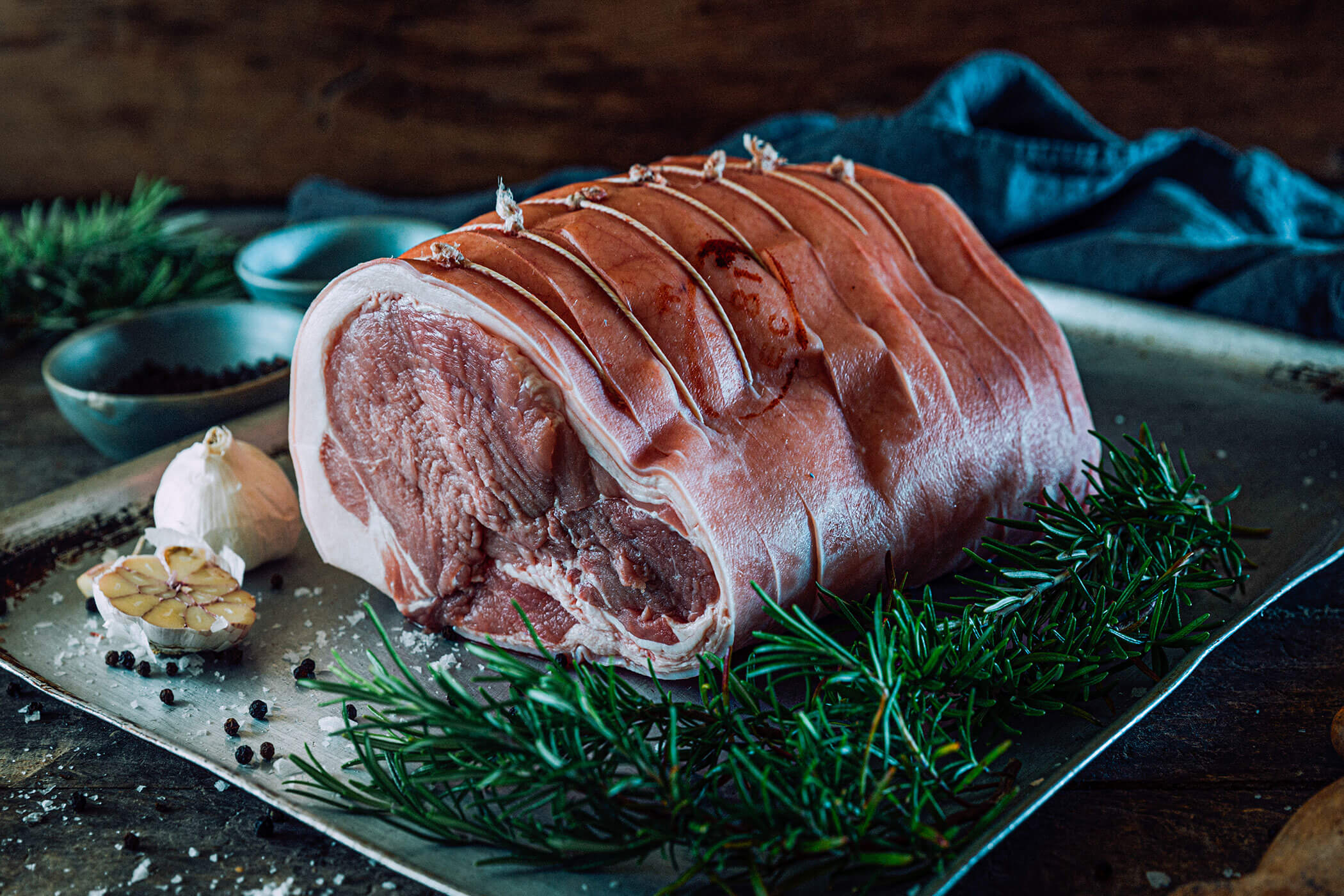
How to Cook Boneless Pork Leg Joint

What Is Boneless Pork Leg Joint?

How to cook boneless pork leg joint: Pork leg is the uncured back leg of a pig, prized for its versatility and rich flavour. It’s the same cut we dry-cure to create our distinctive ham with its dark pink colour and complex depth of flavour.

For those wondering how to cook a boneless pork leg joint, slow-roasting is the perfect method to achieve a succulent Sunday feast. Swaledale’s pork leg joints stand out for their healthy covering of fat – a key difference from commercial pork – and their exceptional crackling. While leaner than pork shoulder, precise cooking results in a seductive combination of firm, juicy meat, crispy golden crackling, and silky fat. This superior result comes from our heritage Middle White and Tamworth pigs, which boast a higher fat content than commercial breeds, naturally basting the joint as it roasts.

How Long Does It Take to Cook a Boneless Pork Leg Joint?

For the best results when cooking a boneless pork leg joint, we recommend using a reliable meat thermometer. Roast the pork until it reaches an internal temperature of 62°C for juicy, tender meat. Start with high heat for the first 25-30 minutes to achieve perfect golden crackling, then reduce the temperature for a gentle, even roast.

As a general guideline, allow 25-30 minutes per 500g of pork leg, plus an additional 20 minutes. For smaller joints, these times may vary, so a good meat thermometer is essential to ensure precise cooking and perfectly cooked pork every time.

How to Cook a Boneless Pork Leg Joint for Perfect Results

  1. Prepare the Joint: Remove your boneless pork leg joint from the fridge, take it out of the vacuum packaging, and pat it dry with a paper towel to remove any moisture. Allow the joint to come to room temperature before cooking.
  2. Preheat and Season: Preheat your oven to 220ºC/Fan 200ºC/Gas 7. Ensure the rind is completely dry and generously sprinkle it with salt to achieve the ultimate crispy crackling. Rub the exposed flesh at each end with olive oil, then season with coarse sea salt and black pepper. The oil helps the seasoning adhere and encourages caramelisation during roasting.
  3. Prepare the Roasting Tin: Place the pork leg in a roasting tin slightly larger than the joint. For even cooking, create a trivet to keep the joint raised above direct contact with the tray. Consider using pork bones (which will enhance a delicious gravy), peeled and quartered onions, sprigs of rosemary, thyme, and sage, as well as halved apples or quartered quinces. As an added bonus, these ingredients will caramelise during cooking, beautifully complementing the rich, meaty flavours of the pork.
  4. Initial High Heat Roast: Place the pork leg in the preheated oven and roast at 220ºC for 30 minutes to start developing golden, crispy crackling.
  5. Lower the Temperature: Reduce the oven temperature to 150ºC/Fan 160ºC/Gas 4 for the remaining cooking time. This is also a good time to add some liquid to prevent the vegetables from scorching and to begin creating a wonderfully rich gravy. Cider works beautifully, as does chicken stock recipe or pork stock, although water will suffice if necessary. For an even drop in heat, leave the oven door open for a couple of minutes before closing it again.
  6. Calculate Cooking Time: Roast the pork for 25 minutes per 500g, plus an additional 20 minutes. To check if the pork is cooked, insert a skewer into the thickest part of the joint; the juices should run clear with no trace of pink. For accuracy, use a meat thermometer to confirm an internal temperature of 62°C at the centre of the joint.
  7. Rest the Pork: Remove the joint from the oven, cover it loosely with tin foil, and allow it to rest for at least half the cooking time. This helps retain the juices, ensuring tender, succulent meat.
  8. Carve and Serve: For the best results, carve the pork against the grain into even slices. Serve with your choice of accompaniments for a truly satisfying meal.

Low-Temperature Roasting Method for Boneless Pork Leg Joint

This method ensures uniform cooking and a juicier, more tender result compared to traditional roasting. For perfect accuracy, the use of a meat thermometer is essential.
  1. Prepare the Pork: Take your boneless pork leg joint out of the refrigerator. Remove it from the vacuum packaging and pat it dry with a paper towel to remove any moisture. Allow the joint to come to room temperature before cooking.
  2. Season Generously: Season the pork rind generously with sea salt, scrunching it between your fingertips to help it penetrate the score marks.
  3. Create a Trivet: Raise the pork joint from the roasting tray to encourage even cooking and add flavour. Consider using pork bones, peeled and quartered onions, sprigs of rosemary, thyme, sage, and halved apples or quartered quinces. Once the trivet is prepared, place the pork joint on top.
  4. An Initial Blast of High Heat: Preheat your oven to its maximum temperature. Place the pork joint in the top of the oven for a short, sharp blast to start the crackling, ensuring minimal heat penetrates the joint itself. Roast for about 10 minutes for an 800g joint or 15 minutes for a larger joint.
  5. Slow Roast: Remove the pork and lower the oven temperature to 85°C. Leave the oven door open for a few minutes to allow the temperature to drop. At this very low temperature (for gas ovens, the pilot light may suffice), roasting will take at least 3 hours depending on the size of the joint. Use a meat thermometer to monitor the internal temperature, aiming for 62°C for perfectly cooked, juicy pork.
  6. Judging the Crackling: Once the pork has reached the desired internal temperature, assess the crackling. If the initial high-heat blast combined with the roasting time has created perfect crackling, the cooking is complete. Rest the joint loosely covered with foil for 20–30 minutes.
  7. Crisp the Crackling, if Necessary: If the crackling needs further crisping, don’t worry – it will be very dry from the roasting and can easily be perfected. Increase the oven temperature to its hottest setting, typically around 230°C. Once the oven is ready, return the pork and check after 10 minutes. For larger joints, an additional 5 minutes may be required.
  8. Rest the Joint: Remove the pork from the oven and loosely cover it with foil. Allow it to rest for 20–30 minutes to lock in the juices and ensure tender meat. The resting period is shorter with this method, as the meat has been cooked at a lower temperature. It has not been subjected to the intense shock of high heat and contraction, meaning a relatively brief resting time yields an exceptionally tender and moist result.
  9. Carve and Serve: Carve the joint against the grain for the best texture. Serve alongside your favourite sides and enjoy perfectly cooked pork with crispy crackling.

Top Tips for Cooking Boneless Pork Leg Joint

  • Dry the Rind Thoroughly: Ensure the rind is completely dry before roasting to achieve the best crackling. If it’s slightly damp, use a hair dryer to remove any remaining moisture.
  • Keep the String On: Leave the string in place unless you plan to stuff the joint. The string helps maintain the shape and prevents the meat from falling apart during cooking.
  • Enhance the Flavour: Place sliced onions and a glass of cider under the joint while roasting. As long as the joint remains uncovered, this won’t impair the crackling but will add delicious flavour to the juices.
  • Season with Fennel Salt: For a Tuscan-inspired twist, coarsely bash fennel seeds and mix them with salt for the initial seasoning. This adds a unique, aromatic flavour to your roast.
  • Avoid Covering the Joint: Do not cover pork cracking joints during cooking unless pot roasting, as this will result in soggy crackling.
  • No Need to Baste: The healthy fat content of Swaledale’s pork naturally bastes the joint, keeping the meat moist and succulent without the need for additional basting.

Enhance Your Boneless Pork Leg Joint

  • Make Use of the Fat: Midway through roasting, spoon off 3–4 tablespoons of fat to create incredible roast potatoes. Toss well-blanched potatoes in the fat, season generously with sea salt and black pepper, and roast to golden perfection.
  • Classic Apple Sauce with a Twist: Apple sauce is a timeless pairing with pork, cutting through the richness of the meat. Use a cooking variety like Bramley apples, which collapse into a puree. Adjust the tartness or sweetness with a squeeze of lemon juice or a pinch of sugar. For a flavourful twist, stir in ½ teaspoon of English mustard, adding more to taste for a tangy apple-mustard sauce that complements the pork beautifully.
  • Roasted Fruits and Aromatics: Enhance the roasting experience by placing halved apples, quartered onions, and quartered quinces around the joint. Season well and add a bashed star anise for a hint of spice and depth of flavour.
  • Sage and Onion Crumbs: For a simple, delicious side dish, create sage and onion crumbs. Sauté sliced onions and smoked lardons (or bacon) in butter until softened. Add sliced sage, a strip of lemon zest, and day-old breadcrumbs. Stir until the breadcrumbs absorb the fat and develop a mix of golden edges and soft texture. These crumbs bring the classic stuffing flavours without the need for a full stuffing.
  • Pot Roasting Alternative: If crackling isn’t essential, consider pot roasting for tender, flavourful results. Layer sliced fennel, apples, and onions in a pot, and add cider with a splash of pork or chicken stock. Place the pork on top and baste regularly while cooking gently. Avoid boiling to prevent the meat from toughening. Serve with creamy mashed potatoes, buttered Savoy cabbage, and a dollop of grain mustard for a comforting and satisfying meal.
  • George Ryle’s Roasted Pork Leg Recipe with Quince, Braised Red Cabbage & Creamed Sprouts: This recipe elevates the pork leg into a festive masterpiece, pairing it with seasonal quince, braised red cabbage, and creamed sprouts. A well-crafted combination of flavours and textures, this dish makes a stunning alternative to turkey for your Christmas table or a luxurious centrepiece for winter gatherings.
Order meat online

Instagram

  • Highland cattle get photographed a lot. They are turned into cuddly toys. But beneath the coat is a hardy animal that can stand the worst of a Yorkshire winter. That is why Andy Lambert grazes them high on the Dales, on rough ground where few other breeds would thrive. They are the one of the few cattle that can turn this hard landscape into rich, delicious beef. It feeds our chefs and home cooks across the country. We are grateful for them, and it is always a pleasure to see them on the tops.
  • A ragù alla bolognese with a few top tips from chef @grylos.

Beef, pork, and a little surprise at the end for real depth. Slow cooked until rich, deep, and properly delicious.

Find the full recipe on our journal and cook it slow this weekend. What’s your secret to a good bolognese?

@grylos 
@tom_saunderson
  • We love yellow fat. Do you?

This is an old Dexter. You do not see beef like this every day. When one comes in, we get a little excited.
  • One of the motivations for operating a whole carcass butchery model is access to the other bits – offal and ‘butchers cuts’. For us, they are just as important a part of the picture as the more famous, prime cuts. 
So, it gives us immense satisfaction that we now sell more of these delights then we ever have. For chefs understand that these cuts and organs offer something a little different. Yes, in terms of flavour and value but also, we think, in terms of creativity. A ribeye or a rack of lamb might inspire more classic garnishes, whereas an ox heart or a pig’s tongue allow the imaginations run a little freer. It takes skill and touch to cook these cuts well and the results can be extraordinary.
We’ll keep buying the whole carcasses, you guys keep cooking the offal and butcher’s cuts!
  • Small herds, native breeds, and wild game, all farmed and sourced with care, are what we’re about and what we care deeply for.

The partridge, often called the hedge chicken, is one of the best introductions to game. Mild, tender, full of flavour, and truly sustainable. In fact, we should be eating more of it to help prevent wastage from wild-shot game.

Here’s @grylos with an autumnal take on a classic: a partridge Caesar salad. It might just inspire you to give this delicious wild game a go.
  • Ceps, butter, onglet. A proper celebration of the season.

Available via our website…

Thanks @grylos
  • Anyone can age beef. Doesn’t make it good beef.

Great beef starts at its source. Well bred, right breed for the terrain, working with nature, not against it. Low stress, low stock density, fed on diverse pasture that isn’t overly rich or monocultured.

From there it’s about time. Then more time. And patience. And, to be honest, the right kit.

As ageing beef has become more popular, you see it in supermarkets and on high streets. But the reality is a lot of the kit used doesn’t stack up. It looks wow but creates mould. People push bad beef too far and try to make it sound interesting.

We’ve done our tests. We’ve listened to our chefs. We’ve custom-built our dry ager. And we know that when you start with quality, proper controlled ageing just enhances the flavour.
  • We’ve been gently reminded that, as butchers, we should probably say something about National Sausage Week.

Truth is, every week’s sausage week here. We love them. We make a lot of them. And, if we’re honest, we think they’re some of the best you’ll find anywhere.

Sausages sit right at the heart of proper whole-carcass butchery. They let us use everything — nose to tail — with care and craft. Made fresh, checked constantly, and built on great ingredients.

So yes, we’re partaking. Here’s 7 sausage recipes that you can find on our journal, with contributions from Jorge the Butcher, @grylos, @samnixon18, and @jacobkenedy
Highland cattle get photographed a lot. They are turned into cuddly toys. But beneath the coat is a hardy animal that can stand the worst of a Yorkshire winter. That is why Andy Lambert grazes them high on the Dales, on rough ground where few other breeds would thrive. They are the one of the few cattle that can turn this hard landscape into rich, delicious beef. It feeds our chefs and home cooks across the country. We are grateful for them, and it is always a pleasure to see them on the tops.
5 days ago
View on Instagram |
1/8
A ragù alla bolognese with a few top tips from chef @grylos. Beef, pork, and a little surprise at the end for real depth. Slow cooked until rich, deep, and properly delicious. Find the full recipe on our journal and cook it slow this weekend. What’s your secret to a good bolognese? @grylos @tom_saunderson
5 days ago
View on Instagram |
2/8
We love yellow fat. Do you? This is an old Dexter. You do not see beef like this every day. When one comes in, we get a little excited.
2 weeks ago
View on Instagram |
3/8
One of the motivations for operating a whole carcass butchery model is access to the other bits – offal and ‘butchers cuts’. For us, they are just as important a part of the picture as the more famous, prime cuts. 
So, it gives us immense satisfaction that we now sell more of these delights then we ever have. For chefs understand that these cuts and organs offer something a little different. Yes, in terms of flavour and value but also, we think, in terms of creativity. A ribeye or a rack of lamb might inspire more classic garnishes, whereas an ox heart or a pig’s tongue allow the imaginations run a little freer. It takes skill and touch to cook these cuts well and the results can be extraordinary.
We’ll keep buying the whole carcasses, you guys keep cooking the offal and butcher’s cuts!
One of the motivations for operating a whole carcass butchery model is access to the other bits – offal and ‘butchers cuts’. For us, they are just as important a part of the picture as the more famous, prime cuts. 
So, it gives us immense satisfaction that we now sell more of these delights then we ever have. For chefs understand that these cuts and organs offer something a little different. Yes, in terms of flavour and value but also, we think, in terms of creativity. A ribeye or a rack of lamb might inspire more classic garnishes, whereas an ox heart or a pig’s tongue allow the imaginations run a little freer. It takes skill and touch to cook these cuts well and the results can be extraordinary.
We’ll keep buying the whole carcasses, you guys keep cooking the offal and butcher’s cuts!
One of the motivations for operating a whole carcass butchery model is access to the other bits – offal and ‘butchers cuts’. For us, they are just as important a part of the picture as the more famous, prime cuts. 
So, it gives us immense satisfaction that we now sell more of these delights then we ever have. For chefs understand that these cuts and organs offer something a little different. Yes, in terms of flavour and value but also, we think, in terms of creativity. A ribeye or a rack of lamb might inspire more classic garnishes, whereas an ox heart or a pig’s tongue allow the imaginations run a little freer. It takes skill and touch to cook these cuts well and the results can be extraordinary.
We’ll keep buying the whole carcasses, you guys keep cooking the offal and butcher’s cuts!
One of the motivations for operating a whole carcass butchery model is access to the other bits – offal and ‘butchers cuts’. For us, they are just as important a part of the picture as the more famous, prime cuts. So, it gives us immense satisfaction that we now sell more of these delights then we ever have. For chefs understand that these cuts and organs offer something a little different. Yes, in terms of flavour and value but also, we think, in terms of creativity. A ribeye or a rack of lamb might inspire more classic garnishes, whereas an ox heart or a pig’s tongue allow the imaginations run a little freer. It takes skill and touch to cook these cuts well and the results can be extraordinary. We’ll keep buying the whole carcasses, you guys keep cooking the offal and butcher’s cuts!
3 weeks ago
View on Instagram |
4/8
Small herds, native breeds, and wild game, all farmed and sourced with care, are what we’re about and what we care deeply for. The partridge, often called the hedge chicken, is one of the best introductions to game. Mild, tender, full of flavour, and truly sustainable. In fact, we should be eating more of it to help prevent wastage from wild-shot game. Here’s @grylos with an autumnal take on a classic: a partridge Caesar salad. It might just inspire you to give this delicious wild game a go.
3 weeks ago
View on Instagram |
5/8
Ceps, butter, onglet. A proper celebration of the season. Available via our website… Thanks @grylos
4 weeks ago
View on Instagram |
6/8
Anyone can age beef. Doesn’t make it good beef. Great beef starts at its source. Well bred, right breed for the terrain, working with nature, not against it. Low stress, low stock density, fed on diverse pasture that isn’t overly rich or monocultured. From there it’s about time. Then more time. And patience. And, to be honest, the right kit. As ageing beef has become more popular, you see it in supermarkets and on high streets. But the reality is a lot of the kit used doesn’t stack up. It looks wow but creates mould. People push bad beef too far and try to make it sound interesting. We’ve done our tests. We’ve listened to our chefs. We’ve custom-built our dry ager. And we know that when you start with quality, proper controlled ageing just enhances the flavour.
1 month ago
View on Instagram |
7/8
We’ve been gently reminded that, as butchers, we should probably say something about National Sausage Week.

Truth is, every week’s sausage week here. We love them. We make a lot of them. And, if we’re honest, we think they’re some of the best you’ll find anywhere.

Sausages sit right at the heart of proper whole-carcass butchery. They let us use everything — nose to tail — with care and craft. Made fresh, checked constantly, and built on great ingredients.

So yes, we’re partaking. Here’s 7 sausage recipes that you can find on our journal, with contributions from Jorge the Butcher, @grylos, @samnixon18, and @jacobkenedy
We’ve been gently reminded that, as butchers, we should probably say something about National Sausage Week.

Truth is, every week’s sausage week here. We love them. We make a lot of them. And, if we’re honest, we think they’re some of the best you’ll find anywhere.

Sausages sit right at the heart of proper whole-carcass butchery. They let us use everything — nose to tail — with care and craft. Made fresh, checked constantly, and built on great ingredients.

So yes, we’re partaking. Here’s 7 sausage recipes that you can find on our journal, with contributions from Jorge the Butcher, @grylos, @samnixon18, and @jacobkenedy
We’ve been gently reminded that, as butchers, we should probably say something about National Sausage Week.

Truth is, every week’s sausage week here. We love them. We make a lot of them. And, if we’re honest, we think they’re some of the best you’ll find anywhere.

Sausages sit right at the heart of proper whole-carcass butchery. They let us use everything — nose to tail — with care and craft. Made fresh, checked constantly, and built on great ingredients.

So yes, we’re partaking. Here’s 7 sausage recipes that you can find on our journal, with contributions from Jorge the Butcher, @grylos, @samnixon18, and @jacobkenedy
We’ve been gently reminded that, as butchers, we should probably say something about National Sausage Week.

Truth is, every week’s sausage week here. We love them. We make a lot of them. And, if we’re honest, we think they’re some of the best you’ll find anywhere.

Sausages sit right at the heart of proper whole-carcass butchery. They let us use everything — nose to tail — with care and craft. Made fresh, checked constantly, and built on great ingredients.

So yes, we’re partaking. Here’s 7 sausage recipes that you can find on our journal, with contributions from Jorge the Butcher, @grylos, @samnixon18, and @jacobkenedy
We’ve been gently reminded that, as butchers, we should probably say something about National Sausage Week.

Truth is, every week’s sausage week here. We love them. We make a lot of them. And, if we’re honest, we think they’re some of the best you’ll find anywhere.

Sausages sit right at the heart of proper whole-carcass butchery. They let us use everything — nose to tail — with care and craft. Made fresh, checked constantly, and built on great ingredients.

So yes, we’re partaking. Here’s 7 sausage recipes that you can find on our journal, with contributions from Jorge the Butcher, @grylos, @samnixon18, and @jacobkenedy
We’ve been gently reminded that, as butchers, we should probably say something about National Sausage Week.

Truth is, every week’s sausage week here. We love them. We make a lot of them. And, if we’re honest, we think they’re some of the best you’ll find anywhere.

Sausages sit right at the heart of proper whole-carcass butchery. They let us use everything — nose to tail — with care and craft. Made fresh, checked constantly, and built on great ingredients.

So yes, we’re partaking. Here’s 7 sausage recipes that you can find on our journal, with contributions from Jorge the Butcher, @grylos, @samnixon18, and @jacobkenedy
We’ve been gently reminded that, as butchers, we should probably say something about National Sausage Week.

Truth is, every week’s sausage week here. We love them. We make a lot of them. And, if we’re honest, we think they’re some of the best you’ll find anywhere.

Sausages sit right at the heart of proper whole-carcass butchery. They let us use everything — nose to tail — with care and craft. Made fresh, checked constantly, and built on great ingredients.

So yes, we’re partaking. Here’s 7 sausage recipes that you can find on our journal, with contributions from Jorge the Butcher, @grylos, @samnixon18, and @jacobkenedy
We’ve been gently reminded that, as butchers, we should probably say something about National Sausage Week.

Truth is, every week’s sausage week here. We love them. We make a lot of them. And, if we’re honest, we think they’re some of the best you’ll find anywhere.

Sausages sit right at the heart of proper whole-carcass butchery. They let us use everything — nose to tail — with care and craft. Made fresh, checked constantly, and built on great ingredients.

So yes, we’re partaking. Here’s 7 sausage recipes that you can find on our journal, with contributions from Jorge the Butcher, @grylos, @samnixon18, and @jacobkenedy
We’ve been gently reminded that, as butchers, we should probably say something about National Sausage Week. Truth is, every week’s sausage week here. We love them. We make a lot of them. And, if we’re honest, we think they’re some of the best you’ll find anywhere. Sausages sit right at the heart of proper whole-carcass butchery. They let us use everything — nose to tail — with care and craft. Made fresh, checked constantly, and built on great ingredients. So yes, we’re partaking. Here’s 7 sausage recipes that you can find on our journal, with contributions from Jorge the Butcher, @grylos, @samnixon18, and @jacobkenedy
1 month ago
View on Instagram |
8/8