
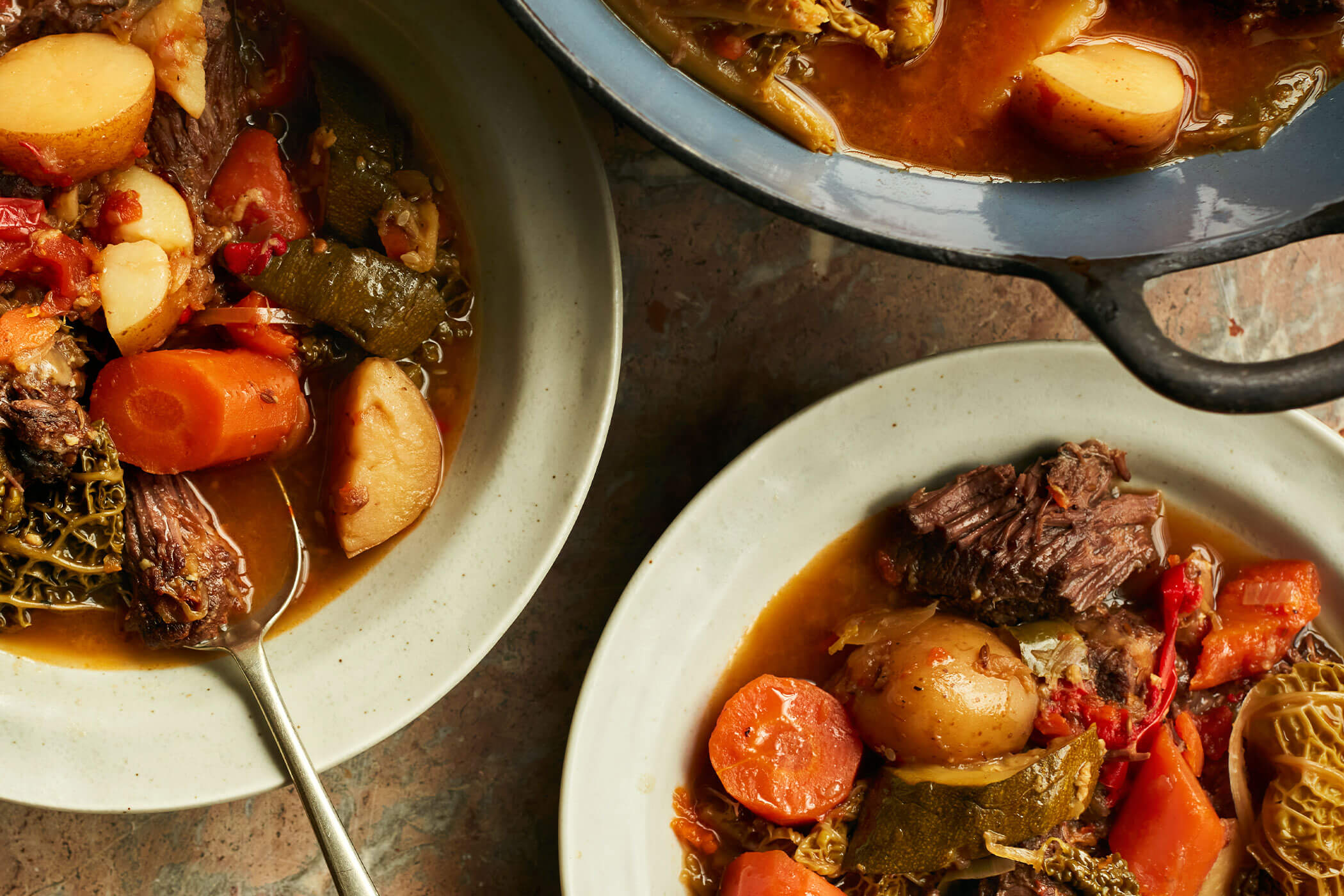
This stew is a gift from Uzbekistan, where it’s a typical autumn dish, a celebration of the season, the harvest, and the earth. It’s exceptional in its simplicity, a reminder of how generous the ground can be. Ingredients are layered in a pot, cooked slowly, and left undisturbed so they release their moisture and create a broth in which their distinct flavours merge in perfect harmony, becoming something truly greater than the sum of their parts.
Don’t feel tied to my layering order (except for the cabbage, that should always be the final layer). Choose your own adventure. And while we’re on that topic, don’t feel tied to these exact ingredients or quantities either. Don’t have five carrots? No problem, use two, or one, or none. Got a few turnips? Perfect. Not a fan of tomatoes? Leave them out. Oh, and if there’s a sweet potato hiding in the corner, bring it along, this stew’s for you, little sweetie.
Dimlama is about seasonality, harvest, nourishment, and simplicity, about making something wonderful from what may seem commonplace. I want to eat this every autumn. In truth, I could eat it every day. And I bet you will too.
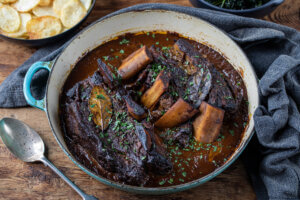
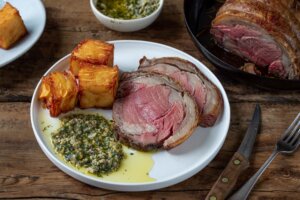
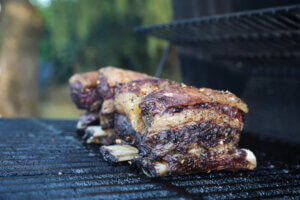
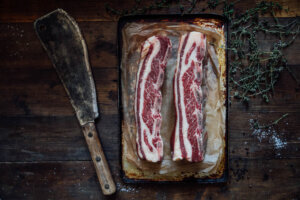
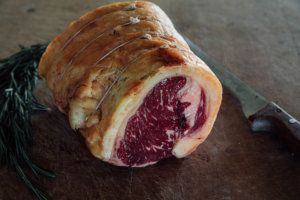
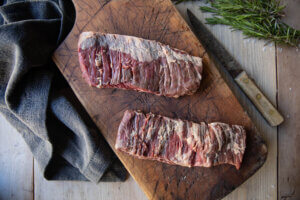
Note: I’ve used ox cheek here, but you could just as easily use lamb or another cut of beef, anything that lends itself to slow cooking.
This recipe is by Anna Ansari and is kindly reproduced with her permission from Silk Roads: A Flavour Odyssey with Recipes from Baku to Beijing.
Serves: 6-8
Prep time: 25 minutes
Cook time: 3 hours
Ingredients
Method
- Put your salt, pepper, and cumin into separate small bowls. You’ll be using these seasonings throughout your dimlama layering, so it’s best to have them ready from the start.
- Pat the meat dry with paper towels and season it on all sides with salt and pepper.
- Heat 1 tbsp of the oil in a heavy-based casserole pot over a medium heat. When the oil is hot and glistening, add the meat, making sure you don’t overcrowd the pot, and brown it on all sides. Be patient; the meat will release easily from the pan once properly browned, usually after 2–4 minutes per side.
- Remove the browned beef from the pan, place it on a plate, and set aside.
- Add the remaining 1 tbsp oil to the pot along with half the sliced onions and a good pinch of salt. Cook, stirring occasionally, for about 10 minutes, or until the onions begin to brown.
- Spread the onions evenly over the bottom of the pot, then return the meat and reduce the heat to low. It’s time to start layering your vegetables.
- I like to add the ingredients in the following order, but as I said above, this is just how I do it, you do you. On top of the meat, layer the rest of the onions, adding a little salt, pepper, and cumin. Then add the carrots and tomatoes (and more salt, pepper, and cumin). Next, the potatoes (and more salt, pepper, and cumin). Then the peppers (and more salt, pepper, and cumin), followed by the apples or quince (and, you guessed it, the last of the salt, pepper, and cumin). Sprinkle the garlic all over the top.
- Finally, lay the cabbage leaves across everything. Their job is to trap the steam, helping everything cook gently and stay moist.
- Once all the vegetables are layered, cover the pot with a lid and cook the dimlama over a low heat for 2 hours. After that, lift the lid and take a peek under the cabbage. Poke a potato with a fork; you want the vegetables soft but not collapsing, and a broth beginning to form.
- If the vegetables haven’t released enough moisture, add about 250 ml of water under the cabbage. Either way, let the dimlama cook for another hour (around 3 hours in total).
- Use a wooden spoon to push the cabbage leaves down into the stew, then stir everything together gently. The meat should be falling apart, the tomatoes disintegrated, the potatoes and carrots tender and yielding, and the peppers collapsed.
- You should be excited. You’re about to ladle earthly heaven into a bowl.
Thank you, Earth. Thank you, Uzbekistan!