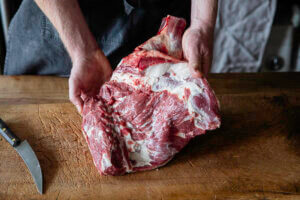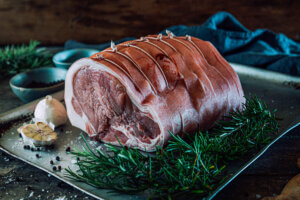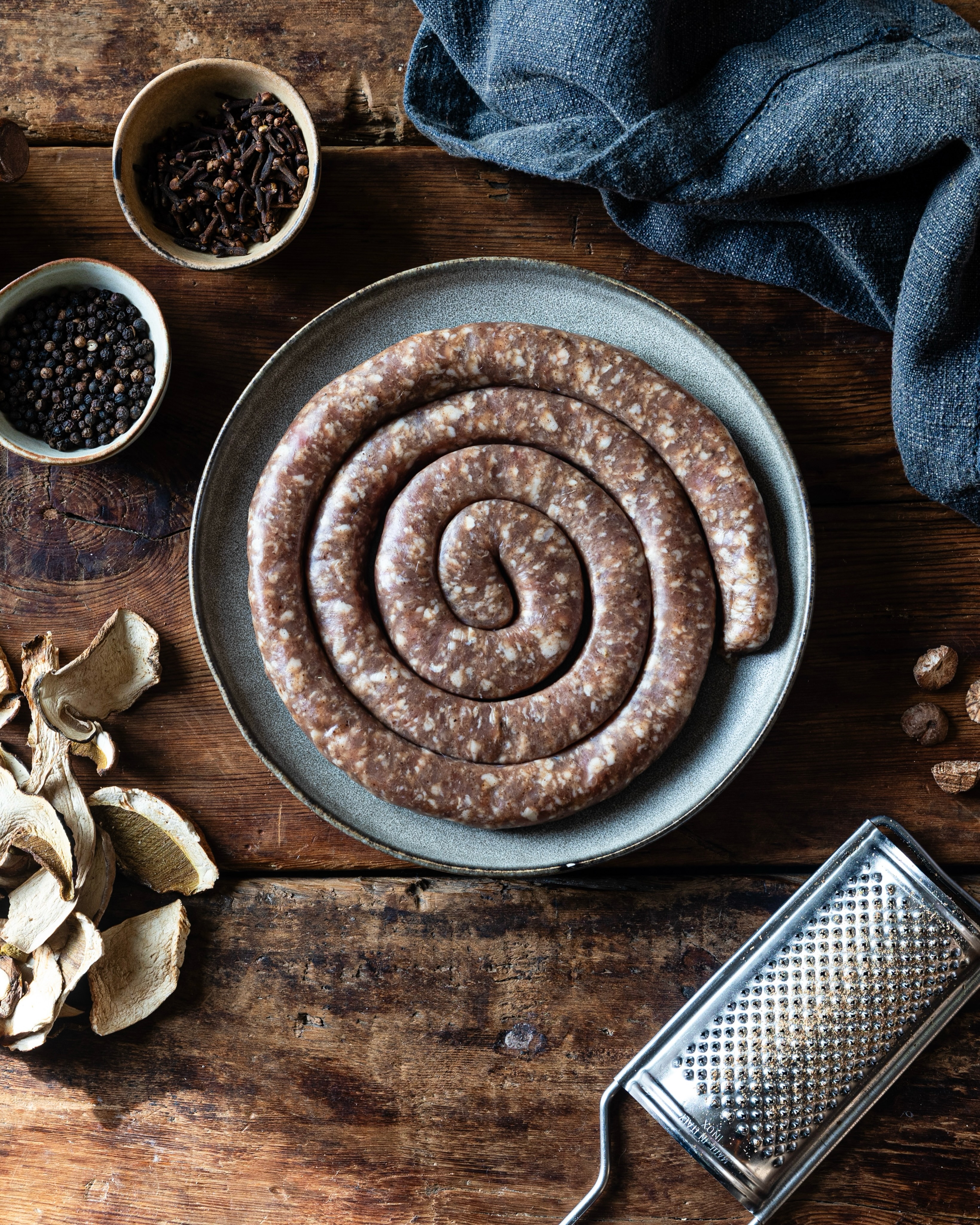


Turkey leg deserves more attention at Christmas. The darker meat has plenty of flavour, and boning, stuffing and rolling it makes for a generous joint that’s straightforward to carve. There’s also the considerable advantage of having the stuffing already taken care of.
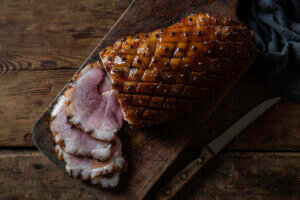
Here, quince paste loosened with cider vinegar makes a simple glaze. Its fragrant sweetness suits the turkey and pork stuffing, while the vinegar keeps things balanced. Brushed on towards the end of roasting, it gives the skin a glossy, amber finish.
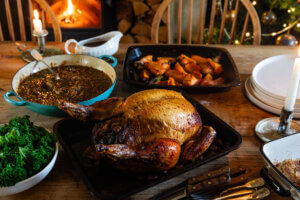
Our rolled and stuffed turkey leg works well with either stuffing: classic sausage meat for something more savoury, or pork, prunes in Armagnac, shallot and sage for a richer Christmas version. Serve with roast potatoes, bread sauce, braised red cabbage, buttered greens and plenty of gravy.
Serves: 6
Prep time: 15 minutes
Cook time: 2 hours 15 minutes, approx. 1 hr 45 mins–2 hrs 15 mins, including browning, plus 20–30 mins resting
Ingredients
For the Quince Glaze
Method
- Preheat the oven to 180°C/160°C fan. Remove the turkey from its packaging and pat dry thoroughly with kitchen paper. Leave the butcher’s string in place, rub the joint with a little of the olive oil and season with sea salt and black pepper.
- Heat the remaining olive oil in a large frying pan over a medium heat. Brown the joint on all sides, turning carefully with tongs. Allow around 10–12 minutes, taking time to colour the skin without scorching it.
- Spread the sliced onion across a snug roasting tin and sit the turkey on top, with the skin facing upwards. Pour the wine into the frying pan, scrape up the caramelised juices and let it bubble for a minute. Tip this into the roasting tin, then add the stock around the turkey, keeping the skin dry.
- Roast for an initial 1 hour 15 minutes. Check occasionally that the tin hasn’t dried out, adding a splash of water if needed. If the skin is becoming too dark, cover loosely with foil.
- Meanwhile, put the quince paste, cider vinegar, sugar and water into a small saucepan. Warm gently, stirring until smooth. It should be thin enough to brush over the turkey; add a little more water if necessary.
- Begin checking the turkey’s temperature after the initial roasting time. Allow roughly 1 hour 30 minutes–2 hours in the oven overall, including the glazing stage, though the joint’s shape and your oven will affect this. Towards the end of cooking, increase the oven to 210°C/190°C fan and brush the exposed skin lightly with the glaze. Roast for a further 15–20 minutes, applying a second thin coat halfway through. Watch carefully, as the quince can catch.
- Check both the centre of the stuffing and the thickest part of the turkey with a meat thermometer. Both must reach 75°C for at least 30 seconds. Check more than one spot. If the glaze is sufficiently coloured before the centre is ready, cover loosely with foil, reduce the oven to 180°C/160°C fan and continue cooking until it reaches temperature.
- Transfer the joint to a warm platter and rest for 20–30 minutes, loosely covered with foil. Meanwhile, strain the roasting juices into a saucepan, spoon off excess fat and simmer to concentrate the flavour. Taste before adding salt, and add a splash of water or stock if the juices are already quite strong.
- Remove the string and carve the turkey into generous slices. Add any resting juices to the gravy and serve alongside traditional trimmings. You’ll find accompaniments in our Christmas recipes and cooking guides.
Top Tip
Keep the glaze light and apply it late. Two thin coats will give the turkey a glossy finish without overwhelming the meat and stuffing. A thick coating, or one applied too early, is more likely to burn before the joint is cooked through.