Lamb Recipes

Butterflied Leg of Lamb Recipe for Year-Round BBQs

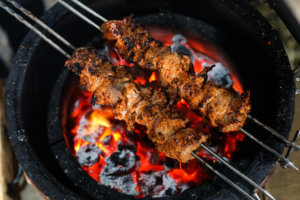
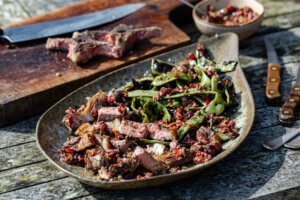
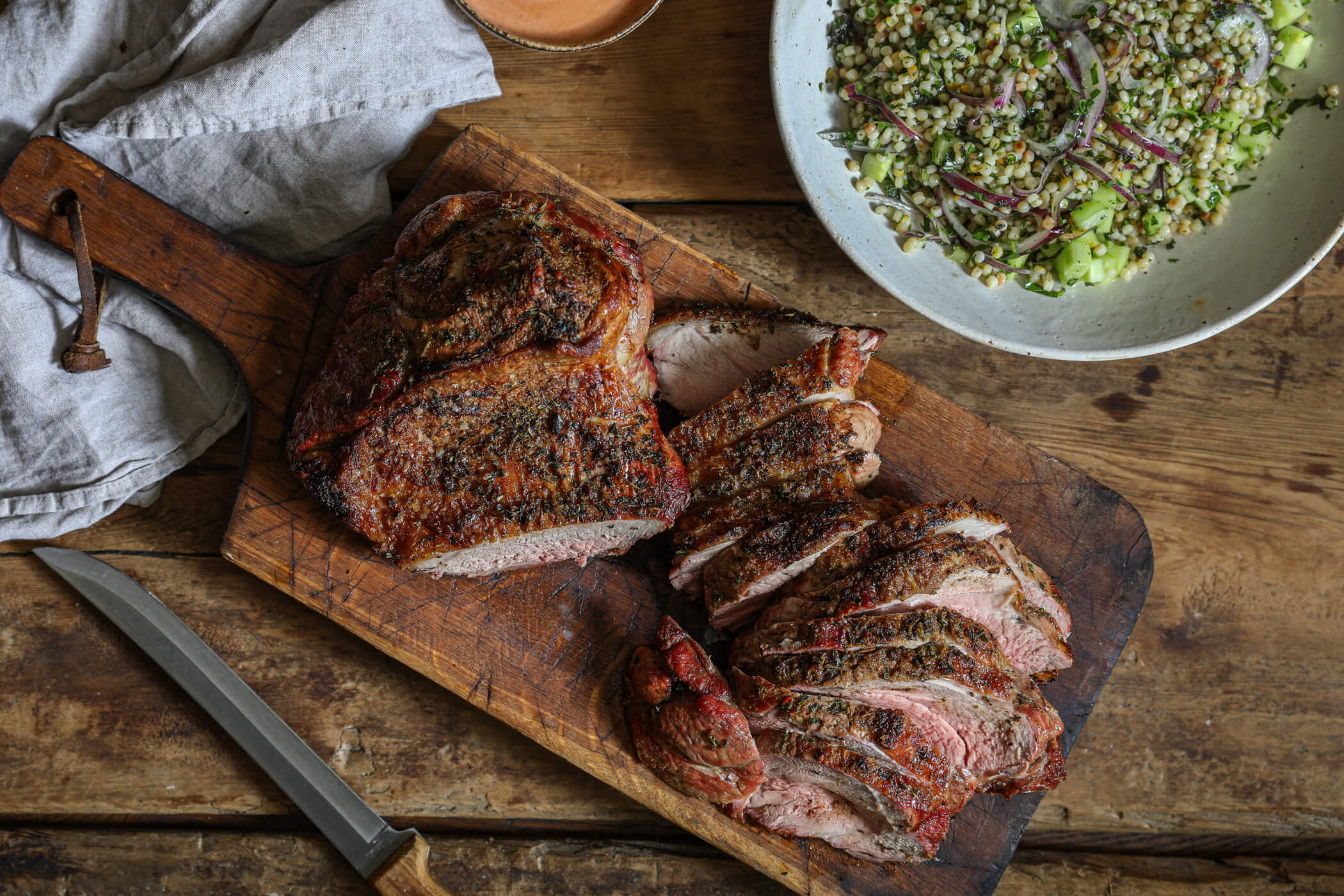
Here is my Butterflied Leg of Lamb Recipe. And although it’s never too late in the year to fire up the BBQ, I must admit I’ve yet to cook Christmas lunch on mine! That said, New Year’s Eve dinners at home have often involved glowing coals and a butterflied leg sizzling away.

Across the eastern end of the Mediterranean, lamb cooked over wood or charcoal is simply a way of life. The smoky heat on marinated, spiced lamb delivers irresistible char, sweetness, and depth of flavour. My good friend JB – the most generous of hosts – has served me many a butterflied leg in this fashion, and it never fails to impress.

Serves: 6-8

Prep time: 24 hours

Cook time: 1 hour 30 minutes

Ingredients

Meat Rub

Salad

Harissa Yoghurt

Method

Prep the Lamb a Day in Advance

  1. Put the whole spices into a dry pan and toast over high heat for a couple of minutes. If you detect a faint whiff of smoke, remove them immediately and grind them coarsely in a spice mill or with a pestle and mortar.
  2. Blend these spices with the sea salt, lemon zest, chillies, garlic, thyme, and olive oil.
  3. On a large tray, rub this mixture into both sides of the lamb leg, then wrap it well in cling film and refrigerate for 24 hours
  4. Remove from the fridge 1 hour before you want to start cooking.

Cook the Lamb

  1. Light your BBQ and allow the coals to burn down to a grey/white heat.
  2. Ensure the grill is raised above the coals to achieve a medium heat, preventing the spices from burning.
  3. Lay the lamb leg on the grill and cook for approximately 25-35 minutes, flipping every 5 minutes, and keeping it moving around the grill.
  4. Remove from the grill and leave to rest in a warm place for at least 25 minutes before carving.

Prepare the Couscous Salad

  1. Cook the couscous according to the packet instructions. Transfer to a shallow bowl, mix in the olive oil, and leave to cool.
  2. Peel and seed the cucumber, then dice finely. Toss with 1 tsp of salt and leave for 30 minutes. Drain and rinse well.
  3. Chop the parsley and mint, adding them to the couscous along with the onion and citrus zests.
  4. Mix well and check the seasoning.
  5. Just before serving, add the lemon juice and a generous glug of olive oil. Mix well and serve immediately.

Finally, the Harissa Yoghurt

  1. Mix all together and if you prefer more of a kick add more harissa and perhaps a little more salt.

Order meat online

Instagram

  • A prize bull is an intimidating thing to see up close. It is also, in its way, awe inspiring.

We recently took the team from @bavettebistro in Leeds, headed by @sandy_jarvis, up to meet one of the most prized Highland herds in the country at @andylambertfarmer.

There is a particular kind of patience that cannot be hurried along by anyone’s convenience, least of all ours. Swaledale beef carries that patience in it. The cattle are given the time they need, nothing more urgent than the season allows, and that unhurried pace is not an inconvenience but the whole point. Years of quiet, careful work go into each animal, not simply to raise it well, but to leave the breed better than it was found.

It is easy for chefs, buried in the daily grind of running a business, to lose sight of where their ingredients actually come from. Trips like this bring it back into focus. We work hard for consistency, but we also work with real cattle, real landscapes, and real farmers, and that means every animal comes with its own shape and character. We work with chefs who understand this. Real produce was never meant to be cylindrical, never perfect on demand. The stuff that always looks the same is usually claiming to be something it isn’t.

Stand next to a bull like that and you understand what none of this can be rushed.
  • It is with great sadness that we share the news of the passing of James Hall.

James farmed high on the hills of Wharfedale, where he kept a flock of Swaledale &Cheviot sheep and rare breed cattle; Red Ruby Devons and Belted Galloways — on the kind of exposed, demanding ground those animals were bred for. The mutton that came from his farm was some of the finest we have worked with,  the product of a man who understood his land, his breeds, and what it takes to do this properly.

He was one of our longest-standing farmers, and ours was the kind of direct relationship that makes this work meaningful. We will miss him.

Our thoughts are with his family.
  • A lot of our farmers are a long way from anywhere. Up in the hills, an hour or more from the nearest major town, and not especially bothered about it. That distance tends to produce a particular kind of farmer, less inclined to chase accreditations or certifications, less interested in being told how to do what they already know how to do. What they have instead is a deep knowledge of their land, and a quiet conviction that the old ways are usually the right ones.

That conviction doesn’t always mean chasing volume. Lower inputs, lower turnover, but the margins tend to hold, just the same as if he were pushing harder for more. Better for the soil too, and the livestock.

The food that comes out of these farms tastes like it should. Food these farmers would put on their own tables, feed their own families. The same product our chefs have built menus around, and that you cook at home.

So this is a small hat tip to farmers like Ed Staveley, who farm the hard ways, just as the hills demand.
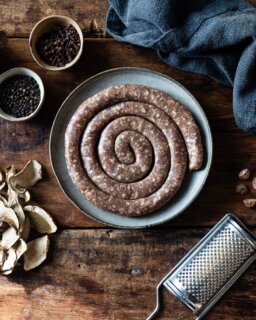
  • Sausages appear in great food cultures all over the world. We never tire of discovering them, and we always want to represent them properly. Which is why we love to make them in partnership with chefs, cooks, or true specialists in that cuisine, or passionate enthusiasts who know it from the inside.

This is Kwa Ko — a Cambodian beef sausage made in collaboration with @barang_london , the project of @tomgeoffrey. Since launching his residency at The Globe in Borough Market, Tom has been bringing the fresh, vibrant flavours of Cambodia to London’s restaurant scene. It didn’t take long before the conversation turned to sausages.

Cambodian sausage traditions are strong. What we’ve made together is genuinely distinctive: beef chuck and brisket with galangal, lemongrass, garlic, makrut lime leaves, white Kampot pepper and steamed jasmine rice. The rice is the detail that makes it, it gives the sausage a characteristic light sourness, another layer of complexity that sets it apart from anything we’ve made before.

Available now, in limited numbers, so be quick!
  • We are firmly of the belief that our pork is as good as it has ever been, the breeding, the rearing, the dry ageing and of course the butchery. All of it functioning in harmony to provide us with some high-grade pork. 

Loin chops seem to be having their moment in the sun, currently a firm favourite amongst our restaurant community, and rightly so. A classic; the leaner eye meat enveloped by a lovely cover of fat, cut thick and cooked well, they are so, so good. 

A little less well known, but no less delicious, and a cracking option for sharing, our shoulder chops are a slightly different beast. We split our shoulders in half and age the so-called Boston butt, when ready, the shoulder chops are cut from this section. The eye meat is made up of the collar or neck fillet and has excellent natural marbling. You then get a little of the blade and the muscles that surround it, this is darker, more richly flavoured meat. You still get the cover of fat, which, once rendered, tastes incredible. All in all, a fantastic sharing chop and a slight point of difference from the loin chops.

Both supremely delicious!
  • The process of developing a dish with chefs is a rewarding one, made all the more so when we have the chance to eat the end product. As was the case here upon a recent (ish) visit to @rambutan_ldn 

Conversations around the best steak to use for this dish began months ago and we were able to offer our expert advice as Sofia and her team fine-tuned the balance of flavours, spices and textures. A few different cuts were trialled, and, in the end, it was our rump steaks which triumphed! Their flavour and fat able to be carried by that rich and deep curry sauce, with brighter notes and acidity being offered up by the parsley temper and little pearls of onion. It is truly a triumph. A marriage of Yorkshire beef and traditional Sri Lankan flavours and we couldn’t be prouder to see it on the menu and being enjoyed by their lucky guests!
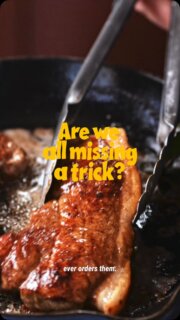
  • What salt should you use when cooking steaks and chops? Does it matter?

Well, we have, in the past, taken some heat in the comments from people saying that we are using the wrong salt on our steaks. “You should be using fine salt!”, “flaky salt on steaks!! NO WAY!”, “It just falls off!”, to give you a few examples. 

So, to put the debate to bed we undertook an extremely controlled, scientific experiment to determine which salt is the best salt to use on your steaks. In a field, with a piece of goose skirt, a barbecue and two varieties of sea salt (that’s one important detail, to use sea salt, not table salt) and a desire to eat well seasoned steak. Poor us!

Watch the video to find our conclusions, which will also feature in an academic journal soon – a seminal piece of scientific research. 

#sodiyum #flakysalt4life
  • A recent visit to see Ed Stavely’s pigs on the Swinton Estate, where a landscape not traditionally associated with pig keeping is slowly being reshaped through careful management and a willingness to do things a little differently.

The pigs are largely native breeds, often crossed with Duroc to help them fare better through the long Yorkshire winters and the exposed conditions up on the estate. Hardy, slow-growing animals that seem to suit both the land and the philosophy behind the system.

They are part of a wider effort to restore ground that had, in places, drifted too far from balance. Their rooting clears rougher areas, disturbs the soil naturally and creates opportunities for new herbal lays, healthier pasture and eventually species-rich hay meadows to return.

There are certainly easier places to rear pigs, but it is difficult not to admire the determination to make this sort of farming work in a landscape like this, where the focus stretches beyond production alone and towards the long-term health of the land itself.
A prize bull is an intimidating thing to see up close. It is also, in its way, awe inspiring. We recently took the team from @bavettebistro in Leeds, headed by @sandy_jarvis, up to meet one of the most prized Highland herds in the country at @andylambertfarmer. There is a particular kind of patience that cannot be hurried along by anyone’s convenience, least of all ours. Swaledale beef carries that patience in it. The cattle are given the time they need, nothing more urgent than the season allows, and that unhurried pace is not an inconvenience but the whole point. Years of quiet, careful work go into each animal, not simply to raise it well, but to leave the breed better than it was found. It is easy for chefs, buried in the daily grind of running a business, to lose sight of where their ingredients actually come from. Trips like this bring it back into focus. We work hard for consistency, but we also work with real cattle, real landscapes, and real farmers, and that means every animal comes with its own shape and character. We work with chefs who understand this. Real produce was never meant to be cylindrical, never perfect on demand. The stuff that always looks the same is usually claiming to be something it isn’t. Stand next to a bull like that and you understand what none of this can be rushed.
6 days ago
785
View on Instagram |
1/8
It is with great sadness that we share the news of the passing of James Hall.

James farmed high on the hills of Wharfedale, where he kept a flock of Swaledale &Cheviot sheep and rare breed cattle; Red Ruby Devons and Belted Galloways — on the kind of exposed, demanding ground those animals were bred for. The mutton that came from his farm was some of the finest we have worked with,  the product of a man who understood his land, his breeds, and what it takes to do this properly.

He was one of our longest-standing farmers, and ours was the kind of direct relationship that makes this work meaningful. We will miss him.

Our thoughts are with his family.
It is with great sadness that we share the news of the passing of James Hall. James farmed high on the hills of Wharfedale, where he kept a flock of Swaledale &Cheviot sheep and rare breed cattle; Red Ruby Devons and Belted Galloways — on the kind of exposed, demanding ground those animals were bred for. The mutton that came from his farm was some of the finest we have worked with, the product of a man who understood his land, his breeds, and what it takes to do this properly. He was one of our longest-standing farmers, and ours was the kind of direct relationship that makes this work meaningful. We will miss him. Our thoughts are with his family.
2 weeks ago
2289
View on Instagram |
2/8
A lot of our farmers are a long way from anywhere. Up in the hills, an hour or more from the nearest major town, and not especially bothered about it. That distance tends to produce a particular kind of farmer, less inclined to chase accreditations or certifications, less interested in being told how to do what they already know how to do. What they have instead is a deep knowledge of their land, and a quiet conviction that the old ways are usually the right ones. That conviction doesn’t always mean chasing volume. Lower inputs, lower turnover, but the margins tend to hold, just the same as if he were pushing harder for more. Better for the soil too, and the livestock. The food that comes out of these farms tastes like it should. Food these farmers would put on their own tables, feed their own families. The same product our chefs have built menus around, and that you cook at home. So this is a small hat tip to farmers like Ed Staveley, who farm the hard ways, just as the hills demand.
3 weeks ago
116
View on Instagram |
3/8
Sausages appear in great food cultures all over the world. We never tire of discovering them, and we always want to represent them properly. Which is why we love to make them in partnership with chefs, cooks, or true specialists in that cuisine, or passionate enthusiasts who know it from the inside.

This is Kwa Ko — a Cambodian beef sausage made in collaboration with @barang_london , the project of @tomgeoffrey. Since launching his residency at The Globe in Borough Market, Tom has been bringing the fresh, vibrant flavours of Cambodia to London’s restaurant scene. It didn’t take long before the conversation turned to sausages.

Cambodian sausage traditions are strong. What we’ve made together is genuinely distinctive: beef chuck and brisket with galangal, lemongrass, garlic, makrut lime leaves, white Kampot pepper and steamed jasmine rice. The rice is the detail that makes it, it gives the sausage a characteristic light sourness, another layer of complexity that sets it apart from anything we’ve made before.

Available now, in limited numbers, so be quick!
Sausages appear in great food cultures all over the world. We never tire of discovering them, and we always want to represent them properly. Which is why we love to make them in partnership with chefs, cooks, or true specialists in that cuisine, or passionate enthusiasts who know it from the inside.

This is Kwa Ko — a Cambodian beef sausage made in collaboration with @barang_london , the project of @tomgeoffrey. Since launching his residency at The Globe in Borough Market, Tom has been bringing the fresh, vibrant flavours of Cambodia to London’s restaurant scene. It didn’t take long before the conversation turned to sausages.

Cambodian sausage traditions are strong. What we’ve made together is genuinely distinctive: beef chuck and brisket with galangal, lemongrass, garlic, makrut lime leaves, white Kampot pepper and steamed jasmine rice. The rice is the detail that makes it, it gives the sausage a characteristic light sourness, another layer of complexity that sets it apart from anything we’ve made before.

Available now, in limited numbers, so be quick!
Sausages appear in great food cultures all over the world. We never tire of discovering them, and we always want to represent them properly. Which is why we love to make them in partnership with chefs, cooks, or true specialists in that cuisine, or passionate enthusiasts who know it from the inside.

This is Kwa Ko — a Cambodian beef sausage made in collaboration with @barang_london , the project of @tomgeoffrey. Since launching his residency at The Globe in Borough Market, Tom has been bringing the fresh, vibrant flavours of Cambodia to London’s restaurant scene. It didn’t take long before the conversation turned to sausages.

Cambodian sausage traditions are strong. What we’ve made together is genuinely distinctive: beef chuck and brisket with galangal, lemongrass, garlic, makrut lime leaves, white Kampot pepper and steamed jasmine rice. The rice is the detail that makes it, it gives the sausage a characteristic light sourness, another layer of complexity that sets it apart from anything we’ve made before.

Available now, in limited numbers, so be quick!
Sausages appear in great food cultures all over the world. We never tire of discovering them, and we always want to represent them properly. Which is why we love to make them in partnership with chefs, cooks, or true specialists in that cuisine, or passionate enthusiasts who know it from the inside.

This is Kwa Ko — a Cambodian beef sausage made in collaboration with @barang_london , the project of @tomgeoffrey. Since launching his residency at The Globe in Borough Market, Tom has been bringing the fresh, vibrant flavours of Cambodia to London’s restaurant scene. It didn’t take long before the conversation turned to sausages.

Cambodian sausage traditions are strong. What we’ve made together is genuinely distinctive: beef chuck and brisket with galangal, lemongrass, garlic, makrut lime leaves, white Kampot pepper and steamed jasmine rice. The rice is the detail that makes it, it gives the sausage a characteristic light sourness, another layer of complexity that sets it apart from anything we’ve made before.

Available now, in limited numbers, so be quick!
Sausages appear in great food cultures all over the world. We never tire of discovering them, and we always want to represent them properly. Which is why we love to make them in partnership with chefs, cooks, or true specialists in that cuisine, or passionate enthusiasts who know it from the inside.

This is Kwa Ko — a Cambodian beef sausage made in collaboration with @barang_london , the project of @tomgeoffrey. Since launching his residency at The Globe in Borough Market, Tom has been bringing the fresh, vibrant flavours of Cambodia to London’s restaurant scene. It didn’t take long before the conversation turned to sausages.

Cambodian sausage traditions are strong. What we’ve made together is genuinely distinctive: beef chuck and brisket with galangal, lemongrass, garlic, makrut lime leaves, white Kampot pepper and steamed jasmine rice. The rice is the detail that makes it, it gives the sausage a characteristic light sourness, another layer of complexity that sets it apart from anything we’ve made before.

Available now, in limited numbers, so be quick!
Sausages appear in great food cultures all over the world. We never tire of discovering them, and we always want to represent them properly. Which is why we love to make them in partnership with chefs, cooks, or true specialists in that cuisine, or passionate enthusiasts who know it from the inside.

This is Kwa Ko — a Cambodian beef sausage made in collaboration with @barang_london , the project of @tomgeoffrey. Since launching his residency at The Globe in Borough Market, Tom has been bringing the fresh, vibrant flavours of Cambodia to London’s restaurant scene. It didn’t take long before the conversation turned to sausages.

Cambodian sausage traditions are strong. What we’ve made together is genuinely distinctive: beef chuck and brisket with galangal, lemongrass, garlic, makrut lime leaves, white Kampot pepper and steamed jasmine rice. The rice is the detail that makes it, it gives the sausage a characteristic light sourness, another layer of complexity that sets it apart from anything we’ve made before.

Available now, in limited numbers, so be quick!
Sausages appear in great food cultures all over the world. We never tire of discovering them, and we always want to represent them properly. Which is why we love to make them in partnership with chefs, cooks, or true specialists in that cuisine, or passionate enthusiasts who know it from the inside. This is Kwa Ko — a Cambodian beef sausage made in collaboration with @barang_london , the project of @tomgeoffrey. Since launching his residency at The Globe in Borough Market, Tom has been bringing the fresh, vibrant flavours of Cambodia to London’s restaurant scene. It didn’t take long before the conversation turned to sausages. Cambodian sausage traditions are strong. What we’ve made together is genuinely distinctive: beef chuck and brisket with galangal, lemongrass, garlic, makrut lime leaves, white Kampot pepper and steamed jasmine rice. The rice is the detail that makes it, it gives the sausage a characteristic light sourness, another layer of complexity that sets it apart from anything we’ve made before. Available now, in limited numbers, so be quick!
4 weeks ago
17914
View on Instagram |
4/8
We are firmly of the belief that our pork is as good as it has ever been, the breeding, the rearing, the dry ageing and of course the butchery. All of it functioning in harmony to provide us with some high-grade pork. Loin chops seem to be having their moment in the sun, currently a firm favourite amongst our restaurant community, and rightly so. A classic; the leaner eye meat enveloped by a lovely cover of fat, cut thick and cooked well, they are so, so good. A little less well known, but no less delicious, and a cracking option for sharing, our shoulder chops are a slightly different beast. We split our shoulders in half and age the so-called Boston butt, when ready, the shoulder chops are cut from this section. The eye meat is made up of the collar or neck fillet and has excellent natural marbling. You then get a little of the blade and the muscles that surround it, this is darker, more richly flavoured meat. You still get the cover of fat, which, once rendered, tastes incredible. All in all, a fantastic sharing chop and a slight point of difference from the loin chops. Both supremely delicious!
1 month ago
977
View on Instagram |
5/8
The process of developing a dish with chefs is a rewarding one, made all the more so when we have the chance to eat the end product. As was the case here upon a recent (ish) visit to @rambutan_ldn Conversations around the best steak to use for this dish began months ago and we were able to offer our expert advice as Sofia and her team fine-tuned the balance of flavours, spices and textures. A few different cuts were trialled, and, in the end, it was our rump steaks which triumphed! Their flavour and fat able to be carried by that rich and deep curry sauce, with brighter notes and acidity being offered up by the parsley temper and little pearls of onion. It is truly a triumph. A marriage of Yorkshire beef and traditional Sri Lankan flavours and we couldn’t be prouder to see it on the menu and being enjoyed by their lucky guests!
1 month ago
775
View on Instagram |
6/8
What salt should you use when cooking steaks and chops? Does it matter? Well, we have, in the past, taken some heat in the comments from people saying that we are using the wrong salt on our steaks. “You should be using fine salt!”, “flaky salt on steaks!! NO WAY!”, “It just falls off!”, to give you a few examples. So, to put the debate to bed we undertook an extremely controlled, scientific experiment to determine which salt is the best salt to use on your steaks. In a field, with a piece of goose skirt, a barbecue and two varieties of sea salt (that’s one important detail, to use sea salt, not table salt) and a desire to eat well seasoned steak. Poor us! Watch the video to find our conclusions, which will also feature in an academic journal soon – a seminal piece of scientific research. #sodiyum #flakysalt4life
1 month ago
13315
View on Instagram |
7/8
A recent visit to see Ed Stavely’s pigs on the Swinton Estate, where a landscape not traditionally associated with pig keeping is slowly being reshaped through careful management and a willingness to do things a little differently.

The pigs are largely native breeds, often crossed with Duroc to help them fare better through the long Yorkshire winters and the exposed conditions up on the estate. Hardy, slow-growing animals that seem to suit both the land and the philosophy behind the system.

They are part of a wider effort to restore ground that had, in places, drifted too far from balance. Their rooting clears rougher areas, disturbs the soil naturally and creates opportunities for new herbal lays, healthier pasture and eventually species-rich hay meadows to return.

There are certainly easier places to rear pigs, but it is difficult not to admire the determination to make this sort of farming work in a landscape like this, where the focus stretches beyond production alone and towards the long-term health of the land itself.
A recent visit to see Ed Stavely’s pigs on the Swinton Estate, where a landscape not traditionally associated with pig keeping is slowly being reshaped through careful management and a willingness to do things a little differently.

The pigs are largely native breeds, often crossed with Duroc to help them fare better through the long Yorkshire winters and the exposed conditions up on the estate. Hardy, slow-growing animals that seem to suit both the land and the philosophy behind the system.

They are part of a wider effort to restore ground that had, in places, drifted too far from balance. Their rooting clears rougher areas, disturbs the soil naturally and creates opportunities for new herbal lays, healthier pasture and eventually species-rich hay meadows to return.

There are certainly easier places to rear pigs, but it is difficult not to admire the determination to make this sort of farming work in a landscape like this, where the focus stretches beyond production alone and towards the long-term health of the land itself.
A recent visit to see Ed Stavely’s pigs on the Swinton Estate, where a landscape not traditionally associated with pig keeping is slowly being reshaped through careful management and a willingness to do things a little differently.

The pigs are largely native breeds, often crossed with Duroc to help them fare better through the long Yorkshire winters and the exposed conditions up on the estate. Hardy, slow-growing animals that seem to suit both the land and the philosophy behind the system.

They are part of a wider effort to restore ground that had, in places, drifted too far from balance. Their rooting clears rougher areas, disturbs the soil naturally and creates opportunities for new herbal lays, healthier pasture and eventually species-rich hay meadows to return.

There are certainly easier places to rear pigs, but it is difficult not to admire the determination to make this sort of farming work in a landscape like this, where the focus stretches beyond production alone and towards the long-term health of the land itself.
A recent visit to see Ed Stavely’s pigs on the Swinton Estate, where a landscape not traditionally associated with pig keeping is slowly being reshaped through careful management and a willingness to do things a little differently.

The pigs are largely native breeds, often crossed with Duroc to help them fare better through the long Yorkshire winters and the exposed conditions up on the estate. Hardy, slow-growing animals that seem to suit both the land and the philosophy behind the system.

They are part of a wider effort to restore ground that had, in places, drifted too far from balance. Their rooting clears rougher areas, disturbs the soil naturally and creates opportunities for new herbal lays, healthier pasture and eventually species-rich hay meadows to return.

There are certainly easier places to rear pigs, but it is difficult not to admire the determination to make this sort of farming work in a landscape like this, where the focus stretches beyond production alone and towards the long-term health of the land itself.
A recent visit to see Ed Stavely’s pigs on the Swinton Estate, where a landscape not traditionally associated with pig keeping is slowly being reshaped through careful management and a willingness to do things a little differently. The pigs are largely native breeds, often crossed with Duroc to help them fare better through the long Yorkshire winters and the exposed conditions up on the estate. Hardy, slow-growing animals that seem to suit both the land and the philosophy behind the system. They are part of a wider effort to restore ground that had, in places, drifted too far from balance. Their rooting clears rougher areas, disturbs the soil naturally and creates opportunities for new herbal lays, healthier pasture and eventually species-rich hay meadows to return. There are certainly easier places to rear pigs, but it is difficult not to admire the determination to make this sort of farming work in a landscape like this, where the focus stretches beyond production alone and towards the long-term health of the land itself.
2 months ago
462
View on Instagram |
8/8