Pork Recipes, Sausage Recipes

The Swaledale Full English Breakfast

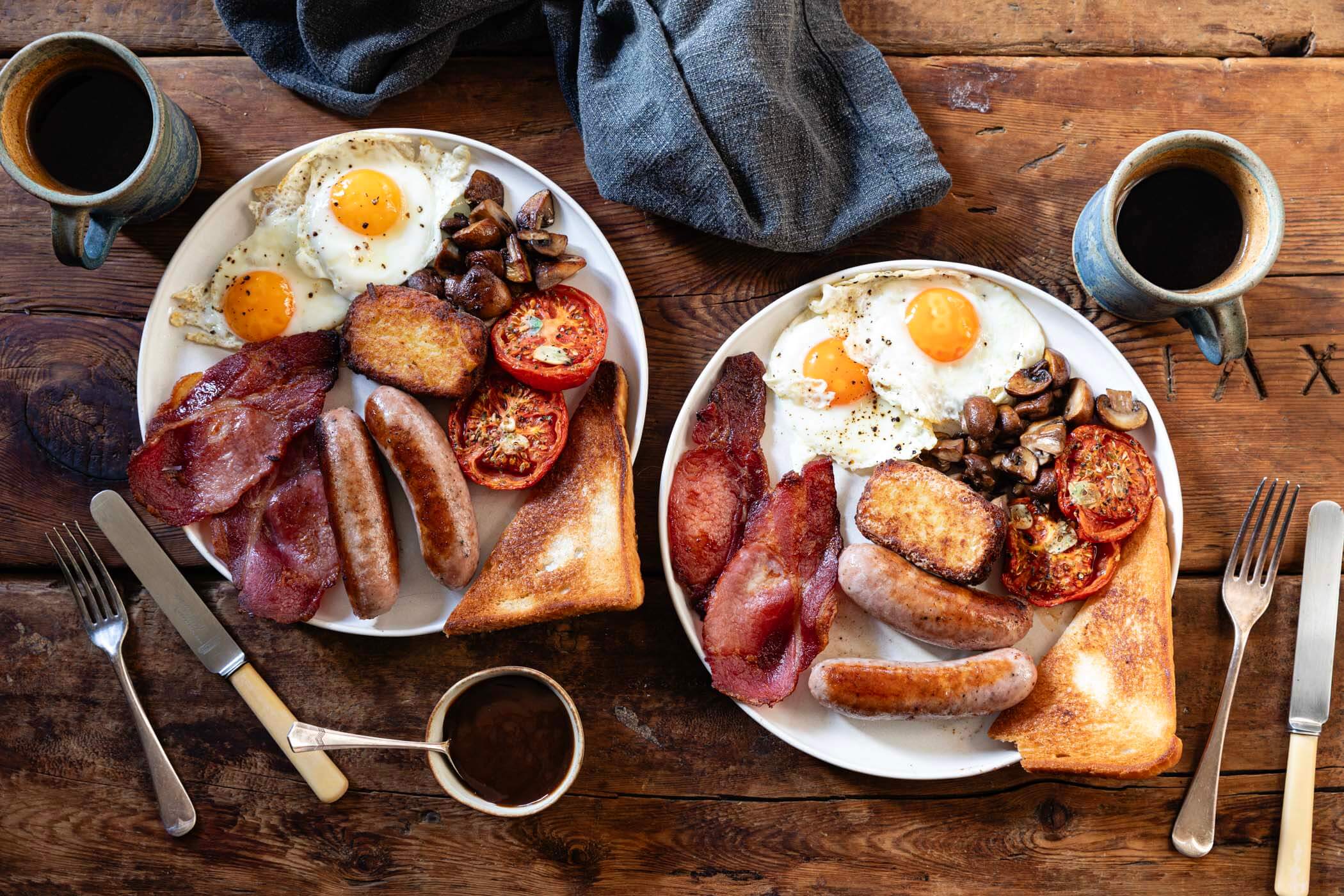
A plated Full English breakfast featuring sausages, bacon, fried eggs, tomatoes, mushrooms, fried bread, and homemade hash browns.

Full English Breakfast Recipe: A Full English breakfast is a personal affair – but this is how we do it at Swaledale Butchers. British breakfast staples like sausage and bacon take the lead, supported by mushrooms, tomatoes, crispy fried eggs, golden fried bread, and homemade hash browns. Few finer starts to the day exist, though for the sake of your arteries, it’s best enjoyed as an occasional indulgence. Strong, hot tea or coffee is essential.

Controversially, you’ll notice baked beans are absent. If that’s a deal-breaker, it’s easily fixed – open a tin and warm them through.

We’ve included a recipe for from-scratch hash browns. While shop-bought options exist, these are well worth the small extra effort.

Serves: 3

Prep time: 1 hour

Cook time: 35 minutes

Ingredients

Hash Browns

Method

Start with the Hash Browns

  1. Preheat your oven to 180°C.
  2. Prick the potatoes all over with a small sharp knife.
  3. Sprinkle a little salt onto a baking tray, place the potatoes on top, and roast for 35–40 minutes until almost – but not fully – cooked. Set aside to cool slightly.
  4. Once cool enough to handle, peel and grate the potatoes into a mixing bowl. Add the melted butter, both flours, a generous pinch of salt, and a few grinds of black pepper. Mix thoroughly with your hands.
  5. Taste the mixture and adjust the seasoning if needed.
  6. Scoop roughly 150g portions and shape into your preferred form – rectangles or triangles work well.
  7. Transfer to the fridge to chill for at least an hour to firm up before frying.

Meanwhile, Prepare the Rest

  1. Halve the tomatoes and place them cut side up on a baking tray. Season with salt and black pepper, scatter over a little finely sliced garlic, drizzle with oil, and roast in the oven (still at 180°C) for 25 minutes.
  2. Quarter the mushrooms. Heat a large frying pan over high heat, add a knob of butter and a lightly crushed garlic clove, then toss in the mushrooms. Season with sea salt and cook for 8–10 minutes, stirring occasionally.
  3. Arrange the sausages and bacon on a baking tray and roast in the oven for 8–10 minutes until golden and cooked through.
  4. Fry the black pudding in a pan until crisp on both sides, then set aside and keep warm.
  5. In the same pan, fry the bread in a little butter or vegetable oil until golden and crisp on both sides.
  6. Fry the eggs to your liking in the same pan.
  7. Add about a centimetre of vegetable oil to the pan and bring to a medium heat. Carefully add the chilled hash browns and shallow fry until golden and crisp on both sides. Drain on kitchen paper.
  8. Assemble everything on warm plates, pour the coffee, serve with brown sauce, and enj

Order meat online

Instagram

  • It is with great sadness that we share the news of the passing of James Hall.

James farmed high on the hills of Wharfedale, where he kept a flock of Swaledale &Cheviot sheep and rare breed cattle; Red Ruby Devons and Belted Galloways — on the kind of exposed, demanding ground those animals were bred for. The mutton that came from his farm was some of the finest we have worked with,  the product of a man who understood his land, his breeds, and what it takes to do this properly.

He was one of our longest-standing farmers, and ours was the kind of direct relationship that makes this work meaningful. We will miss him.

Our thoughts are with his family.
  • A lot of our farmers are a long way from anywhere. Up in the hills, an hour or more from the nearest major town, and not especially bothered about it. That distance tends to produce a particular kind of farmer, less inclined to chase accreditations or certifications, less interested in being told how to do what they already know how to do. What they have instead is a deep knowledge of their land, and a quiet conviction that the old ways are usually the right ones.

That conviction doesn’t always mean chasing volume. Lower inputs, lower turnover, but the margins tend to hold, just the same as if he were pushing harder for more. Better for the soil too, and the livestock.

The food that comes out of these farms tastes like it should. Food these farmers would put on their own tables, feed their own families. The same product our chefs have built menus around, and that you cook at home.

So this is a small hat tip to farmers like Ed Staveley, who farm the hard ways, just as the hills demand.
  • Sausages appear in great food cultures all over the world. We never tire of discovering them, and we always want to represent them properly. Which is why we love to make them in partnership with chefs, cooks, or true specialists in that cuisine, or passionate enthusiasts who know it from the inside.

This is Kwa Ko — a Cambodian beef sausage made in collaboration with @barang_london , the project of @tomgeoffrey. Since launching his residency at The Globe in Borough Market, Tom has been bringing the fresh, vibrant flavours of Cambodia to London’s restaurant scene. It didn’t take long before the conversation turned to sausages.

Cambodian sausage traditions are strong. What we’ve made together is genuinely distinctive: beef chuck and brisket with galangal, lemongrass, garlic, makrut lime leaves, white Kampot pepper and steamed jasmine rice. The rice is the detail that makes it, it gives the sausage a characteristic light sourness, another layer of complexity that sets it apart from anything we’ve made before.

Available now, in limited numbers, so be quick!
  • We are firmly of the belief that our pork is as good as it has ever been, the breeding, the rearing, the dry ageing and of course the butchery. All of it functioning in harmony to provide us with some high-grade pork. 

Loin chops seem to be having their moment in the sun, currently a firm favourite amongst our restaurant community, and rightly so. A classic; the leaner eye meat enveloped by a lovely cover of fat, cut thick and cooked well, they are so, so good. 

A little less well known, but no less delicious, and a cracking option for sharing, our shoulder chops are a slightly different beast. We split our shoulders in half and age the so-called Boston butt, when ready, the shoulder chops are cut from this section. The eye meat is made up of the collar or neck fillet and has excellent natural marbling. You then get a little of the blade and the muscles that surround it, this is darker, more richly flavoured meat. You still get the cover of fat, which, once rendered, tastes incredible. All in all, a fantastic sharing chop and a slight point of difference from the loin chops.

Both supremely delicious!
  • The process of developing a dish with chefs is a rewarding one, made all the more so when we have the chance to eat the end product. As was the case here upon a recent (ish) visit to @rambutan_ldn 

Conversations around the best steak to use for this dish began months ago and we were able to offer our expert advice as Sofia and her team fine-tuned the balance of flavours, spices and textures. A few different cuts were trialled, and, in the end, it was our rump steaks which triumphed! Their flavour and fat able to be carried by that rich and deep curry sauce, with brighter notes and acidity being offered up by the parsley temper and little pearls of onion. It is truly a triumph. A marriage of Yorkshire beef and traditional Sri Lankan flavours and we couldn’t be prouder to see it on the menu and being enjoyed by their lucky guests!
  • What salt should you use when cooking steaks and chops? Does it matter?

Well, we have, in the past, taken some heat in the comments from people saying that we are using the wrong salt on our steaks. “You should be using fine salt!”, “flaky salt on steaks!! NO WAY!”, “It just falls off!”, to give you a few examples. 

So, to put the debate to bed we undertook an extremely controlled, scientific experiment to determine which salt is the best salt to use on your steaks. In a field, with a piece of goose skirt, a barbecue and two varieties of sea salt (that’s one important detail, to use sea salt, not table salt) and a desire to eat well seasoned steak. Poor us!

Watch the video to find our conclusions, which will also feature in an academic journal soon – a seminal piece of scientific research. 

#sodiyum #flakysalt4life
  • A recent visit to see Ed Stavely’s pigs on the Swinton Estate, where a landscape not traditionally associated with pig keeping is slowly being reshaped through careful management and a willingness to do things a little differently.

The pigs are largely native breeds, often crossed with Duroc to help them fare better through the long Yorkshire winters and the exposed conditions up on the estate. Hardy, slow-growing animals that seem to suit both the land and the philosophy behind the system.

They are part of a wider effort to restore ground that had, in places, drifted too far from balance. Their rooting clears rougher areas, disturbs the soil naturally and creates opportunities for new herbal lays, healthier pasture and eventually species-rich hay meadows to return.

There are certainly easier places to rear pigs, but it is difficult not to admire the determination to make this sort of farming work in a landscape like this, where the focus stretches beyond production alone and towards the long-term health of the land itself.
  • Take a little inspiration from our very own grill master @grylos when it comes to cooking your big, bone in steaks. This method takes time, skill and plenty of patience but the result is a deep, dark char, beautiful blushing pink flesh and melting buttery fat. We can safely say, after this day we spent in the field, that it is well worth the effort. Close to steak perfection. 

Plus, he knocked up a charred spring vegetable green sauce, which was an ideal foil for that most delicious of steaks – clever boy. 

The idea is to spend time building a char and crust with many short visits to the hottest part of the grill, interspersed with time away from the grill, somewhere warm, slowly coming up to temperature. Placing it directly on the coals at the end is a bit of a gimmick, however, it did yield excellent results, so maybe give it a go (only if you have good quality charcoal though!)!

Steak perfection!!
It is with great sadness that we share the news of the passing of James Hall.

James farmed high on the hills of Wharfedale, where he kept a flock of Swaledale &Cheviot sheep and rare breed cattle; Red Ruby Devons and Belted Galloways — on the kind of exposed, demanding ground those animals were bred for. The mutton that came from his farm was some of the finest we have worked with,  the product of a man who understood his land, his breeds, and what it takes to do this properly.

He was one of our longest-standing farmers, and ours was the kind of direct relationship that makes this work meaningful. We will miss him.

Our thoughts are with his family.
It is with great sadness that we share the news of the passing of James Hall. James farmed high on the hills of Wharfedale, where he kept a flock of Swaledale &Cheviot sheep and rare breed cattle; Red Ruby Devons and Belted Galloways — on the kind of exposed, demanding ground those animals were bred for. The mutton that came from his farm was some of the finest we have worked with, the product of a man who understood his land, his breeds, and what it takes to do this properly. He was one of our longest-standing farmers, and ours was the kind of direct relationship that makes this work meaningful. We will miss him. Our thoughts are with his family.
1 week ago
2109
View on Instagram |
1/8
A lot of our farmers are a long way from anywhere. Up in the hills, an hour or more from the nearest major town, and not especially bothered about it. That distance tends to produce a particular kind of farmer, less inclined to chase accreditations or certifications, less interested in being told how to do what they already know how to do. What they have instead is a deep knowledge of their land, and a quiet conviction that the old ways are usually the right ones. That conviction doesn’t always mean chasing volume. Lower inputs, lower turnover, but the margins tend to hold, just the same as if he were pushing harder for more. Better for the soil too, and the livestock. The food that comes out of these farms tastes like it should. Food these farmers would put on their own tables, feed their own families. The same product our chefs have built menus around, and that you cook at home. So this is a small hat tip to farmers like Ed Staveley, who farm the hard ways, just as the hills demand.
2 weeks ago
115
View on Instagram |
2/8
Sausages appear in great food cultures all over the world. We never tire of discovering them, and we always want to represent them properly. Which is why we love to make them in partnership with chefs, cooks, or true specialists in that cuisine, or passionate enthusiasts who know it from the inside.

This is Kwa Ko — a Cambodian beef sausage made in collaboration with @barang_london , the project of @tomgeoffrey. Since launching his residency at The Globe in Borough Market, Tom has been bringing the fresh, vibrant flavours of Cambodia to London’s restaurant scene. It didn’t take long before the conversation turned to sausages.

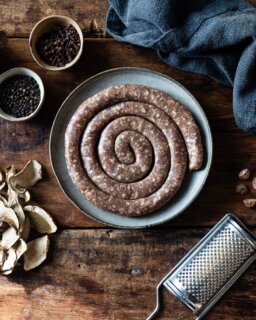
Cambodian sausage traditions are strong. What we’ve made together is genuinely distinctive: beef chuck and brisket with galangal, lemongrass, garlic, makrut lime leaves, white Kampot pepper and steamed jasmine rice. The rice is the detail that makes it, it gives the sausage a characteristic light sourness, another layer of complexity that sets it apart from anything we’ve made before.

Available now, in limited numbers, so be quick!
Sausages appear in great food cultures all over the world. We never tire of discovering them, and we always want to represent them properly. Which is why we love to make them in partnership with chefs, cooks, or true specialists in that cuisine, or passionate enthusiasts who know it from the inside.

This is Kwa Ko — a Cambodian beef sausage made in collaboration with @barang_london , the project of @tomgeoffrey. Since launching his residency at The Globe in Borough Market, Tom has been bringing the fresh, vibrant flavours of Cambodia to London’s restaurant scene. It didn’t take long before the conversation turned to sausages.

Cambodian sausage traditions are strong. What we’ve made together is genuinely distinctive: beef chuck and brisket with galangal, lemongrass, garlic, makrut lime leaves, white Kampot pepper and steamed jasmine rice. The rice is the detail that makes it, it gives the sausage a characteristic light sourness, another layer of complexity that sets it apart from anything we’ve made before.

Available now, in limited numbers, so be quick!
Sausages appear in great food cultures all over the world. We never tire of discovering them, and we always want to represent them properly. Which is why we love to make them in partnership with chefs, cooks, or true specialists in that cuisine, or passionate enthusiasts who know it from the inside.

This is Kwa Ko — a Cambodian beef sausage made in collaboration with @barang_london , the project of @tomgeoffrey. Since launching his residency at The Globe in Borough Market, Tom has been bringing the fresh, vibrant flavours of Cambodia to London’s restaurant scene. It didn’t take long before the conversation turned to sausages.

Cambodian sausage traditions are strong. What we’ve made together is genuinely distinctive: beef chuck and brisket with galangal, lemongrass, garlic, makrut lime leaves, white Kampot pepper and steamed jasmine rice. The rice is the detail that makes it, it gives the sausage a characteristic light sourness, another layer of complexity that sets it apart from anything we’ve made before.

Available now, in limited numbers, so be quick!
Sausages appear in great food cultures all over the world. We never tire of discovering them, and we always want to represent them properly. Which is why we love to make them in partnership with chefs, cooks, or true specialists in that cuisine, or passionate enthusiasts who know it from the inside.

This is Kwa Ko — a Cambodian beef sausage made in collaboration with @barang_london , the project of @tomgeoffrey. Since launching his residency at The Globe in Borough Market, Tom has been bringing the fresh, vibrant flavours of Cambodia to London’s restaurant scene. It didn’t take long before the conversation turned to sausages.

Cambodian sausage traditions are strong. What we’ve made together is genuinely distinctive: beef chuck and brisket with galangal, lemongrass, garlic, makrut lime leaves, white Kampot pepper and steamed jasmine rice. The rice is the detail that makes it, it gives the sausage a characteristic light sourness, another layer of complexity that sets it apart from anything we’ve made before.

Available now, in limited numbers, so be quick!
Sausages appear in great food cultures all over the world. We never tire of discovering them, and we always want to represent them properly. Which is why we love to make them in partnership with chefs, cooks, or true specialists in that cuisine, or passionate enthusiasts who know it from the inside.

This is Kwa Ko — a Cambodian beef sausage made in collaboration with @barang_london , the project of @tomgeoffrey. Since launching his residency at The Globe in Borough Market, Tom has been bringing the fresh, vibrant flavours of Cambodia to London’s restaurant scene. It didn’t take long before the conversation turned to sausages.

Cambodian sausage traditions are strong. What we’ve made together is genuinely distinctive: beef chuck and brisket with galangal, lemongrass, garlic, makrut lime leaves, white Kampot pepper and steamed jasmine rice. The rice is the detail that makes it, it gives the sausage a characteristic light sourness, another layer of complexity that sets it apart from anything we’ve made before.

Available now, in limited numbers, so be quick!
Sausages appear in great food cultures all over the world. We never tire of discovering them, and we always want to represent them properly. Which is why we love to make them in partnership with chefs, cooks, or true specialists in that cuisine, or passionate enthusiasts who know it from the inside.

This is Kwa Ko — a Cambodian beef sausage made in collaboration with @barang_london , the project of @tomgeoffrey. Since launching his residency at The Globe in Borough Market, Tom has been bringing the fresh, vibrant flavours of Cambodia to London’s restaurant scene. It didn’t take long before the conversation turned to sausages.

Cambodian sausage traditions are strong. What we’ve made together is genuinely distinctive: beef chuck and brisket with galangal, lemongrass, garlic, makrut lime leaves, white Kampot pepper and steamed jasmine rice. The rice is the detail that makes it, it gives the sausage a characteristic light sourness, another layer of complexity that sets it apart from anything we’ve made before.

Available now, in limited numbers, so be quick!
Sausages appear in great food cultures all over the world. We never tire of discovering them, and we always want to represent them properly. Which is why we love to make them in partnership with chefs, cooks, or true specialists in that cuisine, or passionate enthusiasts who know it from the inside. This is Kwa Ko — a Cambodian beef sausage made in collaboration with @barang_london , the project of @tomgeoffrey. Since launching his residency at The Globe in Borough Market, Tom has been bringing the fresh, vibrant flavours of Cambodia to London’s restaurant scene. It didn’t take long before the conversation turned to sausages. Cambodian sausage traditions are strong. What we’ve made together is genuinely distinctive: beef chuck and brisket with galangal, lemongrass, garlic, makrut lime leaves, white Kampot pepper and steamed jasmine rice. The rice is the detail that makes it, it gives the sausage a characteristic light sourness, another layer of complexity that sets it apart from anything we’ve made before. Available now, in limited numbers, so be quick!
3 weeks ago
17914
View on Instagram |
3/8
We are firmly of the belief that our pork is as good as it has ever been, the breeding, the rearing, the dry ageing and of course the butchery. All of it functioning in harmony to provide us with some high-grade pork. Loin chops seem to be having their moment in the sun, currently a firm favourite amongst our restaurant community, and rightly so. A classic; the leaner eye meat enveloped by a lovely cover of fat, cut thick and cooked well, they are so, so good. A little less well known, but no less delicious, and a cracking option for sharing, our shoulder chops are a slightly different beast. We split our shoulders in half and age the so-called Boston butt, when ready, the shoulder chops are cut from this section. The eye meat is made up of the collar or neck fillet and has excellent natural marbling. You then get a little of the blade and the muscles that surround it, this is darker, more richly flavoured meat. You still get the cover of fat, which, once rendered, tastes incredible. All in all, a fantastic sharing chop and a slight point of difference from the loin chops. Both supremely delicious!
4 weeks ago
977
View on Instagram |
4/8
The process of developing a dish with chefs is a rewarding one, made all the more so when we have the chance to eat the end product. As was the case here upon a recent (ish) visit to @rambutan_ldn Conversations around the best steak to use for this dish began months ago and we were able to offer our expert advice as Sofia and her team fine-tuned the balance of flavours, spices and textures. A few different cuts were trialled, and, in the end, it was our rump steaks which triumphed! Their flavour and fat able to be carried by that rich and deep curry sauce, with brighter notes and acidity being offered up by the parsley temper and little pearls of onion. It is truly a triumph. A marriage of Yorkshire beef and traditional Sri Lankan flavours and we couldn’t be prouder to see it on the menu and being enjoyed by their lucky guests!
1 month ago
775
View on Instagram |
5/8
What salt should you use when cooking steaks and chops? Does it matter? Well, we have, in the past, taken some heat in the comments from people saying that we are using the wrong salt on our steaks. “You should be using fine salt!”, “flaky salt on steaks!! NO WAY!”, “It just falls off!”, to give you a few examples. So, to put the debate to bed we undertook an extremely controlled, scientific experiment to determine which salt is the best salt to use on your steaks. In a field, with a piece of goose skirt, a barbecue and two varieties of sea salt (that’s one important detail, to use sea salt, not table salt) and a desire to eat well seasoned steak. Poor us! Watch the video to find our conclusions, which will also feature in an academic journal soon – a seminal piece of scientific research. #sodiyum #flakysalt4life
1 month ago
13315
View on Instagram |
6/8
A recent visit to see Ed Stavely’s pigs on the Swinton Estate, where a landscape not traditionally associated with pig keeping is slowly being reshaped through careful management and a willingness to do things a little differently.

The pigs are largely native breeds, often crossed with Duroc to help them fare better through the long Yorkshire winters and the exposed conditions up on the estate. Hardy, slow-growing animals that seem to suit both the land and the philosophy behind the system.

They are part of a wider effort to restore ground that had, in places, drifted too far from balance. Their rooting clears rougher areas, disturbs the soil naturally and creates opportunities for new herbal lays, healthier pasture and eventually species-rich hay meadows to return.

There are certainly easier places to rear pigs, but it is difficult not to admire the determination to make this sort of farming work in a landscape like this, where the focus stretches beyond production alone and towards the long-term health of the land itself.
A recent visit to see Ed Stavely’s pigs on the Swinton Estate, where a landscape not traditionally associated with pig keeping is slowly being reshaped through careful management and a willingness to do things a little differently.

The pigs are largely native breeds, often crossed with Duroc to help them fare better through the long Yorkshire winters and the exposed conditions up on the estate. Hardy, slow-growing animals that seem to suit both the land and the philosophy behind the system.

They are part of a wider effort to restore ground that had, in places, drifted too far from balance. Their rooting clears rougher areas, disturbs the soil naturally and creates opportunities for new herbal lays, healthier pasture and eventually species-rich hay meadows to return.

There are certainly easier places to rear pigs, but it is difficult not to admire the determination to make this sort of farming work in a landscape like this, where the focus stretches beyond production alone and towards the long-term health of the land itself.
A recent visit to see Ed Stavely’s pigs on the Swinton Estate, where a landscape not traditionally associated with pig keeping is slowly being reshaped through careful management and a willingness to do things a little differently.

The pigs are largely native breeds, often crossed with Duroc to help them fare better through the long Yorkshire winters and the exposed conditions up on the estate. Hardy, slow-growing animals that seem to suit both the land and the philosophy behind the system.

They are part of a wider effort to restore ground that had, in places, drifted too far from balance. Their rooting clears rougher areas, disturbs the soil naturally and creates opportunities for new herbal lays, healthier pasture and eventually species-rich hay meadows to return.

There are certainly easier places to rear pigs, but it is difficult not to admire the determination to make this sort of farming work in a landscape like this, where the focus stretches beyond production alone and towards the long-term health of the land itself.
A recent visit to see Ed Stavely’s pigs on the Swinton Estate, where a landscape not traditionally associated with pig keeping is slowly being reshaped through careful management and a willingness to do things a little differently.

The pigs are largely native breeds, often crossed with Duroc to help them fare better through the long Yorkshire winters and the exposed conditions up on the estate. Hardy, slow-growing animals that seem to suit both the land and the philosophy behind the system.

They are part of a wider effort to restore ground that had, in places, drifted too far from balance. Their rooting clears rougher areas, disturbs the soil naturally and creates opportunities for new herbal lays, healthier pasture and eventually species-rich hay meadows to return.

There are certainly easier places to rear pigs, but it is difficult not to admire the determination to make this sort of farming work in a landscape like this, where the focus stretches beyond production alone and towards the long-term health of the land itself.
A recent visit to see Ed Stavely’s pigs on the Swinton Estate, where a landscape not traditionally associated with pig keeping is slowly being reshaped through careful management and a willingness to do things a little differently. The pigs are largely native breeds, often crossed with Duroc to help them fare better through the long Yorkshire winters and the exposed conditions up on the estate. Hardy, slow-growing animals that seem to suit both the land and the philosophy behind the system. They are part of a wider effort to restore ground that had, in places, drifted too far from balance. Their rooting clears rougher areas, disturbs the soil naturally and creates opportunities for new herbal lays, healthier pasture and eventually species-rich hay meadows to return. There are certainly easier places to rear pigs, but it is difficult not to admire the determination to make this sort of farming work in a landscape like this, where the focus stretches beyond production alone and towards the long-term health of the land itself.
1 month ago
462
View on Instagram |
7/8
Take a little inspiration from our very own grill master @grylos when it comes to cooking your big, bone in steaks. This method takes time, skill and plenty of patience but the result is a deep, dark char, beautiful blushing pink flesh and melting buttery fat. We can safely say, after this day we spent in the field, that it is well worth the effort. Close to steak perfection. Plus, he knocked up a charred spring vegetable green sauce, which was an ideal foil for that most delicious of steaks – clever boy. The idea is to spend time building a char and crust with many short visits to the hottest part of the grill, interspersed with time away from the grill, somewhere warm, slowly coming up to temperature. Placing it directly on the coals at the end is a bit of a gimmick, however, it did yield excellent results, so maybe give it a go (only if you have good quality charcoal though!)! Steak perfection!!
2 months ago
1,29632
View on Instagram |
8/8