Beef Recipes

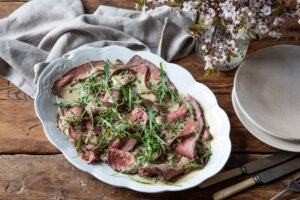
Onglet with Beetroots, Horseradish & Beef Fat Crumbs

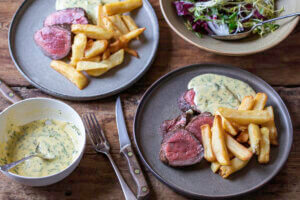
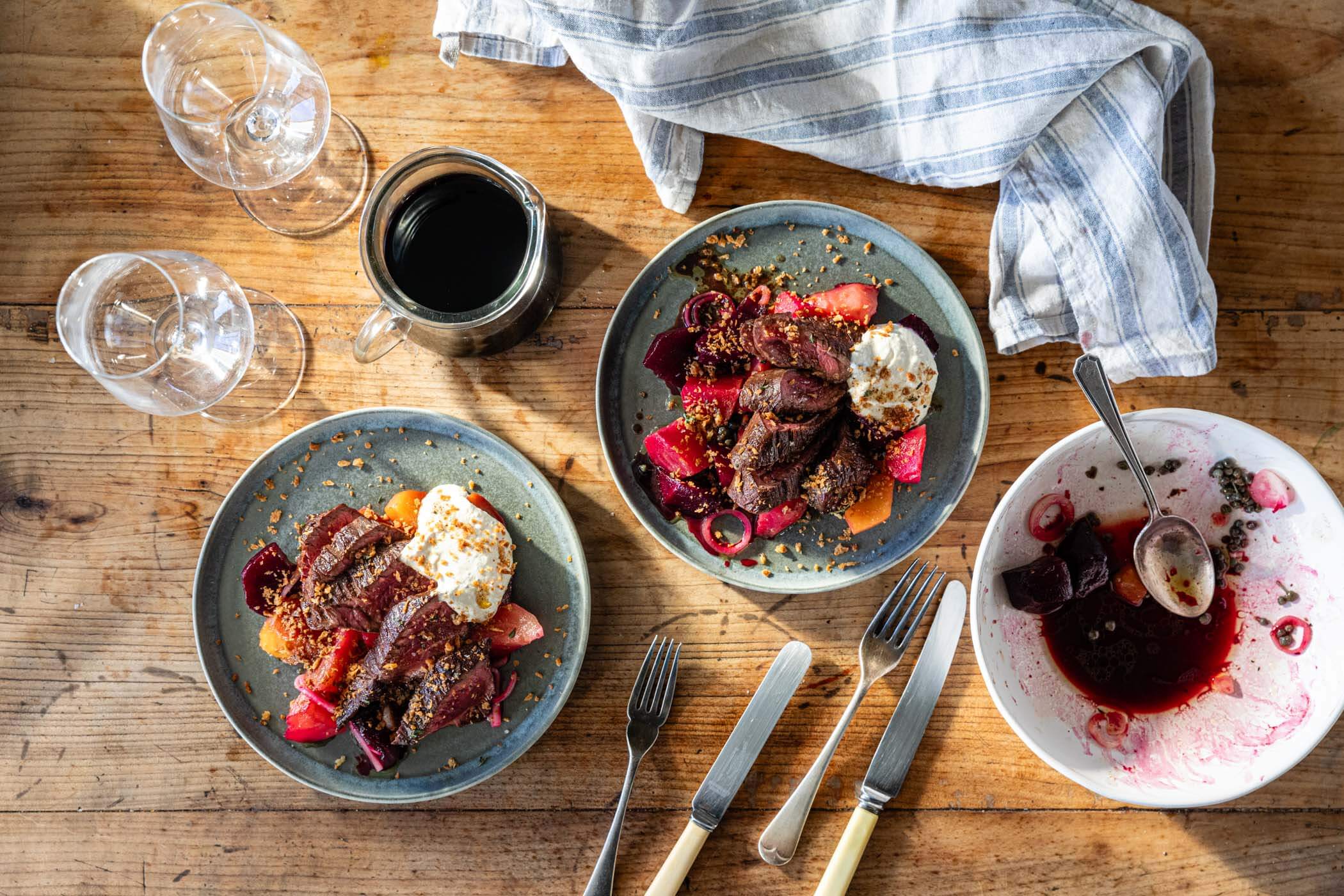
An overhead shot of a table with two plates of onglet steak, beetroots and horseradish, plus a carafe of wine and two glasses to the side.

A bright, vibrant ensemble making use of one of Britain’s very best, and underused, vegetables; the humble beetroot.

Beetroots cooked like this are a treat, a sort of pot roasting situation, with a healthy amount of vinegar really intensifies their flavour. Plus, the liquid left in the pot leaves you with the beginnings of a fantastic dressing. They sit harmoniously here, next to the deep flavour of the onglet, whose slight offal notes set it apart as a steak in my opinion. Breadcrumbs fried in beef fat are, in truth, probably a welcome addition to any plate but here especially they offer an extra dimension.

Serves: 2

Cook time: 1 hour

Ingredients

Beetroots

Horseradish Crème Fraîche

Beef Fat Crumbs

Method

Start with the Beetroots

  1. Preheat the oven to 170°C.
  2. Take a casserole, with a lid and add the beetroots, along with all the other ingredients (except shallots and capers), as well as 4 tablespoons of apple cider vinegar and 2 tablespoons of olive oil. Season it well with sea salt and cover with the lid and place in the oven for an hour.
  3. Remove from the oven and check they are cooked by inserting a small sharp knife into beetroots. It should meet little resistance. If they still feel a little firm, then return to the oven. Otherwise, leave them to cool for 40 minutes, with the lid on.
  4. Once cooled, peel the beetroots, and then cut into chunks and place in a bowl.
  5. Pour the reserved cooking liquid through a fine sieve and into a jug or bowl and then whisk in a good glug of olive oil and a little more vinegar, to make a dressing. Taste and adjust the seasoning as necessary.
  6. Add the shallot rings and the capers to the beetroots and then add as much dressing as you see fit. Taste again and adjust the seasoning as necessary.

For the Horseradish Crème Fraiche

  1. Peel the tough outer layer of the horseradish until you reveal the white centre, then using a fine grater, grate approximately 4 centimetres of the stick into a bowl. Season with sea salt and 2 tablespoons of vinegar, stir together and leave to sit for 10 minutes.
  2. Tip the crème fraiche into the bowl, along with a good grind of black pepper and stir together and leave to sit for a further 10 minutes.
  3. Taste and adjust the seasoning as necessary.

For the Beef Fat Croutons

  1. Set a cast-iron skillet or frying pan over a low heat and scatter in the minced beef fat. Allow the fat to render for 10-15 minutes. Pass through a sieve and then return the fat to the same pan.
  2. Turn the heat up a touch and then add the breadcrumbs to the pan, season with salt and fry, stirring regularly, until the crumbs are golden and crispy. At which point, add the picked thyme leaves, stir together and then remove from the pan onto a plate lined with kitchen towel.

Now to Cook the Onglet Steak

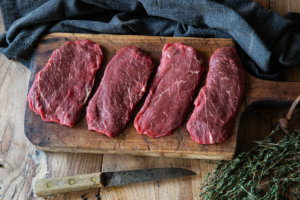
  1. Take steaks out of the fridge, remove packaging, pat dry with kitchen paper, pop on a plate and allow to reach room temperature.
  2. Season the steaks well with sea salt.
  3. Set a cast iron skillet or frying pan over a high heat and add a little oil. Once smoking, add the onglet steaks to the pan and, resisting the urge to move them, cook for 2 minutes. Then flip and cook for two minutes on the other side.
  4. Once other side has cooked for 2 minutes add a good knob of butter to the pan and turn the heat down to low. Turn the steaks every 30 seconds or so for a total cooking time of approx. 7-9 minutes, basting with the foaming butter as you go.
  5. Remove from pan and rest for 10 minutes.
  6. To serve, be sure to carve the onglet against the grain and serve atop the dressed beetroots, a good dollop of the horseradish crème fraiche and then a scattering of the beef fat crumbs all over.

Order meat online

Instagram

  • A while back we had the pleasure of visiting @petea25 at the @cantonarms Arms, where we spoke about their ever evolving menu, a place that is not afraid to cook things until they are gone and then move on to something new.

We saw how they treated the Swaledale pork chop, and it told you everything you needed to know. Cooked with care, handled properly, and full of flavour.

It was, simply, delicious.
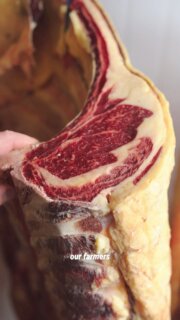
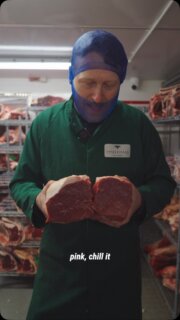
  • Here’s our Trevor, stood in front of an expertly butchered sirloin section.

Porterhouse, T bone, Wing rib, New York strip, fillet, sirloin.

All cut from the same part of the animal, each one offering something slightly different.

Key question is; which one are you taking?
  • The Dales never hurry themselves into spring, and this year is no different. You can drive through them and still feel winter holding on, yet something has shifted all the same.

It begins quietly. Hawthorn shows along the hedgerows, just enough to catch the eye. The grass is lifting, the fields softening, losing that tired, flattened look they carry through the colder months.

Out on the land, the change is clearer. Lambs are scattered across the fields, finding their feet, while cattle have been turned back out and settle easily into the pasture. There is a rhythm to it again, a sense that the farms are beginning to move.

Nothing arrives all at once. It comes on steadily, almost cautiously, as the land turns back to life.
  • The fallacy of Spring lamb!

When we eat lamb in early April, we aren’t eating the lovely little fluffy things people see hopping about in the fields. In fact, you’re actually eating – or at least you are if you are buying from us – old season lamb. The animals that were born the previous springtime. They are age wise, on the verge of morphing into hogget and, in our opinion, it is lamb at its very best. More flavourful as the meat has developed with age, but still with the tenderness one expects with lamb. 
One thing that is not in doubt is that it pairs perfectly with a lot of the seasonal ingredients of this time of year, the peas, broad beans and courgettes from the continent, plus Jersey royals, asparagus and wild garlic from these shores. 
We have plenty of these wonderful carcasses ageing in our fridges, so embrace the idea of eating last years spring lamb!
  • A classic of French cooking, built on combinations that have stood their ground for good reason, and long may they do so.

Chicken breast roasted in brown butter, creamy mash worked with plenty of butter and dairy, and a mustard sauce brought together with cream. It reads rich, but it eats with balance. The Dijon and tarragon cut through, lifting the dish and keeping it in check.
  • A classic of French cooking, built on combinations that have stood their ground for good reason, and long may they do so.

Chicken breast roasted in brown butter, creamy mash worked with plenty of butter and dairy, and a mustard sauce brought together with cream. It reads rich, but it eats with balance. The Dijon and tarragon cut through, lifting the dish and keeping it in check.

This is food that does not chase anything. It knows exactly what it is.
  • Filmed on a blustery day at the Harewood House estate, Ellen talks us through the Highland cattle and the wider farming approach shaping the land here.

These short films look at how the estate is guiding the land back towards what it once was, using the right livestock for the right terrain and allowing systems to work with the landscape rather than against it. Hardy cattle, able to outwinter on pasture alone, reduce the need for inputs and bring a different kind of balance to the farm.

For chefs, this is where the story begins. The flavour comes later, but it is built here, in the fields, through decisions made over time rather than in a single season.

It is a strong example of thoughtful farming, where lower inputs and careful management can support both the land and a sustainable margin, all driven by a clear intention to make the estate work for nature as much as it does for people.
  • We love it when a plan comes together! And this little project with @llewelynslondon provides a great example. 

It all started with a trip up to Swaledale HQ, to see the butchery and meet the team; bacon, black pudding and egg baps were laid on fo breakfast. Then it was off to see one of our network of farmers; Jim Mallender, over in Thornton in craven. Jim and his family showed us round and held a sort of farming Q&A. Then we cooked some cuts on a bbq and sampled the llewelyns take on a hotpot. Truly bringing farmers and chef together and a wonderful day for all involved. 

Off the back of the visit a special dinner an d a three course menu of dreams. It celebrates not just our produce and their cooking but also the 6 beautiful years that head chef michael (@skinnylittlefatman) has spent at the helm of this charming restaurant. 

We are extremely excited to eat and drink tonight to celebrate all those things.
A while back we had the pleasure of visiting @petea25 at the @cantonarms Arms, where we spoke about their ever evolving menu, a place that is not afraid to cook things until they are gone and then move on to something new. We saw how they treated the Swaledale pork chop, and it told you everything you needed to know. Cooked with care, handled properly, and full of flavour. It was, simply, delicious.
1 day ago
3027
View on Instagram |
1/8
Here’s our Trevor, stood in front of an expertly butchered sirloin section.

Porterhouse, T bone, Wing rib, New York strip, fillet, sirloin.

All cut from the same part of the animal, each one offering something slightly different.

Key question is; which one are you taking?
Here’s our Trevor, stood in front of an expertly butchered sirloin section. Porterhouse, T bone, Wing rib, New York strip, fillet, sirloin. All cut from the same part of the animal, each one offering something slightly different. Key question is; which one are you taking?
3 days ago
541
View on Instagram |
2/8
The Dales never hurry themselves into spring, and this year is no different. You can drive through them and still feel winter holding on, yet something has shifted all the same.

It begins quietly. Hawthorn shows along the hedgerows, just enough to catch the eye. The grass is lifting, the fields softening, losing that tired, flattened look they carry through the colder months.

Out on the land, the change is clearer. Lambs are scattered across the fields, finding their feet, while cattle have been turned back out and settle easily into the pasture. There is a rhythm to it again, a sense that the farms are beginning to move.

Nothing arrives all at once. It comes on steadily, almost cautiously, as the land turns back to life.
The Dales never hurry themselves into spring, and this year is no different. You can drive through them and still feel winter holding on, yet something has shifted all the same.

It begins quietly. Hawthorn shows along the hedgerows, just enough to catch the eye. The grass is lifting, the fields softening, losing that tired, flattened look they carry through the colder months.

Out on the land, the change is clearer. Lambs are scattered across the fields, finding their feet, while cattle have been turned back out and settle easily into the pasture. There is a rhythm to it again, a sense that the farms are beginning to move.

Nothing arrives all at once. It comes on steadily, almost cautiously, as the land turns back to life.
The Dales never hurry themselves into spring, and this year is no different. You can drive through them and still feel winter holding on, yet something has shifted all the same.

It begins quietly. Hawthorn shows along the hedgerows, just enough to catch the eye. The grass is lifting, the fields softening, losing that tired, flattened look they carry through the colder months.

Out on the land, the change is clearer. Lambs are scattered across the fields, finding their feet, while cattle have been turned back out and settle easily into the pasture. There is a rhythm to it again, a sense that the farms are beginning to move.

Nothing arrives all at once. It comes on steadily, almost cautiously, as the land turns back to life.
The Dales never hurry themselves into spring, and this year is no different. You can drive through them and still feel winter holding on, yet something has shifted all the same.

It begins quietly. Hawthorn shows along the hedgerows, just enough to catch the eye. The grass is lifting, the fields softening, losing that tired, flattened look they carry through the colder months.

Out on the land, the change is clearer. Lambs are scattered across the fields, finding their feet, while cattle have been turned back out and settle easily into the pasture. There is a rhythm to it again, a sense that the farms are beginning to move.

Nothing arrives all at once. It comes on steadily, almost cautiously, as the land turns back to life.
The Dales never hurry themselves into spring, and this year is no different. You can drive through them and still feel winter holding on, yet something has shifted all the same.

It begins quietly. Hawthorn shows along the hedgerows, just enough to catch the eye. The grass is lifting, the fields softening, losing that tired, flattened look they carry through the colder months.

Out on the land, the change is clearer. Lambs are scattered across the fields, finding their feet, while cattle have been turned back out and settle easily into the pasture. There is a rhythm to it again, a sense that the farms are beginning to move.

Nothing arrives all at once. It comes on steadily, almost cautiously, as the land turns back to life.
The Dales never hurry themselves into spring, and this year is no different. You can drive through them and still feel winter holding on, yet something has shifted all the same. It begins quietly. Hawthorn shows along the hedgerows, just enough to catch the eye. The grass is lifting, the fields softening, losing that tired, flattened look they carry through the colder months. Out on the land, the change is clearer. Lambs are scattered across the fields, finding their feet, while cattle have been turned back out and settle easily into the pasture. There is a rhythm to it again, a sense that the farms are beginning to move. Nothing arrives all at once. It comes on steadily, almost cautiously, as the land turns back to life.
6 days ago
471
View on Instagram |
3/8
The fallacy of Spring lamb! When we eat lamb in early April, we aren’t eating the lovely little fluffy things people see hopping about in the fields. In fact, you’re actually eating – or at least you are if you are buying from us – old season lamb. The animals that were born the previous springtime. They are age wise, on the verge of morphing into hogget and, in our opinion, it is lamb at its very best. More flavourful as the meat has developed with age, but still with the tenderness one expects with lamb. One thing that is not in doubt is that it pairs perfectly with a lot of the seasonal ingredients of this time of year, the peas, broad beans and courgettes from the continent, plus Jersey royals, asparagus and wild garlic from these shores. We have plenty of these wonderful carcasses ageing in our fridges, so embrace the idea of eating last years spring lamb!
2 weeks ago
632
View on Instagram |
4/8
A classic of French cooking, built on combinations that have stood their ground for good reason, and long may they do so. Chicken breast roasted in brown butter, creamy mash worked with plenty of butter and dairy, and a mustard sauce brought together with cream. It reads rich, but it eats with balance. The Dijon and tarragon cut through, lifting the dish and keeping it in check.
4 weeks ago
7
View on Instagram |
5/8
A classic of French cooking, built on combinations that have stood their ground for good reason, and long may they do so. Chicken breast roasted in brown butter, creamy mash worked with plenty of butter and dairy, and a mustard sauce brought together with cream. It reads rich, but it eats with balance. The Dijon and tarragon cut through, lifting the dish and keeping it in check. This is food that does not chase anything. It knows exactly what it is.
4 weeks ago
535
View on Instagram |
6/8
Filmed on a blustery day at the Harewood House estate, Ellen talks us through the Highland cattle and the wider farming approach shaping the land here. These short films look at how the estate is guiding the land back towards what it once was, using the right livestock for the right terrain and allowing systems to work with the landscape rather than against it. Hardy cattle, able to outwinter on pasture alone, reduce the need for inputs and bring a different kind of balance to the farm. For chefs, this is where the story begins. The flavour comes later, but it is built here, in the fields, through decisions made over time rather than in a single season. It is a strong example of thoughtful farming, where lower inputs and careful management can support both the land and a sustainable margin, all driven by a clear intention to make the estate work for nature as much as it does for people.
1 month ago
64
View on Instagram |
7/8
We love it when a plan comes together! And this little project with @llewelynslondon provides a great example. It all started with a trip up to Swaledale HQ, to see the butchery and meet the team; bacon, black pudding and egg baps were laid on fo breakfast. Then it was off to see one of our network of farmers; Jim Mallender, over in Thornton in craven. Jim and his family showed us round and held a sort of farming Q&A. Then we cooked some cuts on a bbq and sampled the llewelyns take on a hotpot. Truly bringing farmers and chef together and a wonderful day for all involved. Off the back of the visit a special dinner an d a three course menu of dreams. It celebrates not just our produce and their cooking but also the 6 beautiful years that head chef michael (@skinnylittlefatman) has spent at the helm of this charming restaurant. We are extremely excited to eat and drink tonight to celebrate all those things.
1 month ago
59
View on Instagram |
8/8